
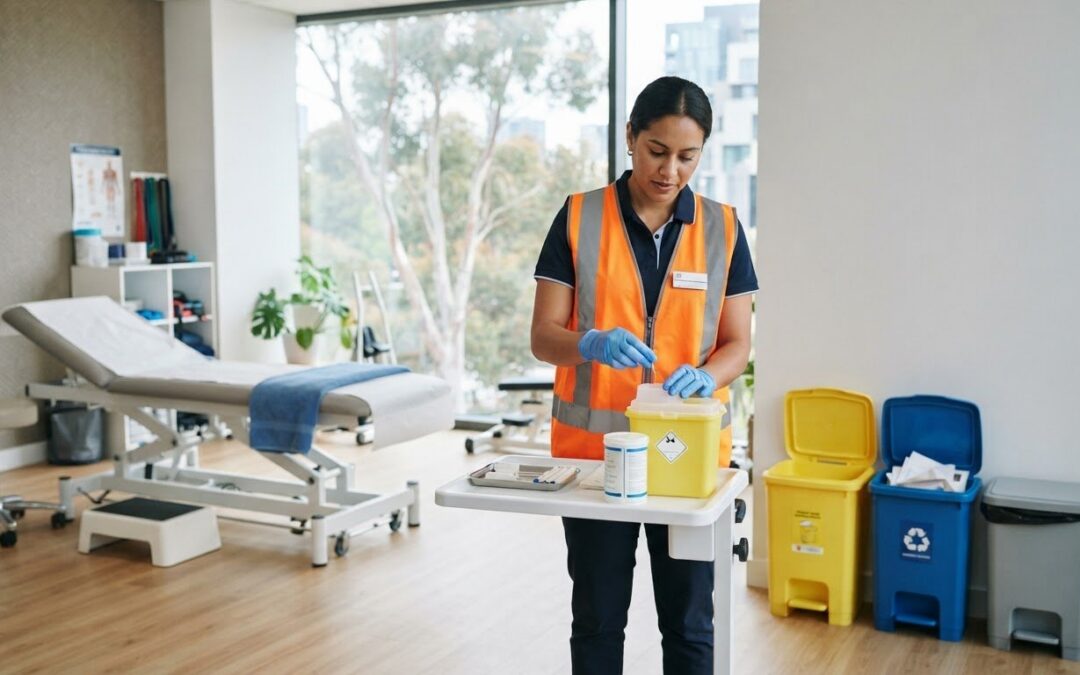
Does every used glove, strip of couch paper or dry-needling needle belong in clinical waste? In a physiotherapy practice, the answer depends on the treatment and whether an item is contaminated. Clinical waste disposal for physiotherapists starts by matching each item to the task that produced it, rather than treating the whole treatment room as high-risk.
It’s understandable to feel unsure, especially when guidance can seem written for hospitals rather than small clinics. Sharps need particular care, while gloves and couch paper may need different handling depending on visible contamination and current Victorian guidance.
This guide explains how to identify, segregate and store common physiotherapy waste, handle sharps safely, and assess what collection your clinic may need. It also points to Victorian EPA and Department of Health guidance to check, so you can build a repeatable process for staff and verify requirements before making disposal decisions.
Key Takeaways
- Match waste to the treatment that produced it and its contamination risk, rather than assuming every treatment-room item needs special disposal.
- Use a clear point-of-use process to direct sharps, soft clinical waste and ordinary rubbish into separate streams.
- Check current Victorian guidance and provider instructions when deciding how to contain and store waste before collection.
- Build a repeatable clinical waste disposal routine, with staff responsibilities for induction, container checks and contacting the service provider.
- Review your arrangements when sharps use or waste volumes change. Ask potential providers which waste streams they accept and how collection is managed.
What clinical waste can a physiotherapy practice generate?
Clinical waste is waste from healthcare that may pose an infection or injury risk because of what it contains or how it was used. In a physiotherapy clinic, the treatment and the waste’s contamination risk matter more than the clinic’s name. This plain-English definition is a starting point, not a substitute for checking how an item is classified under current Victorian guidance.
For clinical waste disposal for physiotherapists, the practical distinction is between waste that needs a specific handling stream and ordinary rubbish that doesn’t. The Biomedical waste overview provides broader context on waste from healthcare settings, including sharps and potentially infectious materials. For decisions in Victoria, check current guidance from EPA Victoria and the Department of Health.
Which physiotherapy treatments may generate clinical waste?
Waste depends on the care provided. If a practitioner treats a wound, dressings or other materials visibly contaminated with blood or bodily fluids may need to be handled as clinical waste. A clinic that provides dry needling may also generate sharps, such as used needles, which should be kept separate from soft waste and placed in an appropriate sharps container. Not every physiotherapy practice provides these treatments, so its waste process should reflect the services it actually offers.
These examples are prompts for review, not a complete classification list. Check the current EPA Victoria Clinical and related waste – operational guidance and Department of Health guidance. Confirm item-specific requirements before setting clinic procedures.
Is every used treatment-room item clinical waste?
No. A used item isn’t automatically clinical waste just because it came from a treatment room. Packaging and uncontaminated tape may be ordinary rubbish, while gloves, masks or couch paper may need different handling if visibly contaminated with blood or bodily fluids. Avoid putting everything into a clinical waste stream by default, as this can make it harder for staff to distinguish waste types at the point of disposal.
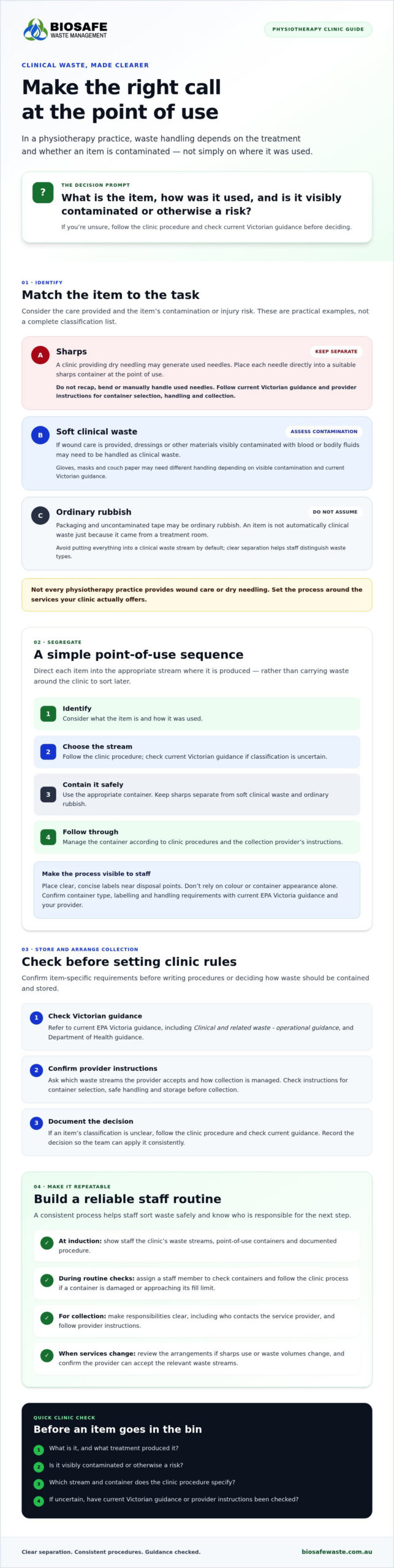
Use a simple decision prompt: What is the item, how was it used, and is it visibly contaminated or otherwise a risk? If the answer is unclear, follow the clinic procedure and check current Victorian guidance before deciding. Record the decision so the team can apply it consistently. This gives physiotherapists a practical starting point for identifying likely clinical waste without treating every piece of treatment-room rubbish alike.
How should physiotherapists segregate clinical waste at the point of use?
Segregate waste where it’s produced by identifying the item, selecting the appropriate stream, containing it safely and following the clinic’s documented procedure. This point-of-generation routine helps staff avoid mixing sharps, potentially contaminated soft waste and ordinary rubbish. It also makes the clinic’s approach easier to follow consistently.
Use a simple sequence for each item:
- Identify it: Consider what the item is and how it was used.
- Choose the stream: Follow the clinic’s procedure and current Victorian guidance if classification is uncertain.
- Contain it: Place it directly into the appropriate container. Keep sharps separate from soft clinical waste and ordinary rubbish.
- Follow through: Manage the container according to clinic procedures and the collection provider’s instructions.
Place clear, concise labels near disposal points so staff can make decisions during treatment, rather than carrying waste around the clinic to sort later. Don’t rely on colour or container appearance alone. Confirm current requirements for container type, labelling and handling with EPA Victoria guidance and your provider.
How should clinics manage sharps from dry needling?
If the clinic provides dry needling, place each used needle directly into a suitable sharps container at the point of use. Don’t recap, bend or manually handle used needles. Keep the container separate from soft waste and ordinary rubbish, and make sure staff know what to do if it’s damaged or approaching its fill limit. Check current Victorian guidance and provider instructions for container selection, safe handling and collection arrangements.
How can staff prevent waste-stream mix-ups?
Place each clearly labelled container where the related waste is generated, without obstructing treatment or movement through the room. Assign a staff member to check containers as part of routine clinic procedures and escalate uncertainty rather than guess. Include the practice’s waste streams in staff induction, then provide refreshers when treatments, procedures or guidance change.
A written procedure can record which streams the clinic uses, where containers are located, who checks them and who contacts the collection provider. This gives new and existing staff a shared reference. For clinical waste disposal for physiotherapists, specialist collection is one part of the system. Correct segregation and safe storage within the clinic remain essential.
Victorian practices assessing external support can review clinical and sharps waste collection from BioSafe Waste Management, then confirm current service availability for their practice and location.
How should a physiotherapy clinic store waste and arrange collection?
After segregation, keep clinical waste contained, secure and separate from ordinary rubbish while it awaits removal. Choose a storage area that limits access and protects containers from damage or disturbance. Keep different waste streams apart, and make sure staff can identify the correct container without moving or reopening it.
The clinic needs to follow verified handling instructions. Check current EPA Victoria and Department of Health guidance, use containers as directed, and follow the collection provider’s requirements for storage, preparation and handover. Don’t assume one storage approach applies to every waste stream. If guidance or provider instructions are unclear, seek clarification before changing the procedure.
What should staff check before waste is collected?
Use a brief pre-collection check that reflects the clinic’s procedures and provider instructions. Staff can confirm that containers have been used for the intended waste stream, are closed as directed and are ready for collection. Don’t open a container to inspect its contents. If it’s damaged, overfilled or otherwise not ready, follow the clinic’s escalation process rather than attempting an improvised fix.
Confirm the collection arrangement covers the clinic’s actual waste, including sharps if the practice generates them. Record relevant collection details and any issue that needs follow-up in line with clinic policy. Ask the provider which waste streams it accepts, what containers are appropriate, how they should be prepared and what records the clinic should retain.
When might a physiotherapy clinic need specialist collection?
A dedicated arrangement may be needed for clinical waste or sharps that require handling outside the clinic’s ordinary rubbish process. Specialist clinical waste collection is distinct from municipal rubbish collection, so confirm that each service is intended for the waste stream it will receive. Check the current Victorian requirements that apply to the clinic’s waste and collection arrangements.
There’s no single collection frequency that suits every practice. Review what the clinic generates, how quickly it accumulates and the provider’s service terms, then confirm an arrangement that meets the practice’s needs and applicable guidance. Reassess when treatments change or volumes shift. This is a practical part of clinical waste disposal for physiotherapists, alongside safe segregation and storage.
BioSafe Waste Management provides clinical and medical waste collection across Victoria, including sharps services for healthcare providers. Physiotherapy practices can contact BioSafe Waste Management to check current service availability for their clinic and location, and discuss the waste streams they need collected.
Clinical waste disposal for physiotherapists: how to build a reliable routine
A reliable routine connects each stage of care, from planning the treatment to arranging collection. Write down the waste streams the clinic generates, the approved containers for each stream and the point-of-use steps staff should follow. Include who checks containers, who contacts the collection provider and what staff should do if waste is mis-sorted or they’re unsure how to classify an item.
Use the procedure as a working guide, not a substitute for current Victorian requirements. Check relevant EPA Victoria and Department of Health guidance, and confirm container and handling instructions with the provider. Review the procedure when the clinic introduces a treatment, waste volumes change, staff responsibilities shift, or the premises and collection arrangements change. Related guidance on medical waste collection in Victoria can help clinics consider the broader collection process.
What belongs in a physiotherapy waste procedure?
Make the instructions easy to use during a busy clinic day. Record the waste streams produced, where each container is located, how waste is placed into it, and the steps for safe storage and collection. Add a contact for questions and a clear escalation path for damaged containers or incorrectly discarded items. Assign responsibility for staff induction and refresher training, as well as routine container checks. Set a review point so the procedure stays aligned with clinic practice and verified guidance. This is a practical framework, not a legal compliance checklist.
How should mobile and community physiotherapists plan?
For home visits, plan how any clinical waste or sharps generated during treatment will be contained and managed safely away from the clinic. Don’t assume it can be placed in a household bin or carried loose. Establish a process that follows current guidance and provider instructions before delivering treatment. Where relevant, see medical waste disposal for home care. Physiotherapists working in residential settings should also coordinate with the facility’s procedures and clarify who is responsible for each waste stream. Aged care waste management in Victoria offers related context.
Consistency is the aim. A documented, role-based routine helps staff follow the same steps and makes it easier to identify when advice or collection arrangements need review. For support with clinical waste disposal for physiotherapists, contact BioSafe Waste Management to discuss clinical waste collection and confirm current service availability for your practice and location.
When should a physiotherapy practice seek specialist waste support?
Review your arrangements if the practice starts providing dry needling or wound care, generates more clinical waste than before, or finds staff are unsure which collection stream to use. A change in premises, treatment mix or team can also reveal gaps in existing procedures. Don’t wait for a container or collection problem to prompt a review. Check that the current service matches the waste your clinic actually produces.
Choosing support for clinical waste disposal for physiotherapists means checking practical details as well as service availability. Before making an arrangement, prepare a short description of the waste streams, approximate volumes and current handling process. Then ask prospective providers:
- Do you accept the clinic’s specific clinical waste and sharps streams?
- Which containers are suitable, and what instructions apply to their use, storage and handover?
- How are collection arrangements agreed, and what should clinic staff do if a container is damaged or not ready?
- What service records or collection documentation are provided, and what should the clinic retain?
- Is the service available at the clinic’s location and suitable for its operational needs?
Clear answers help the practice assess whether a service fits its workflow. Verify current Victorian guidance separately, and compare the provider’s instructions with the clinic’s documented procedures before changing how waste is handled.
How can BioSafe Waste Management support a physiotherapy practice?
BioSafe Waste Management provides clinical and medical waste collection across Victoria, including specialist sharps disposal. These services may suit physiotherapy practices that generate clinical waste or sharps, but suitability depends on the clinic’s waste streams, location and requirements. Confirm current availability and discuss the collection process directly. Don’t assume a particular container, schedule or service arrangement is included.
Specialist collection is one part of a safe waste system. The practice still needs clear segregation, suitable storage and staff who understand the procedure. If you’re reviewing your current arrangements, gather details about the waste generated and the clinic’s location, then discuss clinical waste collection with BioSafe Waste Management to assess whether its Victorian services may suit your practice.
Make your clinic’s waste routine clear and consistent
Safe clinical waste handling starts with knowing what each treatment may generate, then giving staff a clear process for segregation, storage and collection. Keep sharps separate, avoid assuming every used treatment-room item is clinical waste, and check current Victorian guidance when an item’s classification or handling requirements are uncertain.
A documented routine helps the whole team follow the same steps. Review it when treatments, waste volumes or clinic arrangements change, and confirm that any collection service covers the streams your practice actually produces. These are practical foundations for reliable clinical waste disposal for physiotherapists.
BioSafe Waste Management provides clinical and medical waste collection across Victoria, including specialised sharps disposal services. Suitability and availability depend on your clinic’s location and waste needs, so confirm the details before making arrangements. To discuss options for your practice, discuss clinical waste collection for your Victorian practice.
Frequently Asked Questions
Is all waste from a physiotherapy clinic classified as clinical waste?
No. A physiotherapy clinic produces both routine workplace rubbish and treatment-related waste, and they may need different handling. Classification depends on the item, how it was used and whether it’s contaminated, not simply where it was discarded. For example, ordinary packaging may be kept separate from a dressing that could be contaminated. Check current Victorian guidance and your clinic’s procedures for item-specific decisions. Don’t assume every used item belongs in clinical waste.
Can physiotherapists put dry-needling needles in ordinary rubbish?
Used dry-needling needles are sharps and shouldn’t go in ordinary rubbish. Place them directly into an appropriate sharps container, then follow current Victorian guidance, workplace procedures and the collection provider’s instructions for its use and removal. Don’t recap or manually handle a used needle. If one is mistakenly discarded in another bin, avoid reaching in. Follow the clinic’s incident and exposure-response procedure and notify the responsible staff member.
How should a physiotherapy clinic dispose of used dressings?
Place used dressings in the waste stream specified by your clinic’s procedure, based on how they were used and whether they’re contaminated. A dressing from wound care may need different handling from an unused or clean item, so don’t apply one classification to every dressing. Set out item-specific instructions using current Victorian guidance, and have staff segregate materials at the point of use rather than mixing potentially contaminated dressings with general rubbish.
What happens if clinical waste is placed in the wrong bin?
If waste goes into the wrong bin, staff should stop and avoid further handling. Where appropriate, secure or isolate the affected waste and notify the person responsible under the clinic’s procedure. Follow current workplace guidance and contact the waste provider for advice if the next step isn’t clear. If anyone is exposed or injured, use the clinic’s incident-response process. The right response can depend on the waste type and circumstances, so don’t improvise.
Does a small physiotherapy practice need a clinical waste collection service?
Not necessarily. A practice’s size alone doesn’t determine whether it needs specialist collection. Assess the waste streams generated by its actual treatments, including whether staff use sharps, then review segregation arrangements and current Victorian guidance. If clinical waste or sharps need a dedicated service, ask providers whether they accept those streams, what containers and service arrangements apply, and whether collection is available for your location. This assessment supports sound clinical waste disposal for physiotherapists.
How often should a physiotherapy clinic arrange clinical waste collection?
No single collection schedule suits every clinic. Needs depend on the types and volumes of waste generated, storage arrangements, provider terms and applicable guidance. Ask the provider to recommend an arrangement based on your practice’s actual activity, and clarify what staff should do if a container approaches capacity between collections. Check that the proposed service fits your clinic’s waste streams and location, rather than assuming another practice’s collection frequency will suit yours.