
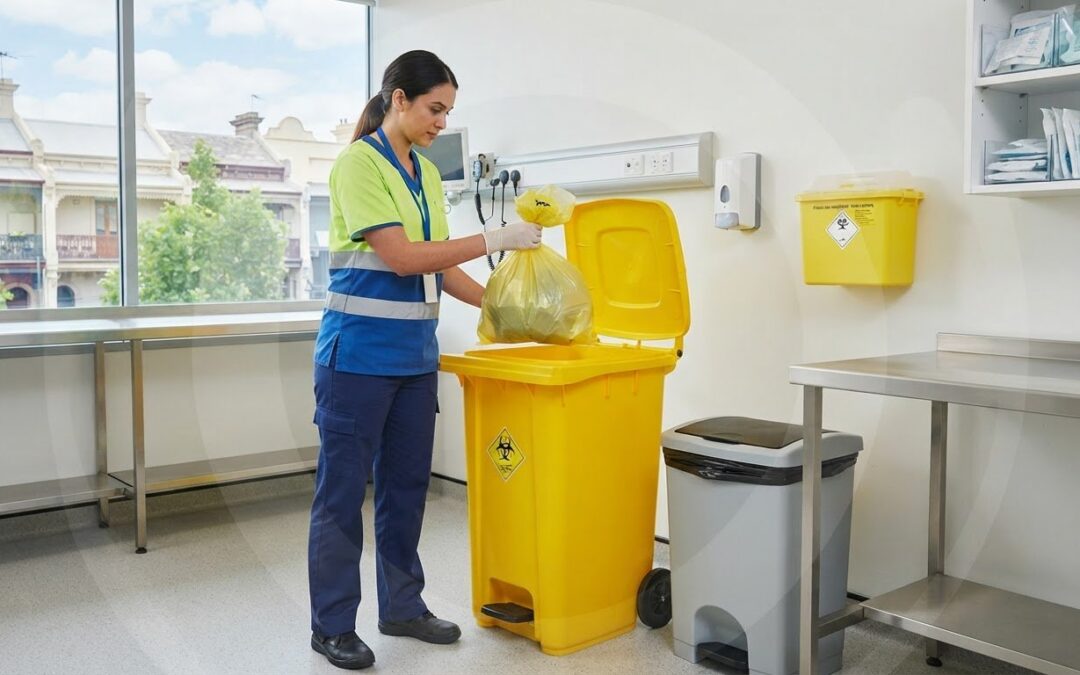
Could the wrong item in a yellow bag put staff and others at risk? When waste streams are unclear, it’s easy to treat every contaminated item the same. Safe yellow clinical waste bags disposal starts with classifying waste correctly where it’s generated, not simply choosing a bag by colour.
If you’re responsible for a healthcare, dental, veterinary, aged care or tattoo facility, staff need a procedure they can follow consistently. This guide explains how to use your facility’s waste-classification process to identify what belongs in a yellow clinical waste bag and what must go elsewhere. It also covers careful handling, closure, temporary storage and professional clinical waste collection in Victoria. Clear segregation and planned collection work together to support safer handling and more consistent waste management across your facility.
Key Takeaways
- Use your facility’s waste-classification procedure to decide which items belong in a yellow clinical waste bag. Colour coding alone doesn’t determine the correct stream.
- Keep sharps and general waste separate, following your site’s risk assessment and current procedures.
- Handle, close and store bags carefully, following the manufacturer’s instructions and your facility’s fill limits.
- Safe yellow clinical waste bags disposal in Victoria includes secure temporary storage and a planned handover for professional collection.
- BioSafe provides clinical and medical waste collection across Victoria to support a consistent process from segregation through collection.
Yellow clinical waste bags: what they are for in Victorian facilities
Yellow clinical waste bags contain waste designated for that stream under a facility’s waste-classification procedure and current Victorian guidance. The colour helps staff identify a waste stream, but it doesn’t classify the contents by itself. Correct yellow clinical waste bags disposal starts by identifying the right stream for the waste, then using its designated container and handling process.
Clinical waste management involves more than choosing a coloured bag. Segregation, containment and subsequent handling all matter. For background on how these steps and colour-coding systems are discussed internationally, see this overview of biomedical waste management. In a Victorian workplace, staff should follow the facility’s procedure and relevant local guidance.
What does the yellow bag signify?
Yellow identifies a designated waste stream within a colour-coded system. It doesn’t mean every item used in a clinical environment belongs in the same bag. Healthcare settings may produce several waste streams, and the correct one depends on the waste’s nature and the facility’s classification process. Staff should follow the approved procedure and check current EPA Victoria guidance and applicable standards, including AS 3816 where relevant, against the current edition.
Which Victorian facilities may use yellow clinical waste bags?
Hospitals and other healthcare providers, dental practices, veterinary clinics, aged care facilities and tattoo studios may generate waste that their procedures classify for clinical waste containment. The activity matters. A dental practice, for example, should classify waste according to the procedure and materials involved, rather than treating every used item as clinical waste. The same principle applies to animal care, personal care and tattooing activities.
For facility managers, a practical starting point is to map waste generated by each activity to the appropriate stream, then make the procedure clear to staff. If your site provides several services, document how classification decisions are made so staff can segregate waste consistently. BioSafe’s Victorian clinical waste collection guide provides further context for managing clinical waste collection in Victoria.
Use a yellow bag only when the facility’s classification procedure directs staff to that stream. This keeps colour coding in its proper role: a practical aid to segregation, not a substitute for assessment. Next, distinguish designated clinical waste from items that need a separate container or disposal stream.
What belongs in a yellow clinical waste bag, and what must stay separate?
There isn’t a universal item list that applies to every Victorian facility. The correct stream depends on the waste generated, the facility’s risk assessment and its current classification procedure. Sort waste where it’s generated, using the procedure rather than guessing from an item’s appearance or where it was used.
Correct segregation keeps waste in the right container, reduces handling risks and helps each stream follow its appropriate disposal process.
| Waste stream | How to approach it |
|---|---|
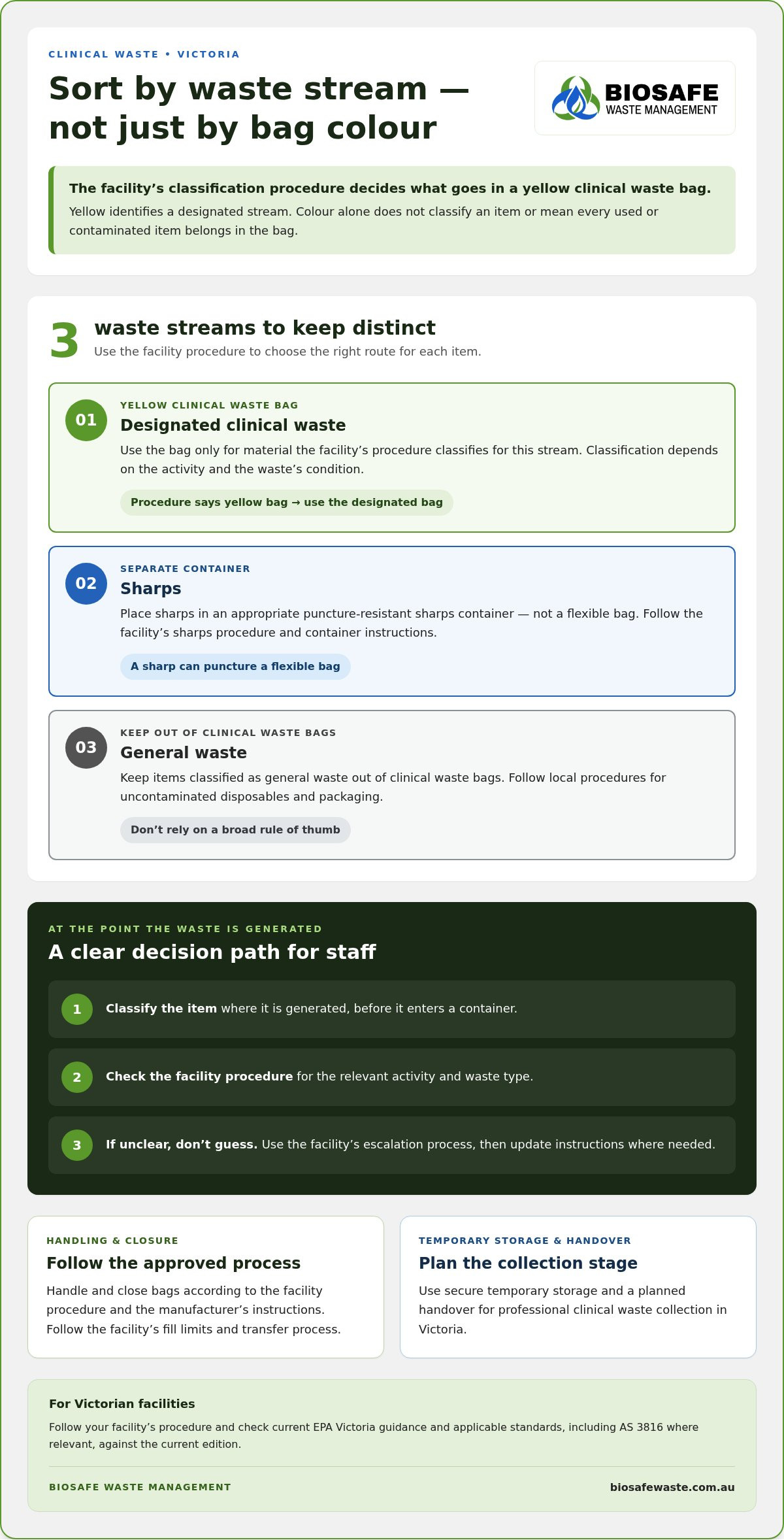
| Designated clinical waste | Use a yellow clinical waste bag only for material the facility’s procedure classifies for that stream. Classification depends on the activity and the waste’s condition, so don’t assume every used or contaminated item belongs in the bag. |
| Sharps | Place sharps in an appropriate puncture-resistant sharps container, not a flexible bag. Follow the facility’s sharps procedure and container instructions. |
| General waste | Keep items the facility classifies as general waste out of clinical waste bags. Follow local procedures for uncontaminated disposables and packaging rather than relying on a broad rule of thumb. |
How to decide whether an item belongs in the bag
Classify the item where it’s generated, before it enters a container. Check the facility procedure for the relevant activity and waste type. If the item isn’t covered or its status is unclear, don’t guess or put it in a yellow bag by default. Use the facility’s escalation process to resolve the classification consistently, then update instructions where needed so staff can apply the decision in future.
Why sharps and other waste streams need separate handling
A sharp can puncture a flexible bag, exposing staff and others handling it to injury and potential contact with contaminated material. Sharps containers are designed for a separate stream. They aren’t interchangeable with bags, and not all clinical waste is sharps waste.
Keep bags and containers distinct at the point of use, and make the correct disposal route clear to staff. Facilities seeking a dedicated collection pathway can learn about professional sharps disposal services in Melbourne. This separation is central to yellow clinical waste bags disposal: use the bag only for waste classified for that stream, and keep sharps contained separately. BioSafe provides clinical and medical waste collection across Victoria to support facilities at the collection stage.
How to handle, close and store yellow clinical waste bags safely
A consistent workflow helps staff contain designated clinical waste without unnecessary handling or uncertainty. Follow your facility’s procedure at every step, including instructions for bag closure, fill limits and transfer. Don’t rely on informal habits when the approved process gives direction.
A practical handling sequence for staff
- Classify the waste where it’s generated. Use the facility’s current waste-classification procedure to identify the correct stream before placing an item in a container.
- Use the designated container. Put only waste classified for the yellow-bag stream into the appropriate bag. Keep sharps and other separately classified waste in their designated containers.
- Handle the bag with care. Avoid unnecessary movement and follow workplace instructions for safe handling. If a bag is damaged or its contents are uncertain, report and manage the issue under the facility’s procedure rather than improvising.
- Close it as instructed. Follow the bag manufacturer’s instructions and your facility’s procedure. These set the closure method and fill limit. Don’t overfill the bag or guess how it should be closed.
- Transfer it to the designated storage area. Move the closed bag according to site procedures and keep it secure until the scheduled collection process.
This sequence makes yellow clinical waste bags disposal a clear workplace process, from classification through to collection. Staff training and accessible instructions help keep each handover consistent.
Temporary storage before collection
Temporary storage should limit unauthorised access and reduce avoidable handling while waste awaits collection. Use the facility’s designated storage area and follow its access arrangements, handling procedures and current applicable Victorian guidance. Make the transfer process clear to staff moving waste from the point of generation to storage and then to collection.
Set out who can access the storage area, how staff transfer waste there and how collection handover is managed. These details should reflect your facility’s risk assessment and current procedures, rather than an assumed storage time or a generic rule that may not suit the site. Review the process when activities or waste streams change, and ensure staff know where to find current instructions.
For further guidance on workplace practices, see clinical waste handling protocols for healthcare staff. Secure, orderly storage connects careful segregation on site with professional clinical waste collection across Victoria.
Yellow clinical waste bag disposal in Victoria: collection and compliance
Safe disposal continues after a bag leaves the treatment room. Once closed in line with the facility’s procedure, yellow-bag waste should move from secure on-site storage through an organised handover to professional clinical waste collection. This keeps the process controlled and helps prevent waste from being mixed with other streams or handled unnecessarily.
For Victorian requirements, refer to current EPA Victoria guidance and check the applicable edition and relevance of AS 3816. Guidance and standards can change, so use current sources when reviewing facility processes. Clinical waste shouldn’t go into ordinary municipal rubbish unless authoritative guidance for that specific waste stream permits it. If classification or disposal arrangements are unclear, follow the facility’s escalation process before moving the waste.
What facilities should document and review
Documenting the process can make the handover easier to follow and maintain. Record how staff classify and segregate waste, where closed bags are stored, who manages access and how collection is arranged. These records can clarify responsibilities, support staff training and make process gaps easier to identify. This is practical process guidance, not a statement of a specific legal recordkeeping duty.
Review procedures and staff training when facility activities, waste streams or relevant guidance change. Ensure updates reach the people who generate, handle and transfer waste, so the written process reflects day-to-day practice.
How regular collection supports safe disposal
Planned professional collection provides a clear next step once bags are securely stored. It helps facilities maintain an orderly waste process and avoid an uncertain or inconsistent on-site handover. Collection arrangements should suit the facility’s waste generation and established procedures. This article doesn’t prescribe a collection frequency.
BioSafe provides clinical and medical waste collection across Victoria for healthcare, dental, veterinary, aged care and tattoo facilities. The service connects careful segregation and secure storage with professional collection. Explore BioSafe’s Victorian clinical waste collection service to arrange the next step for your facility.
Arrange clinical waste collection for yellow bags with BioSafe
Yellow-bag waste management works best as a connected process: classify waste correctly, contain it in the designated bag, store it securely and arrange professional collection. Each step supports the next. A clear collection arrangement gives staff a defined handover after on-site segregation and storage, helping keep clinical waste management orderly across the facility.
BioSafe provides professional clinical and medical waste collection across Victoria for healthcare providers, dental practices, veterinary clinics, aged care facilities and tattoo studios. Waste and facility operations differ between settings, so collection arrangements should suit each site’s requirements and established procedures. The aim is a consistent process staff can follow, not a one-size-fits-all approach.
Support for healthcare and specialist facilities
Different activities produce different waste streams. A dental practice, veterinary clinic or tattoo studio may need to manage clinical waste alongside other separately classified waste, while aged care and healthcare settings have their own operational needs. Clear segregation and storage procedures help staff prepare waste for collection without mixing streams.
Dental facilities can read more about dental waste management in Victoria. For any facility, coordinating collection with handling and storage procedures supports a more dependable handover and an orderly workplace.
The next step for Victorian facilities
Before arranging collection, facility managers can consider how waste is classified, where closed bags are stored and how staff prepare waste for handover. These details help shape an arrangement that fits site operations while keeping the facility’s procedures central. Clear responsibilities also help staff understand what happens after bags leave the point of generation.
If your facility needs a professional pathway for yellow clinical waste bags disposal, BioSafe provides clinical and medical waste collection across Victoria. Discuss clinical waste collection with BioSafe to consider an arrangement suited to your facility’s operations.
Make your clinical waste process clear and consistent
Safe yellow clinical waste bags disposal relies on a straightforward sequence: classify waste using your facility’s procedure, put it in the correct container and keep it secure until collection. Yellow bags are for designated clinical waste, while sharps and other separately classified streams need their own handling. Staff should follow workplace procedures and bag instructions for closure and storage.
A planned collection arrangement completes the process with a clear handover from the facility to professional clinical waste collection. BioSafe provides clinical and medical waste collection across Victoria, supporting healthcare, dental, veterinary, aged care and tattoo facilities. The arrangement should reflect your site’s activities and waste-management procedures.
With consistent segregation, careful handling and planned collection, your team can manage waste with greater clarity. Discuss clinical waste collection with BioSafe and take the next step towards an orderly process for your facility.
Frequently Asked Questions
Can all clinical waste go in a yellow bag?
No. A yellow bag is for waste your facility classifies for that stream, not every item generated in a healthcare setting. Follow your site’s current waste-classification procedure and applicable guidance. Keep sharps and other separately classified waste in their designated containers. If an item’s classification is unclear, use the facility’s established escalation process rather than guessing or putting it in the yellow bag by default.
Can sharps be put in a yellow clinical waste bag?
No. Place needles and other sharps directly into an appropriate puncture-resistant sharps container, following workplace procedures. A flexible bag doesn’t provide the same puncture protection, so a sharp placed inside may injure staff or waste handlers. Keep sharps separate from bagged waste and manage the container through your facility’s clinical waste process. Don’t reach into a bag or try to retrieve a sharp from it.
How should yellow clinical waste bags be closed?
Follow the bag manufacturer’s instructions and your facility’s procedure for closure, fill limits and handling. Don’t overfill or compress a bag, as this can make handling less safe. Once closed, avoid unnecessary handling and move it according to workplace procedures. Closure methods and fill limits can vary, so use current instructions rather than informal practice.
Where should yellow clinical waste bags be stored before collection?
Keep closed bags in the facility’s designated clinical waste storage area, following site procedures for access, containment and handling. Storage arrangements should keep waste secure and reduce unnecessary contact before collection. The suitable location and process depend on the facility and applicable guidance. Check current Victorian guidance and workplace requirements when setting these arrangements rather than assuming one location or storage period applies to every site.
Can yellow clinical waste bags go in general rubbish in Victoria?
Don’t assume clinical waste can enter ordinary rubbish collection. Its classification and disposal route depend on the waste stream and applicable Victorian guidance. Keep designated clinical waste segregated, contained and within your facility’s clinical waste collection process. For yellow clinical waste bags disposal, follow your current workplace procedure and check EPA Victoria guidance relevant to your site. If the correct route is uncertain, use the facility’s escalation process.
Do yellow clinical waste bags need a biohazard label?
Labelling requirements can depend on the waste stream, packaging and applicable procedures. Follow your facility’s current waste-management protocol and check relevant Victorian guidance and standards to determine what identification is required. Don’t assume the bag’s colour alone meets every labelling requirement. If staff are unsure, use the facility’s designated process and update local instructions where needed so handling and identification remain consistent.
Who collects yellow clinical waste bags in Victoria?
Facilities in Victoria can arrange professional clinical waste collection through BioSafe Waste Management. BioSafe provides clinical and medical waste collection and disposal across Victoria for healthcare, dental, veterinary, aged care and tattoo facilities. A planned arrangement supports the handover from secure on-site storage to professional collection. Facilities should continue to follow their classification, containment and storage procedures as part of the overall waste-management process.