
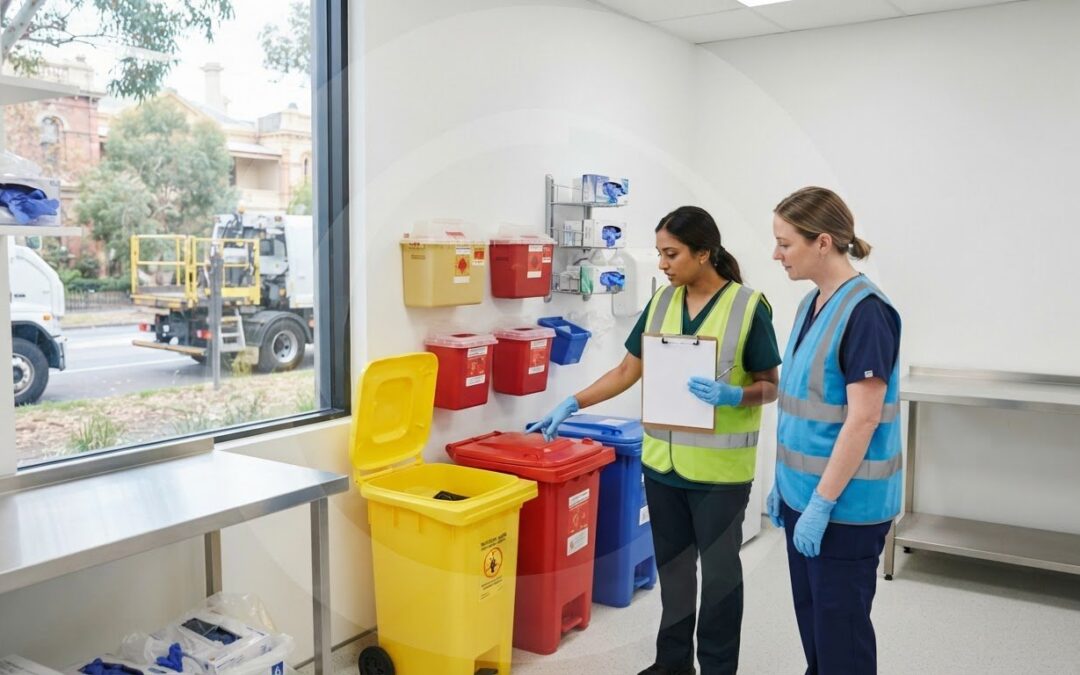
What if your waste pathway looks compliant on paper but busy-day practices tell a different story? For a Victorian GP clinic, an audit should trace each waste stream from the point it’s generated through to collection and authorised treatment. A practical review of medical waste disposal for GP clinics Victoria can help identify where written procedures, staff habits and contractor records don’t align.
It’s understandable to be unsure which materials need separate handling, or which documents and provider details an audit should cover. Victoria’s framework classifies clinical and related industrial waste as reportable priority waste, so clear segregation and reliable records matter.
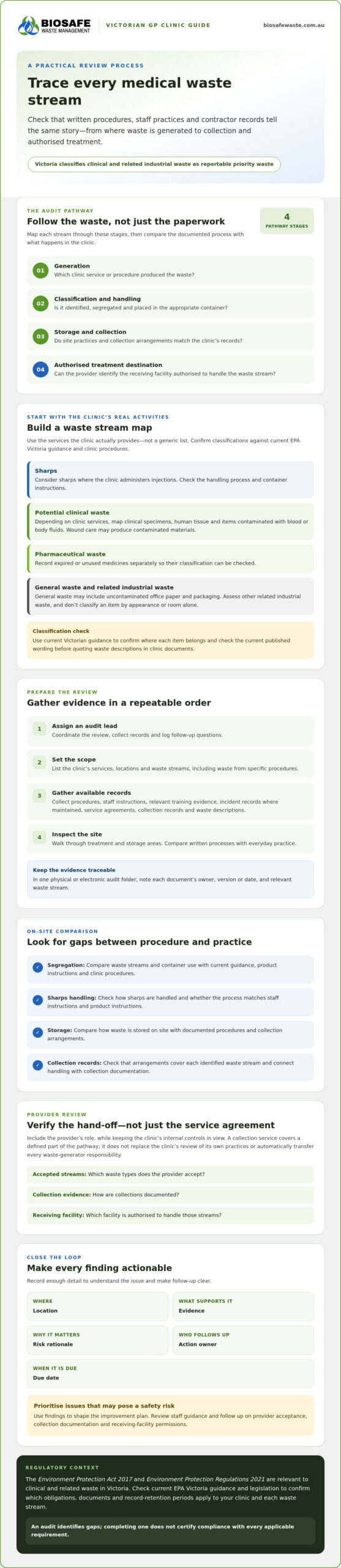
This guide sets out a repeatable process for checking how your clinic classifies, handles, stores and arranges collection of medical waste. You’ll learn what evidence to gather, how to spot differences between procedures and daily practice, and what to verify with a clinical waste collection provider. Use the steps to map the waste pathway, identify gaps and decide what needs attention.
Key Takeaways
- Set a clear audit scope and gather the clinic’s procedures, training records and relevant waste documentation before inspecting the site.
- Compare waste streams, segregation, sharps handling and collection arrangements with current official guidance and product instructions.
- Record each finding with its location, supporting evidence, risk rationale, action owner and due date so follow-up is clear.
- Use this practical audit process to review medical waste disposal for GP clinics Victoria, then prioritise issues that may pose a safety risk.
- Strengthen your improvement plan by reviewing staff guidance and asking providers about accepted waste streams, collection documentation and receiving-facility permissions.
What should a medical waste compliance audit cover in a Victorian GP clinic?
A useful audit follows each waste stream from the point it’s generated to its collection and final destination. It documents the clinic’s classification, handling, storage and collection arrangements, using evidence such as procedures, training records and service documents. An audit can identify gaps, but completing one does not certify that the clinic complies with every applicable requirement.
Start by mapping the services the clinic actually provides, then list the waste each activity can generate. A clinic that administers injections, for example, will need to consider sharps. Wound care may produce materials contaminated with blood or body fluids. Record pharmaceutical waste, such as expired or unused medicines, separately for a specific classification check. Use current Environment Protection Authority Victoria guidance to confirm classifications, and check its current published wording before quoting descriptions of clinical and related industrial waste in clinic documents. A broader introduction to biomedical waste can provide context, but Victorian requirements should guide the audit.
Which medical waste streams should a GP clinic map?
Build the map around the clinic’s actual procedures, not a generic list. Depending on the services provided, likely streams may include sharps, clinical specimens, human tissue, and items contaminated with blood or body fluids. Record pharmaceutical waste separately so its classification can be checked. Other related industrial waste may also need assessment.
Compare these streams with general waste, which may include uncontaminated office paper and packaging. Check current Victorian guidance and clinic procedures before deciding where an item belongs. Don’t assume an item is general waste simply because it looks ordinary, or clinical waste solely because it came from a treatment room. Consistent decisions where waste is generated help staff use the correct containers and keep the audit trail clear.
What is the difference between an audit and a collection service?
The clinic’s audit examines its own systems and evidence: how staff sort waste, how containers are handled and stored, what records are kept, and whether arrangements cover each identified waste stream. A collection service handles a defined part of that pathway. It doesn’t replace the clinic’s review of its practices or automatically transfer every waste-generator responsibility.
Include the provider’s role in the audit, but assess it alongside the clinic’s internal controls. Confirm which waste types the provider accepts, how collections are documented, and which receiving facility is authorised to handle those streams. For medical waste disposal for GP clinics Victoria, connect everyday handling with collection records and destination information. This gives the clinic a practical basis for follow-up.
How to prepare audit evidence for Victorian GP clinic waste disposal
A consistent evidence-gathering process helps the audit lead compare written procedures with what happens in the clinic. In Victoria, the Environment Protection Act 2017 and Environment Protection Regulations 2021 are relevant to clinical and related waste. Check current EPA Victoria guidance and the legislation to confirm which obligations, documents and record-retention periods apply to your clinic and each waste stream.
Prepare in this order:
- Assign an audit lead. Give one person responsibility for coordinating the review, collecting records and logging follow-up questions.
- Set the scope. List the clinic’s services, locations and waste streams to be checked, including waste generated by specific procedures.
- Gather records. Collect current procedures, staff instructions, relevant training evidence, incident records where maintained, service agreements, collection records and waste descriptions.
- Inspect the site. Walk through treatment and storage areas to compare documented processes with everyday practice.
Which documents and records should the audit lead gather?
Use one audit folder, physical or electronic, and record each document’s owner, version or date, and relevant waste stream. Review procedures alongside practical staff instructions and available training records. Check incident records where the clinic maintains them. Note any procedure updates or staff guidance that may not yet appear in the formal documents.
For collection arrangements, gather service agreements, collection records and descriptions of accepted waste types. Look for changes to arrangements or missed collections, and note how these were followed up. Don’t assume a particular retention period or document is mandatory for every record. Confirm current requirements through official Victorian guidance and document what applies to your clinic.
How should the clinic inspect bins and waste handling?
Observe the pathway from the point of generation to temporary storage and collection. Check that each waste stream goes into the designated container, containers are clearly labelled and closed as instructed, and storage access and container condition align with applicable guidance and product instructions. Record the location and observation, but don’t handle or open containers that may contain hazardous waste.
Keep findings factual. Note the room, container type and observed issue rather than making assumptions about the cause. This gives the clinic a sound basis for reviewing medical waste disposal for GP clinics Victoria and discussing the collection pathway with its provider. To review provider arrangements, you can also look at clinical waste collection arrangements.
How to assess waste segregation, sharps handling and collection arrangements
Compare staff practices with the clinic’s procedures, container instructions and collection records. Don’t assume every waste stream follows the same classification, packaging, transport or treatment pathway. Check each arrangement against current EPA Victoria guidance and product-specific instructions, then record the evidence supporting your conclusion.
| Waste stream | Clinic handling check | Evidence to review | Follow-up question |
|---|---|---|---|
| Clinical waste, such as materials contaminated with blood or body fluids | Check that staff segregate it at the point of generation and use the designated container. | Written procedures, container instructions and site observations. | Does the collection arrangement accept this stream, and how is it documented? |
| Sharps | Check that sharps go directly into a dedicated, suitable container and that staff follow its instructions. | Container specifications, placement, closure and collection records. | How are full containers secured and prepared for collection? |
| Pharmaceutical or other related industrial waste | Confirm the classification and handling requirements for the specific material. | Waste descriptions, procedures and provider documentation. | Is the receiving facility authorised for this waste type? |
| General waste | Check that uncontaminated items are kept separate from clinical waste. | Staff guidance and observations of bins in work areas. | Are staff clear about which items must be kept out of general waste? |
How can a clinic review sharps disposal?
Check whether containers are positioned where sharps are used, secured as directed and replaced in line with product instructions and clinic procedures. Review how full containers are closed, stored and prepared for collection. Don’t handle or open a container during the audit. For more background, consult a dedicated guide to professional sharps disposal services in Melbourne.
What should a GP clinic ask its waste contractor?
Trace each handoff: what the clinic prepares, what the collector receives, what documentation is provided and where the waste goes next. Ask the provider to identify accepted waste types and explain how collections are recorded. Confirm that the receiving facility has permission for the clinic’s relevant waste streams. Keep the answers with the audit evidence, and note anything unclear for follow-up with EPA Victoria.
This comparison gives your audit a consistent basis for reviewing medical waste disposal for GP clinics Victoria. A specialist collection provider is one part of the documented pathway. The clinic still needs to check its own segregation and handling against current guidance.
How to record audit findings and prioritise corrective actions
A finding is useful only if someone can understand what was observed and what needs to happen next. Record each issue in a findings register and link it to the relevant waste stream and evidence. Keep observations factual. Distinguish a confirmed gap against the clinic’s procedure from a question that still needs regulatory or specialist verification.
For each entry, include:
- Location and waste stream: identify where the issue occurred and which material or process it concerns.
- Evidence and risk rationale: note what you observed or reviewed, then explain the potential safety or process concern without overstating what the evidence proves.
- Action owner and due date: name the person responsible and set a practical date for completion.
- Status and review date: track progress and record when the completed action will be checked.
How should audit findings be prioritised?
Address observed issues that may create an immediate safety risk first. Follow the clinic’s established procedures to contain the issue and escalate it to the appropriate person. Examples may include potentially unsafe handling or storage, or a sharps container arrangement that appears inconsistent with current instructions. If the right response is unclear, seek suitable advice rather than improvising.
Assign routine improvements, such as updating records or refreshing staff guidance, to a named owner with a due date. Keep uncertain waste classifications or questions about legal duties separate from confirmed findings. Refer those questions to current official guidance or a relevant specialist, and record who will verify them and by when.
How can the clinic close out corrective actions?
Closing an action means checking that the change was made and addresses the finding. Record the action taken, completion date and responsible person. Then recheck the affected process, such as observing whether revised segregation instructions are being followed in the relevant work area. Keep evidence of that follow-up with the audit record.
If a change affects daily work, update the relevant procedure or staff instructions and make sure the people who need them can access them. Set a review date for any action that needs monitoring. This turns the audit into a practical improvement cycle for medical waste disposal for GP clinics Victoria, rather than a list of unresolved concerns.
If a finding relates to collection arrangements or accepted waste streams, discuss the documented pathway with your provider. Review clinical waste collection options as part of that follow-up.
How to improve GP clinic medical waste disposal after the audit
Use the findings register to create a focused improvement plan. For each issue, identify the change required, who will make it and how the clinic will check that it worked. Actions may include updating a procedure, clarifying staff instructions or reviewing a collection arrangement that doesn’t cover a waste stream on the clinic’s map.
Use the Victorian medical waste collection guide alongside your audit records to review the provider handoff. Match each waste stream to the provider’s accepted waste types, then compare written information about the collection process, collection records and receiving-facility permissions. Ask for clarification where details are missing, and verify unresolved regulatory questions independently against current official guidance.
How can a GP clinic review its collection provider?
Assess providers against the same criteria so the comparison is clear. Check whether the service covers the clinic’s documented waste streams, how collections and service changes are recorded, and which receiving destination handles each stream. Request clear written responses, particularly about permissions for relevant waste types. If an answer is unclear, record the question and confirm the requirement with the appropriate authority rather than treating an assumption as evidence.
BioSafe Waste Management provides clinical and medical waste collection across Victoria, including sharps disposal. Check current availability for your clinic’s location and confirm that the proposed collection arrangements and destination permissions fit your waste types. A collection provider can support a documented waste pathway, but engaging one doesn’t certify the clinic’s audit or replace its own review.
When should a clinic repeat its waste audit?
Set a review schedule that reflects the clinic’s operations and applicable requirements. Don’t assume a fixed interval without checking current official guidance. Repeat relevant checks when services, premises, procedures or providers change, as these may affect the waste generated or how it’s managed.
Keep the audit record, action register, supporting evidence and current procedures together so the clinic can follow decisions over time. Revisit open actions on the planned review date, and record whether changes remain effective in daily practice. This makes the audit a repeatable part of managing medical waste disposal for GP clinics Victoria, rather than a one-off paperwork exercise.
Discuss clinical waste collection for your Victorian clinic and confirm which waste streams and collection arrangements are relevant to your site.
Make your clinic’s waste pathway easier to review
A practical audit connects the clinic’s waste streams with what staff do each day, the records that support those practices and the collection pathway beyond the clinic. Use the findings to assign corrective actions, update procedures and staff guidance, and set a review date. Where classifications or requirements remain uncertain, confirm them through current official guidance.
For medical waste disposal for GP clinics Victoria, a specialist collection provider is one part of a documented waste pathway, not a substitute for the clinic’s own review. BioSafe Waste Management provides clinical and medical waste collection and disposal across Victoria, with sharps disposal among its listed services. Confirm current availability for your clinic location and discuss accepted waste streams and collection arrangements.
Discuss clinical waste collection for your Victorian clinic. Clear records, assigned follow-up and suitable provider arrangements help your team maintain a consistent approach to medical waste management.
Frequently Asked Questions
What should a medical waste compliance audit cover in a GP clinic?
A medical waste compliance audit should document how the clinic classifies, handles, stores and arranges collection of each waste stream, and what is known about its destination. Map waste generated by the clinic’s actual services, then compare staff practices with procedures, container instructions and collection records. Include sharps and check whether pharmaceutical or other related industrial waste needs a separate classification review. An audit reviews systems and evidence; it doesn’t certify compliance.
Who is responsible for medical waste disposal in a Victorian GP clinic?
The clinic should manage and review its own waste-generation and handling practices, while other parties may have responsibilities for their roles in transport, treatment or disposal. Applicable duties depend on the waste and each party’s activities. The Environment Protection Act 2017 and Environment Protection Regulations 2021 are relevant Victorian legal instruments. Clinics should check current EPA Victoria guidance to confirm which requirements apply, rather than assume a contractor takes on every responsibility.
How often should a GP clinic conduct a medical waste audit?
Set a review schedule that suits the clinic’s operations, and check current official guidance for any applicable fixed interval. Repeat relevant checks when the clinic changes its services, premises, waste procedures or collection provider, because these changes can alter the waste streams or handling pathway. Record the review date and actions taken. A regular, documented review helps the clinic identify mismatches between written procedures and daily practice before they become established.
What records should a GP clinic keep for clinical waste collection?
Keep current waste procedures and staff instructions, relevant training evidence, incident records where maintained, service agreements, waste descriptions and available collection documentation. Keep records of service changes or missed collections and how they were followed up. Where transport documentation applies, include it in the audit file. Confirm mandatory records and retention periods against current Victorian requirements and official guidance, as requirements may depend on the waste stream and the clinic’s role in the waste pathway.
How should a GP clinic dispose of used needles and other sharps?
Place each used sharp directly into a suitable, dedicated sharps container at the point of use, following current official guidance and the container’s product instructions. Don’t recap needles or put sharps into general waste. Check that containers are positioned securely, closed and stored as instructed, and prepared for collection under the clinic’s procedure. During an audit, observe the process without opening or handling containers that may contain sharps.
Does using a clinical waste contractor make a GP clinic compliant?
No. A contractor can provide collection and disposal services for accepted waste streams, but using one doesn’t certify the clinic’s practices or remove the need to review its own waste handling and records. Check that the service accepts the clinic’s identified waste types, understand how collections are documented, and ask about the receiving facility’s permissions for those streams. Record the answers and verify unresolved regulatory questions against current EPA Victoria guidance.
What should a GP clinic do if its audit identifies a waste-handling problem?
Assess the issue promptly and follow clinic procedures to contain and escalate it if it may pose a safety risk. Record the location, waste stream, evidence and reason for concern, then assign an action owner and due date. Separate confirmed gaps from questions that need regulatory or specialist advice. After making the change, recheck the affected process, retain evidence of the follow-up and update staff instructions if daily work has changed.