
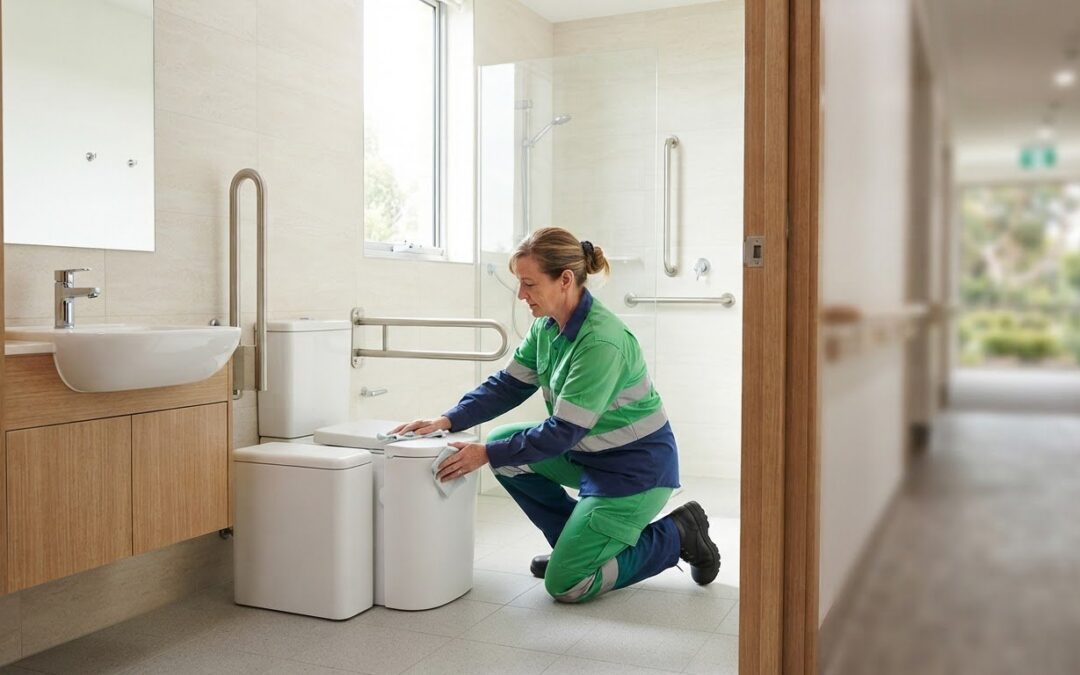
What if sanitary bin servicing could support bathroom hygiene without interrupting residents’ routines or compromising their privacy? For aged care facilities, the right arrangement needs to suit different bathroom locations, service schedules and day-to-day care needs. A dependable approach to aged care sanitary bin services can help maintain clean facilities while treating residents with dignity.
Servicing works best when it fits the facility’s routines and forms part of a clear waste plan. Staff need to know which bathrooms have sanitary bins, how to report a unit that needs attention, and how sanitary hygiene waste is kept separate from other waste streams.
This guide explains how to plan services around bathroom use and facility routines, protect resident privacy during servicing, and coordinate sanitary bins with broader aged care waste management. BioSafe provides tailored sanitary bin services for aged care facilities across Victoria.
Key Takeaways
- Plan aged care sanitary bin services around bathroom use, access and facility routines.
- Consider discreet servicing to help protect resident privacy and minimise disruption.
- Assess resident, staff and visitor bathrooms individually rather than assuming they have the same needs.
- Use a site review to coordinate sanitary services with broader aged care waste planning.
- BioSafe provides tailored sanitary bin services for aged care facilities across Victoria.
Why aged care sanitary bin services matter for Victorian facilities
Aged care bathrooms serve people with different needs and routines. A sanitary bin service provides designated disposal units in relevant bathrooms and arranges for them to be serviced. Planning the locations and servicing around how each bathroom is used helps staff manage sanitary hygiene waste separately from general waste.
Sanitary hygiene waste is not automatically the same as clinical waste or sharps. These waste streams have different handling considerations, so facility procedures should explain how to keep them separate. For general background on what is clinical waste, it’s useful to consider how medical waste is defined, without assuming all bathroom waste belongs in that category.
What does an aged care sanitary bin service cover?
Sanitary bins provide a designated place to dispose of relevant hygiene items in bathrooms. Servicing maintains the units and manages their contents as part of the facility’s hygiene plan. The locations and arrangements should reflect the site’s layout and use, rather than assume every bathroom serves the same purpose.
For example, a resident bathroom may support personal care and daily routines, while a staff amenity or visitor bathroom serves a different group. When reviewing each space, consider who uses it, whether the disposal point is accessible and how servicing can fit around bathroom use.
How do hygiene and dignity work together?
A clean, accessible bathroom supports comfort and gives residents a practical way to manage personal hygiene with privacy. Needs and preferences vary, so a useful facility plan considers individual circumstances rather than treating residents as a uniform group.
Servicing arrangements affect how a bathroom feels to use. Planning visits around facility routines, keeping work discreet and limiting avoidable disruption can help protect privacy. Consider how service activity interacts with care schedules and busy periods, while maintaining access to facilities where possible.
Staff and visitors have bathroom needs, too. Including their amenities in the site review helps avoid overlooking areas outside resident rooms and gives facility teams a consistent way to plan hygiene waste management.
Aged care sanitary bin services are most useful when they form part of a practical hygiene plan. Consider bathroom use, resident dignity and separation of waste streams together, then coordinate sanitary hygiene needs with the facility’s broader waste arrangements.
How aged care sanitary bin services support hygiene and resident dignity
Maintained sanitary bins give people a suitable place to dispose of hygiene waste and help prevent used items from being left in bathroom areas. Routine servicing keeps disposal points usable and supports a hygienic environment. Consistent servicing removes accumulated sanitary waste and helps maintain clean, accessible bathrooms.
In aged care, hygiene processes need to work alongside daily care, not interrupt it. A discreet service routine can reduce unnecessary disruption and help residents feel more comfortable using shared facilities. Staff can support this by coordinating bathroom access and communicating practical site needs to the service team.
What should staff consider in resident and shared bathrooms?
Review each bathroom for privacy, accessibility and traffic flow. A bin should be within reach without obstructing mobility aids, doorways or essential fixtures. Consider who uses the space and whether servicing could affect access during busy periods or care routines.
Set a clear reporting process so staff know how to raise an issue if a unit appears full, damaged or needs attention. A consistent facility channel helps the right person act without residents having to manage service issues themselves. Keep reports discreet and focused on the operational need.
How can servicing fit around aged care routines?
Service planning works best when it reflects the facility’s operating patterns. Facility contacts can identify when particular bathrooms are busy, explain access arrangements and share changes to site routines that could affect servicing. This gives the service team practical context without assuming every location follows the same schedule.
A designated facility contact can coordinate servicing details, pass on staff reports and communicate changes that may affect bathroom access. Agreed communication channels make it easier to resolve issues and maintain continuity, without relying on assumptions about a fixed visit time or frequency.
Sanitary hygiene waste should remain distinct from clinical waste and sharps in facility procedures. The Victorian Department of Health provides guidance on infection control and waste handling in its Victorian infection control and waste procedures. Use relevant guidance alongside established facility processes, and classify and manage each waste stream appropriately.
Well-coordinated aged care sanitary bin services support clean facilities while respecting resident privacy and daily operations. BioSafe provides tailored sanitary bin services for aged care facilities across Victoria. Learn about BioSafe’s aged care sanitary bin services.
Planning sanitary bin services for different Victorian aged care facilities
Start with the facility’s layout and how each bathroom is used. Resident bathrooms, staff amenities and visitor facilities may differ in traffic, access requirements and cleaning routines. Aged care sanitary bin services should reflect those differences rather than apply the same arrangement everywhere.
Which bathroom locations may need sanitary bin services?
Walk through the site and consider each bathroom’s purpose, users, typical traffic and access. Check whether a unit can be reached without affecting mobility or privacy. Facility size matters, but so do the number and location of bathrooms and occupancy patterns throughout the day. These details help shape an arrangement around actual use.
| Bathroom location | Planning considerations |
|---|---|
| Resident bathrooms | Consider resident access, privacy, mobility needs and how servicing fits around care routines. |
| Staff amenities | Review staff numbers, shift patterns, bathroom traffic and existing cleaning processes. |
| Visitor facilities | Consider visitor access, periods of higher use and how the bathroom is maintained. |
Use this as a planning guide, not a fixed specification. Some bathrooms may have different disposal needs, and locations can be reviewed when occupancy or use changes. See the aged care waste management guide for broader facility planning considerations.
How should sanitary waste fit with other facility waste streams?
Clear segregation helps staff direct waste to the appropriate process. Sanitary hygiene waste, clinical waste, sharps and general waste are distinct categories. They should not be treated as interchangeable simply because they arise within the same facility. Staff procedures should explain how to identify each stream and where to direct questions or unusual items.
Facility teams can align bathroom planning with infection prevention and control processes. The Aged Care Quality and Safety Commission’s infection prevention and control resources for aged care provide broader context, without prescribing one sanitary bin arrangement for every site.
Clinical waste requires separate consideration from sanitary hygiene waste. For guidance on that stream, see the medical waste collection guide. Clear responsibilities and procedures help staff manage each category consistently as part of a tailored facility hygiene plan.
How to organise aged care sanitary bin services in Victoria
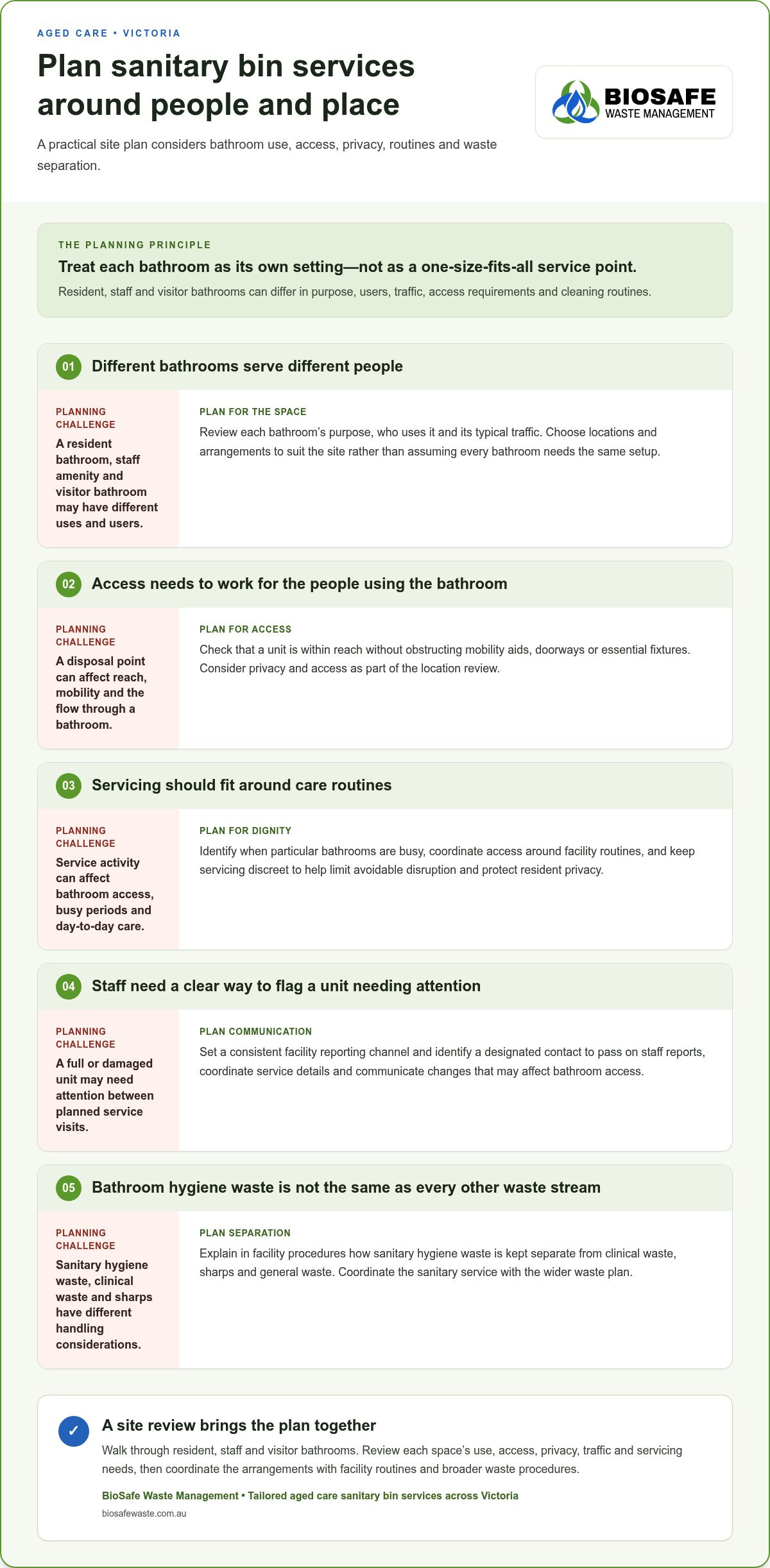
A clear planning process helps facility teams organise aged care sanitary bin services around bathroom use, privacy and operational needs. It also makes responsibilities easier to follow if a unit needs attention or facility routines change.
- Map relevant bathrooms. Record resident, staff and visitor amenities, noting their general use, access arrangements and location. Do not include resident-identifying information.
- Assess site needs. Consider facility size, bathroom traffic, occupancy patterns, mobility access and cleaning routines. Note where service activity could affect access or privacy.
- Assign facility contacts. Identify who coordinates the arrangement and receives operational updates. Make sure staff know which established channel to use to report a full or damaged unit.
- Review waste procedures. Keep sanitary hygiene waste distinct from clinical waste, sharps and general waste. Check that staff guidance explains segregation and reporting steps.
- Coordinate and review. Share relevant site information with the service team and agree on communication processes. Review the arrangement if bathroom use, layout or facility routines change.
What information helps plan a facility service arrangement?
A simple site record can list bathroom locations, general user groups, access considerations, cleaning routines and the facility contact responsible for coordination. Include practical notes about privacy and busy periods, but leave out names or personal care details. This provides useful operational context while respecting residents’ privacy.
Clear internal reporting procedures help staff pass on issues consistently. For example, a team member who notices a damaged unit should know how to notify the designated contact, rather than relying on informal messages that may not reach the person coordinating the service.
Which standards and guidance should facility teams check?
Review the current Aged Care Quality Standards and relevant Aged Care Quality and Safety Commission resources, including its infection prevention and control resources. Check how guidance applies to the facility’s circumstances, and consult current Victorian authority information for requirements relevant to each waste stream.
Legal and accreditation requirements depend on their scope and applicability. Documenting locations, contacts and issue-reporting steps is good-practice planning. A practical planning checklist does not replace checking current authoritative guidance.
A facility’s bathroom locations and routines provide a practical starting point for organising an arrangement. Learn about aged care sanitary bin services.
BioSafe aged care sanitary bin services across Victoria
BioSafe Waste Management provides sanitary bin services for aged care facilities across Victoria, with hygiene waste arrangements tailored to facility needs. A residential care facility’s layout, bathroom locations and daily routines can vary, so a considered plan should reflect how each site operates.
What can aged care facilities expect from a tailored service approach?
Planning starts with the facility context. Bathroom locations and use, access requirements and operational routines can inform how sanitary bin services fit into the broader hygiene plan. Clear communication between the facility’s nominated contact and service team supports practical coordination and gives staff an understood way to raise operational issues.
The arrangement can be shaped around the facility rather than relying on a fixed service frequency, bin specification or identical inclusions for every site. It also keeps sanitary hygiene waste distinct from other streams. If a facility also manages clinical or medical waste, those needs can be considered within wider aged care waste planning without treating the streams as interchangeable.
A well-organised plan should work for people using the facility as well as the teams responsible for its operations. Include bathroom access and resident routines in coordination discussions so service activity is considered alongside daily care and facility requirements. Base the details on the facility’s circumstances, not a one-size-fits-all assumption.
What is the next step for Victorian facilities?
Prepare a brief outline of the facility’s locations and operational needs. Include the general locations of relevant bathrooms, their user groups, access considerations and the facility contact who will coordinate the arrangement. Avoid sharing resident-identifying or personal care information when describing site requirements.
BioSafe works with aged care facilities in Victoria on sanitary bin services and tailored hygiene waste management. Facilities can plan these needs alongside broader aged care waste management, including separate clinical and medical waste requirements where relevant. Focusing on layout, routines and waste streams gives coordination a clear starting point.
For a considered approach to your facility’s hygiene waste needs, Discuss aged care sanitary bin services with BioSafe.
Build a considered hygiene plan for your facility
Effective aged care sanitary bin services balance bathroom hygiene with resident dignity and the practical demands of facility operations. A considered arrangement accounts for bathroom locations, how different spaces are used and how servicing can fit around daily routines. Clear facility contacts and reporting procedures also help staff manage issues consistently.
BioSafe provides sanitary bin services for aged care facilities across Victoria, with arrangements tailored to aged care and healthcare environments. These services can sit within broader facility waste planning while keeping sanitary hygiene waste distinct from clinical waste and sharps.
Start with a simple outline of your facility’s bathroom locations, access considerations and operational needs. Discuss aged care sanitary bin services with BioSafe to plan a practical hygiene arrangement for your facility.
Frequently Asked Questions
What are aged care sanitary bin services?
Aged care sanitary bin services provide designated disposal units in relevant bathrooms and arrange for those units to be serviced. They help facilities manage sanitary hygiene waste as part of bathroom operations, separately from general waste collection. The arrangement can account for different bathroom locations, users and routines. It should also keep sanitary waste procedures distinct from processes for clinical waste and sharps.
How often should sanitary bins be serviced in an aged care facility?
There isn’t one suitable servicing frequency for every aged care facility. The arrangement should reflect bathroom use, occupancy patterns, the number and location of units, and facility routines. Staff can monitor whether units remain suitable for use and report issues through an established channel. These practical factors help shape a service arrangement around the facility’s needs.
Are sanitary bins required in every aged care bathroom?
Not every bathroom necessarily needs the same arrangement. Assess each space according to its purpose, users, accessibility, traffic and operational routines. Resident bathrooms, staff amenities and visitor facilities may have different needs. Check current guidance and requirements that apply to your facility rather than assuming one rule covers every bathroom. A location-by-location review can help identify appropriate provision.
How can sanitary bin services protect resident dignity?
Thoughtful placement and discreet coordination can make disposal more accessible while reducing avoidable disruption to residents’ routines. Facility teams can consider privacy, mobility and bathroom access when planning locations and servicing. Staff should also have a clear, discreet process for reporting a full or damaged unit, so residents aren’t left to manage service issues. Individual needs and preferences differ, so planning should avoid treating residents as a uniform group.
What is the difference between sanitary waste and clinical waste?
Sanitary hygiene waste, clinical waste and sharps are separate waste categories and shouldn’t be treated as interchangeable. Their classification and handling depend on the waste and applicable facility procedures. Staff need clear guidance on segregation and where to direct each stream. If an item’s classification is unclear, follow the facility’s established waste procedures and current authoritative guidance. Keeping streams distinct supports consistent handling and broader waste planning.
How do we organise sanitary bin services for an aged care facility in Victoria?
Start by mapping relevant bathrooms and recording their general use, access considerations and cleaning routines. Identify a facility contact to coordinate the arrangement and establish how staff should report issues. Share operational information without resident-identifying details, then plan how servicing can fit the facility’s routines. Review current Aged Care Quality and Safety Commission resources and applicable Victorian guidance when checking requirements for your circumstances.
Can sanitary bin services be coordinated with aged care waste management?
Yes. Sanitary bin servicing can be planned alongside wider aged care waste management, with each waste stream kept distinct. Facility procedures should explain how sanitary hygiene waste, clinical waste, sharps and general waste are managed and who staff should approach with questions. Coordination aligns bathroom arrangements with broader site planning without conflating categories. BioSafe provides tailored hygiene waste management for aged care facilities across Victoria.