
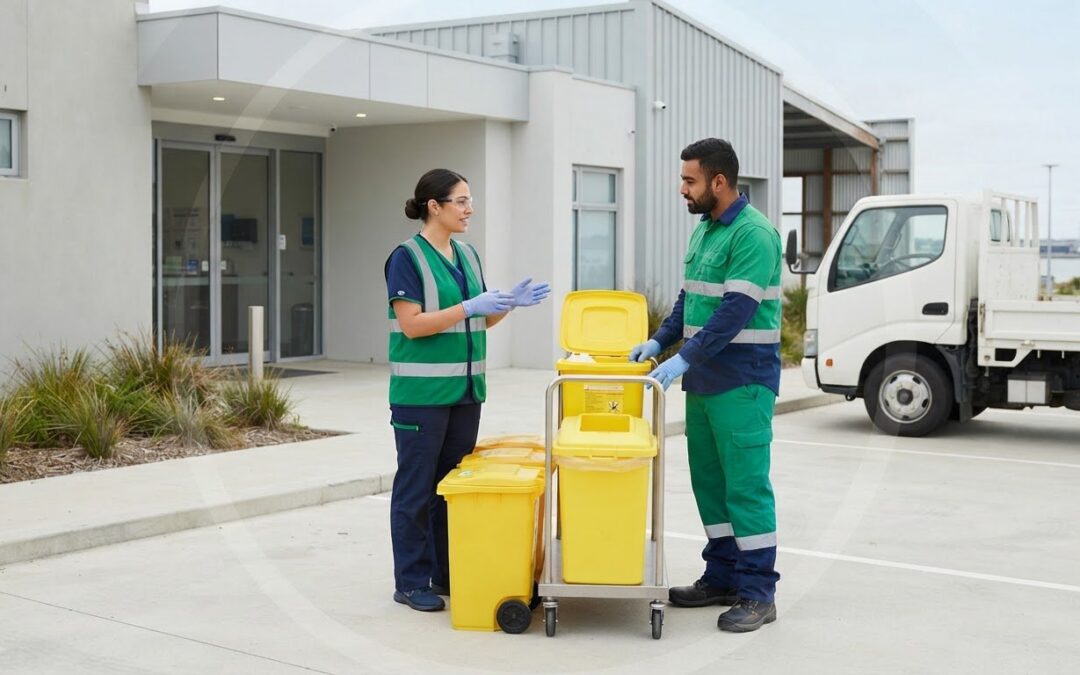
The nearest contractor may not be the right fit for your clinic. A search for veterinary clinic waste disposal geelong should do more than confirm that a provider serves the area: the service also needs to suit your waste streams, handling procedures and collection needs. You’ll want clear answers about sharps and other clinical waste, collection arrangements and available records.
This guide provides a practical checklist for comparing providers before you engage one. You’ll learn what to ask about accepted waste streams, containers, handling conditions, collection arrangements, service records and local coverage. BioSafe Waste Management provides clinical and medical waste collection across Victoria and serves veterinary clinics. Confirm directly whether it currently services your Geelong address and accepts the specific waste streams your clinic generates. The sections ahead will help you assess those details and choose a service that fits your requirements.
Key Takeaways
- Start with a simple waste audit so you can describe what your practice generates before comparing providers.
- Use a consistent checklist to assess veterinary clinic waste disposal geelong, including local coverage, accepted streams and collection arrangements.
- Check current EPA Victoria guidance and applicable Victorian requirements for the waste types your clinic produces.
- Plan collection needs around observed waste volumes and clinic routines, then review the arrangement after the first collection.
- Ask providers to clarify handling conditions, service records and communication processes before you decide.
Veterinary clinic waste disposal in Geelong: identify what your practice needs collected
Before comparing providers, make a clear list of three things: the waste streams your clinic generates, the Geelong service location and your collection requirements. Your procedures determine what needs to be discussed with a contractor. Sharps, such as needles and scalpel blades, and materials that may be clinical waste require careful separation from general waste. Check each item’s classification against current EPA Victoria guidance and applicable requirements instead of relying on assumptions.
The term biomedical and veterinary waste can help introduce the range of materials produced in animal care, but it doesn’t replace Victorian guidance or a provider’s handling instructions. Not every material associated with an animal automatically belongs in a clinical waste stream. Check how the material was generated and what guidance applies.
Which veterinary clinic waste streams should you discuss with a provider?
Prepare an itemised list based on your actual procedures. It may include sharps and clinical waste, such as materials contaminated during treatment or surgery. Ask the provider to confirm whether it accepts each stream, how it must be segregated and packaged, and whether any handling conditions apply.
Raise pharmaceuticals, chemicals and anatomical materials as separate questions. Don’t assume they can go in the same container or be collected under the same arrangement as other clinical waste. Record the instructions for each stream so staff can follow a consistent process.
How does your Geelong clinic’s work affect service needs?
A practice focused on routine consultations may produce a different mix and volume of waste from one that performs surgery or provides other procedures. Species treated and services offered can also change the clinic’s waste profile. Use available clinic records to estimate what is generated and how quickly containers fill. This gives providers a practical basis for discussing collection arrangements without relying on a default frequency.
Map the collection point at the Geelong site and note access conditions, such as where a vehicle can reach and any entry instructions. Share the clinic’s operating hours so the provider can explain what arrangements are workable. Confirm directly that the provider currently services your address, including nearby areas if relevant. BioSafe Waste Management provides clinical and medical waste collection across Victoria and serves veterinary clinics, but confirm Geelong availability and acceptance of your specific waste streams before proceeding.
Victorian veterinary waste requirements: verify safe handling and provider responsibilities
Waste handling requirements depend on the material and how it is generated. Check current Victorian guidance for each stream rather than applying one rule to every item. EPA Victoria is the primary regulator for clinical and related waste in the state. Its guidance, alongside applicable legislation, can help clarify how particular waste should be segregated, stored and managed.
Responsibilities apply at different stages, but the clinic still needs clear controls where waste is generated. Staff should identify and segregate waste correctly, follow container instructions and prepare it for collection. The provider should explain what it accepts, the conditions for collection and how the waste is managed after handover. Confirm these responsibilities in writing. A collection arrangement alone isn’t confirmation that every waste stream is being handled appropriately.
What should a Geelong practice verify against current Victorian guidance?
Check official EPA Victoria information for the specific waste stream and your practice’s circumstances. The Environment Protection Act 2017 and Environment Protection Regulations 2021 are relevant Victorian instruments, but confirm their current status and scope through official sources before relying on a particular provision. If transport requirements may apply, check EPA Victoria’s current information and transporter records. Don’t assume a permit, standard or handling method applies without verifying it with an authoritative source.
Keep the review practical: record the waste type, the guidance consulted and any questions that still need an answer. If your clinic’s procedures change, revisit the classification and handling instructions instead of relying on an old assessment.
What records and handling details should you clarify?
Ask what service records or collection confirmations the provider supplies, how you can access them and what details they contain. Clarify which containers suit each accepted stream, how they must be closed, where they should be stored and what staff need to do at handover. Follow current guidance and provider instructions for the specific waste rather than applying one process across all containers.
Assign a staff member to maintain procedures and brief the team. Set out who checks segregation, monitors containers and contacts the provider if a collection is missed. Keep relevant instructions, records and provider communications together so the practice can check what was agreed and respond consistently if questions arise.
For clinics comparing clinical and medical waste collection, BioSafe Waste Management serves veterinary clinics across Victoria. Confirm directly whether current Geelong coverage, your waste streams, collection arrangements and available records suit your practice.
Compare veterinary waste disposal services in Geelong using a provider checklist
A useful comparison starts with your clinic’s waste audit, not a provider’s broad claims or the lowest quoted price. Ask each service the same questions about your exact site and waste streams, then record the answers in a consistent format. This makes it easier to identify a genuine service fit and follow up on gaps before agreeing to an arrangement.
Which questions reveal whether a provider suits your clinic?
Confirm coverage at your Geelong street address rather than relying on a general statement about servicing Victoria or the region. Request written clarification of the streams the provider accepts, any exclusions and the container or handling conditions for each. Also ask how to raise changes in clinic activity, site access issues or service concerns, including a missed collection.
| What to compare | What to confirm and record |
|---|---|
| Geelong coverage | Does the provider currently service the clinic’s exact address? |
| Accepted waste streams | Which listed streams are accepted, and what exclusions or handling conditions apply? |
| Collection arrangements | What arrangement is available, and how can it be reviewed if volumes or clinic activity change? |
| Containers and handover | Which containers are suitable, and what preparation and access instructions must staff follow? |
| Records and communication | What collection records or confirmations are supplied, who is the service contact, and how are missed collections escalated? |
How can you compare service arrangements fairly?
Give each provider the same list of waste streams and the same description of clinic procedures, estimated volumes, access and operating hours. Compare the clarity of the answers, not just whether a service sounds comprehensive. A clear statement of responsibilities and records is more useful than a broad assurance of compliance, which doesn’t explain how your specific waste will be handled.
Note unanswered questions and ask for clarification in writing before deciding. Check how you can discuss increased or reduced container volumes, changes to services offered or access disruptions. Establish who your staff should contact and what information they’ll need to report a concern or missed collection. These details help you assess whether the arrangement can be managed as the clinic’s needs change.
Once you’ve defined your requirements, the Victorian clinical waste collection guide offers broader service context to support your comparison.
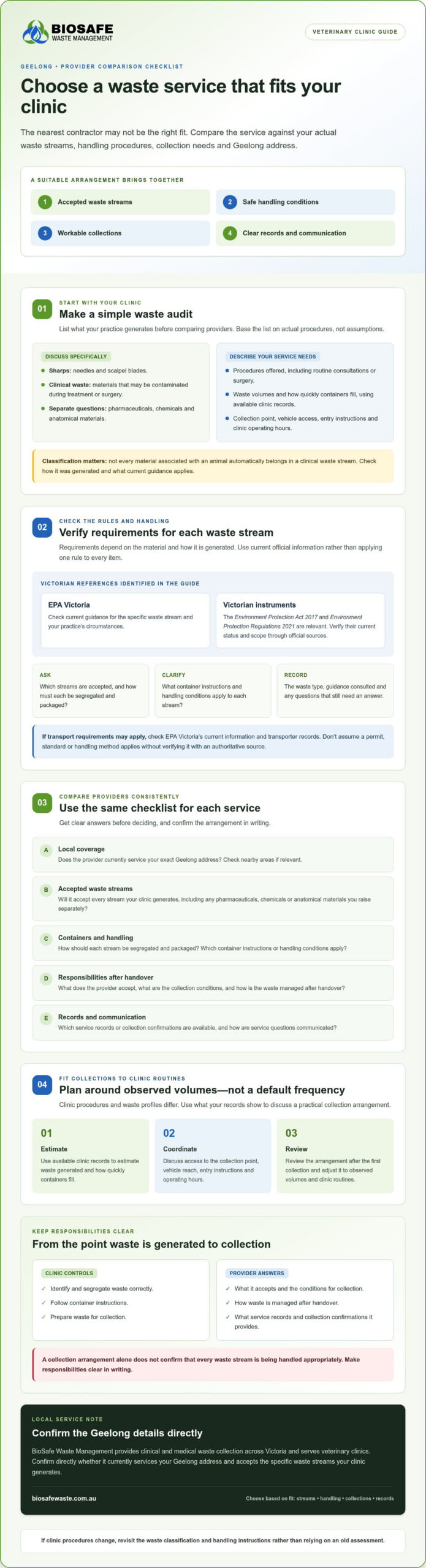
Plan veterinary waste collections for a Geelong clinic without disrupting daily work
A well-planned collection arrangement fits the clinic’s actual waste output and site routines. For veterinary clinic waste disposal geelong, build the service plan around observed volumes, clear staff responsibilities and access details, then review it once collections begin. Avoid choosing a fixed frequency based on assumptions about clinics generally.
What should a clinic prepare before service begins?
Use this onboarding sequence to make responsibilities clear before the first collection:
- Audit current waste streams. List what the clinic generates and note how much accumulates over time, using existing records where available.
- Confirm the service fit. Provide the exact collection address and ask the provider to confirm current coverage, accepted streams and any conditions.
- Plan containers and storage. Confirm which containers are approved for each accepted stream, how they should be closed and where they can be stored safely at your site.
- Map access and handover. Record entry instructions, collection-point location, access restrictions and clinic operating hours. Nominate a staff contact who can coordinate handover and respond to provider queries.
- Brief relevant staff. Explain segregation, storage and handover procedures, and show staff where to find the current instructions.
These details help prevent avoidable confusion on collection day. Keep the agreed arrangements and provider instructions accessible to staff who handle waste or oversee the site.
How should a practice review an ongoing collection arrangement?
Use routine clinic records to track how quickly containers fill and whether collections occur as arranged. Compare observed fill patterns with the service plan rather than relying on estimates made before the arrangement began. Record missed collections, access problems or containers that don’t suit the clinic, then raise them through the agreed provider contact.
Review the plan whenever the clinic changes its procedures, operating hours, site access or waste volumes. For example, adding a service that produces a different waste stream may require a fresh discussion about acceptance and handling. Note the change, advice received and any adjustments agreed so staff follow the same process.
BioSafe Waste Management provides clinical and medical waste collection across Victoria and serves veterinary clinics. Ask BioSafe about veterinary waste collection and confirm whether current Geelong coverage, accepted streams and collection arrangements suit your site.
Choose a veterinary waste disposal provider for your Geelong practice
A suitable provider should meet three basic tests: confirm service availability at your exact Geelong address, identify which of your clinic’s waste streams it accepts, and explain responsibilities for collection and handover. Compare answers against your requirements checklist, not broad claims or assumptions about what a service includes. Clear information on records, communication and changes to the arrangement also helps your team manage the service consistently.
When may BioSafe be relevant to a Geelong veterinary clinic?
BioSafe Waste Management provides clinical and medical waste collection across Victoria and serves veterinary clinics. Its services also include sharps disposal. This makes BioSafe a potential provider to consider, but it doesn’t confirm that every veterinary waste stream is accepted or that a Geelong collection is available. Ask BioSafe directly about current coverage for your clinic and the handling conditions for each material you need collected.
What details should you have ready when requesting service information?
A clear enquiry helps the provider assess your clinic’s needs. Prepare the exact site address, a list of waste streams, approximate volumes based on clinic records, and details about collection-point access and operating hours. Then ask for specific answers about:
- Which materials are accepted, excluded or subject to particular handling conditions.
- What collection arrangements are available and how they can be reviewed if your clinic’s needs change.
- What containers and handover procedures staff should follow.
- What service records or collection confirmations are provided.
- Which contact to use for service questions, access issues or a missed collection.
Keep the provider’s answers with your clinic’s waste procedures so staff have a consistent reference. If an answer is unclear, seek written clarification before agreeing to the arrangement. BioSafe’s Victorian service coverage doesn’t confirm a Geelong route, so verify availability and service fit directly.
For veterinary clinic waste disposal geelong, BioSafe can be one provider to assess against your checklist. Discuss veterinary waste services with BioSafe and confirm whether it can support your location, accepted streams and collection requirements.
Choose a service arrangement your clinic can manage confidently
A dependable choice starts with a clear inventory of your clinic’s waste streams and a realistic view of how quickly containers fill. Use that information to compare providers on confirmed Geelong coverage, accepted materials, collection arrangements, handling instructions and service records. Check current Victorian guidance for your specific waste types, and make sure staff know their roles in segregation and handover.
For veterinary clinic waste disposal geelong, verify the details that affect your site before agreeing to a service. BioSafe provides clinical and medical waste collection and sharps disposal, and veterinary clinics are among its healthcare customers. The business describes its coverage as Victoria-wide, but you’ll need to confirm current Geelong availability, acceptance of your specific waste streams, collection arrangements and available records directly.
Have your clinic address, waste list, approximate volumes and access requirements ready for the conversation. Discuss your veterinary clinic waste requirements with BioSafe to clarify whether its service may suit your practice. With the right questions and clear responsibilities, you can make an informed choice and support a more orderly waste process for your team.
Frequently Asked Questions
Is veterinary clinic waste automatically classified as clinical waste?
No. Whether an item is clinical waste depends on what it is and how it was generated, so animal-related material shouldn’t automatically be placed in a clinical waste stream. Sharps and materials contaminated during treatment may need specific handling, while other items may have different requirements. Check current EPA Victoria guidance for the waste type and your clinic’s circumstances, then confirm segregation and acceptance instructions with your provider.
Can BioSafe collect veterinary clinic waste in Geelong?
BioSafe serves veterinary clinics and provides clinical and medical waste collection and sharps disposal across Victoria, but this doesn’t confirm current service availability at a Geelong address. For veterinary clinic waste disposal geelong, contact BioSafe to check coverage at your exact location and whether it accepts each stream your practice generates. Ask about handling conditions, collection arrangements and available service records before deciding whether the service fits.
How often should a veterinary clinic arrange waste collection?
There isn’t one suitable collection frequency for every veterinary clinic. Base the arrangement on your observed waste volumes, how quickly containers fill, available storage and the provider’s collection options. Clinic records can help you estimate needs before service starts. Once collections begin, track fill patterns and any issues, then review the arrangement if volumes, procedures or operating conditions change. Confirm the agreed schedule and how to raise a collection concern.
What waste streams should a veterinary clinic discuss with a disposal provider?
Discuss sharps and clinical waste generated by your clinic’s actual procedures, including materials that may be contaminated through treatment or surgery. Raise pharmaceuticals, chemicals and anatomical materials separately rather than assuming they can be handled with other streams. Ask the provider to confirm acceptance, segregation, container and handling requirements for each item. Check current Victorian guidance for classifications, as not every animal-related material automatically belongs in clinical waste.
What should a Geelong clinic ask before choosing a waste provider?
Ask the provider to confirm service availability at your exact Geelong address and provide written details of accepted streams, exclusions and handling conditions. Clarify collection arrangements, access requirements, suitable containers and how changes in volumes can be reviewed. Also ask what service records are supplied, who your nominated contact is and how missed collections or other concerns are escalated. Compare providers using the same clinic details and waste list.
What records should a veterinary practice keep for waste collection?
Keep the clinic’s current segregation and handling procedures, staff instructions, provider communications and available collection confirmations together. Record relevant collection details, such as the date and any issue that needs follow-up, using the records supplied by your provider. This helps staff check what was agreed and identify service changes. Confirm any specific record-keeping expectations against current Victorian guidance and requirements that apply to your clinic and waste streams.
Can a general waste service handle sharps from a veterinary clinic?
Don’t assume a general waste service accepts sharps. Sharps need an appropriate, puncture-resistant container and a disposal arrangement that specifically accepts them. Ask the provider to confirm the correct container, closure and handover instructions, and check current EPA Victoria guidance for your circumstances. Keep sharps separate from general waste, and make sure staff know where the designated container is and what to do when it needs collection.