
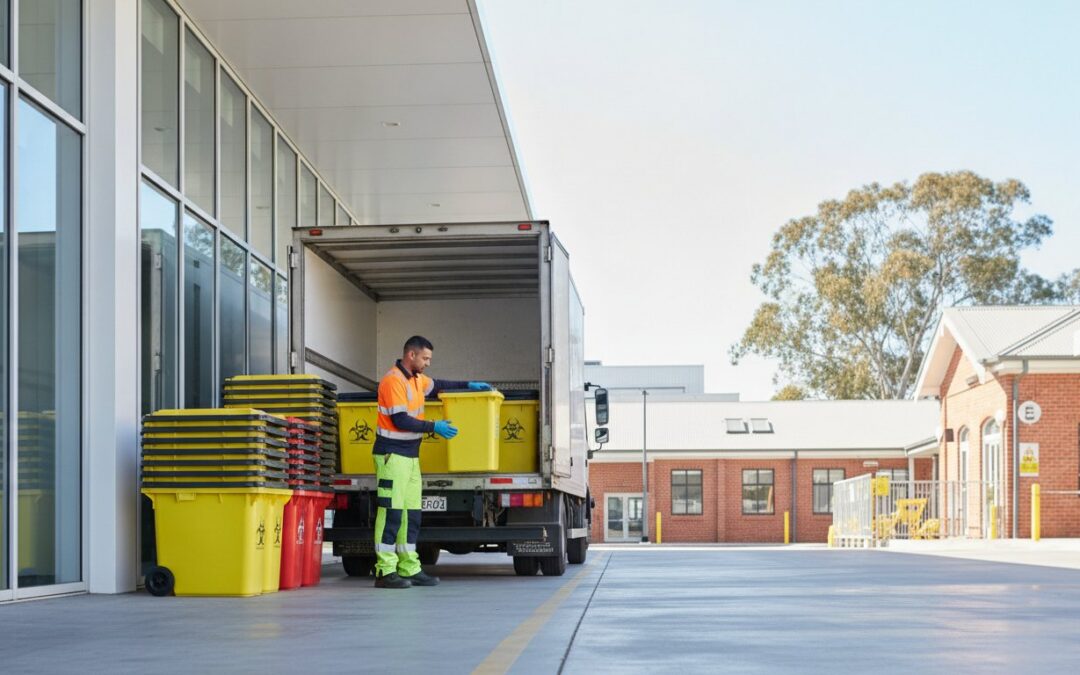
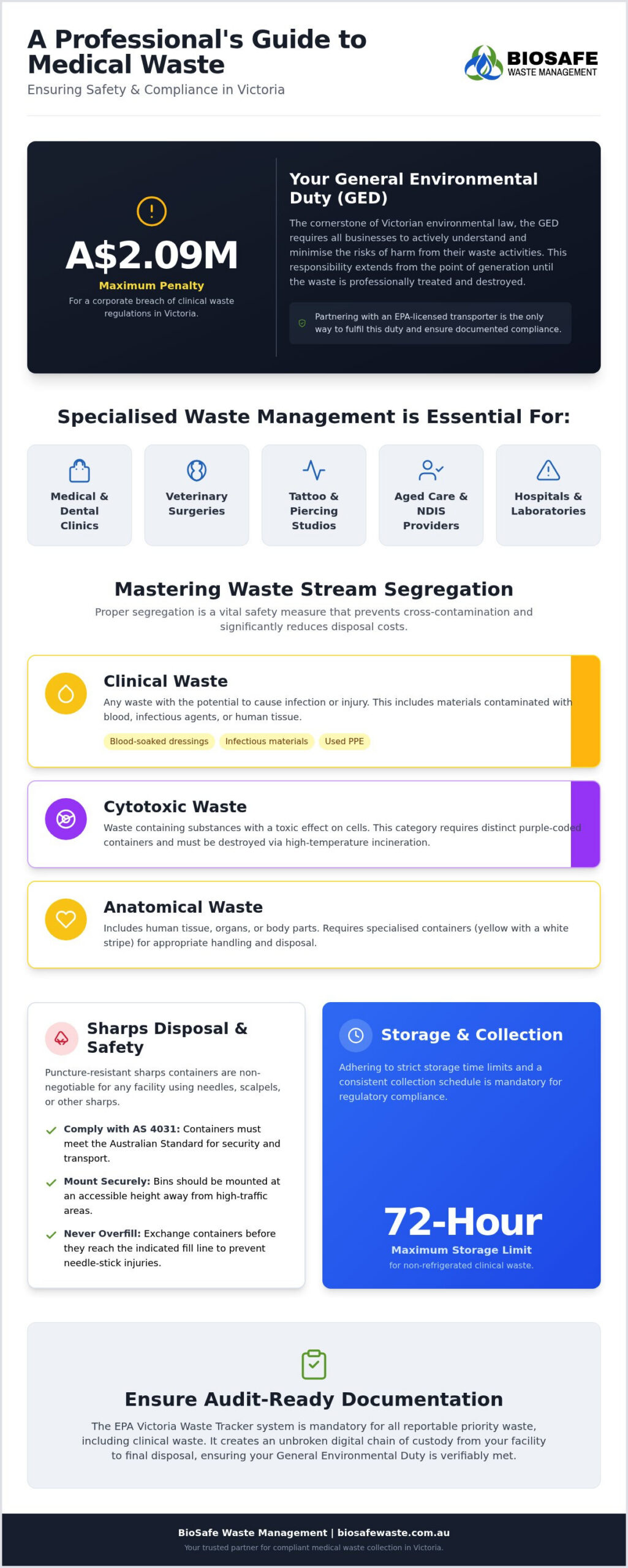
For the 2026-2027 financial year, a corporate breach of clinical waste regulations in Victoria carries a maximum penalty of approximately A$2.09 million. Managing a busy healthcare facility is demanding enough without the constant worry of shifting EPA requirements or the anxiety caused by overflowing bins. Securing a professional partner for medical waste collection Victoria is no longer just a logistical choice; it’s a fundamental requirement of your General Environmental Duty to protect the community and your practice.
You likely understand the heavy responsibility of ensuring every sharps container and clinical waste bag is handled with absolute precision. This guide provides a clear, professional roadmap for Victorian healthcare providers to navigate the complexities of the Environment Protection Act 2017 and the 2021 regulations. We will examine how to categorise waste streams accurately, maintain strict storage protocols, and implement a consistent disposal schedule that eliminates regulatory risk while ensuring your facility remains a safe environment for both staff and patients.
Key Takeaways
- Understand the legal requirements of the Environment Protection Act 2017 to ensure your facility meets its General Environmental Duty and avoids substantial penalties.
- Master precise waste segregation techniques to prevent cross-contamination and optimise the disposal expenses for your Victorian practice.
- Establish a consistent medical waste collection Victoria schedule that adheres to the mandatory 72-hour storage limit for non-refrigerated clinical waste.
- Learn how to utilise the EPA Waste Tracker system to maintain accurate documentation and ensure your facility is always audit-ready.
- Identify the operational advantages of partnering with a local specialist who understands the specific compliance needs of the Victorian healthcare and sanitation sectors.
Understanding Clinical Waste Requirements in Victoria
Under the Environment Protection Act 2017, which came into full effect on 1 July 2021, clinical waste is defined by its potential risk to human health and the environment. It is not merely general refuse; it is a category of “Reportable Priority Waste” that demands strict oversight and specific handling protocols. Improper handling can lead to the spread of infectious diseases, needle-stick injuries, or environmental contamination. Professional medical waste collection Victoria services are essential because they provide the specialised equipment and licensed transport required to mitigate these high-stakes risks. Using a general waste stream for these materials is a direct violation of Victorian law.
Victorian businesses that must engage professional management services include:
- Dental practices and medical clinics
- Veterinary surgeries
- Tattoo and body piercing studios
- Aged care facilities and NDIS providers
- Hospitals and pathology laboratories
What Qualifies as Clinical and Related Waste?
Distinguishing between waste streams is critical for safety and compliance. Clinical waste typically includes blood-stained materials, human tissue, or items used in the treatment of patients. Pharmaceutical waste consists of expired or discarded medicines, while cytotoxic substances represent a higher level of hazard and require distinct purple-coded containers. For a broader perspective on these categories, a Biomedical waste overview can help clarify the management principles that inform our local regulations. Clinical waste is any waste with the potential to cause infection or injury in a healthcare setting.
Who is Responsible for Medical Waste Management?
The “General Environmental Duty” (GED) is the cornerstone of Victorian environmental law. This duty requires all businesses to understand and minimise the risks of harm from their activities. It means that the responsibility for waste doesn’t end when the bin is filled. It remains with the generator until the waste is professionally treated and destroyed. Choosing an EPA-licensed transporter is the only way to ensure this chain of custody is documented through the mandatory Waste Tracker system. This level of meticulousness protects your facility from the legal ramifications of non-compliance, which can include penalties exceeding A$2 million for corporations. Reliable medical waste collection Victoria ensures that your duty of care is fulfilled through consistent, documented protocols.
Categorising Your Waste Streams for Safe Collection
Effective waste management begins at the point of generation. Proper segregation is not just a regulatory hurdle; it’s a vital safety measure that prevents cross-contamination between hazardous materials and municipal waste. When you categorise materials correctly, you significantly reduce disposal costs for your Victorian practice. General waste is considerably cheaper to process than clinical streams, so ensuring that only reportable priority waste enters the specialised bins protects your bottom line. Following the Australian colour-coding system is the most reliable way to maintain order:
- Yellow: Clinical waste, including blood-soaked dressings and infectious materials.
- Purple: Cytotoxic waste, which requires high-temperature incineration.
- Yellow with White Stripe: Specific containers for anatomical waste.
Sharps Disposal and Needle Safety
Puncture-resistant sharps containers are non-negotiable for any facility using needles or scalpels. These containers must comply with Australian Standard AS 4031 to ensure they remain secure during use and transport. In Victorian clinics, sharps bins should be mounted at an accessible height, away from high-traffic thoroughfares, to prevent accidental knocks. It’s essential to exchange these containers before they reach the indicated fill line, as overfilled bins are a primary cause of needle-stick injuries among healthcare staff. Melbourne facilities seeking to implement a robust containment and collection framework should review the requirements for sharps disposal services Melbourne inspectors approve to ensure full compliance with current EPA standards.
Specialised Waste: Dental, Vet, and Tattoo Studios
Different sectors face unique disposal challenges. Dental practices must manage amalgam waste through specialised separators to prevent mercury from entering the water system. Veterinary surgeries require meticulous containment for pathological waste and animal tissues to mitigate biological risks. Tattoo studios, which generate high volumes of blood-contaminated materials, must treat every used needle and ink cap as clinical waste. Establishing a reliable medical waste collection Victoria schedule allows these specialised businesses to maintain high hygiene standards without disrupting their daily operations. For dental surgeries navigating the specific requirements of amalgam separation and sharps handling, understanding the full scope of dental waste management Victoria regulations is essential to maintaining EPA compliance.
Sanitary and Hygiene Services for Medical Facilities
Sanitary bin services are a critical component of clinical hygiene that extends beyond the treatment room. Providing compliant feminine hygiene disposal in staff and patient washrooms is essential for infection control and facility maintenance. Modern units should ideally be touch-free to minimise contact points. A clean, well-managed washroom reflects the professional standards of the entire facility and supports a comprehensive infection control strategy by preventing the improper disposal of hygiene products in general waste streams.
Victorian EPA Compliance: Navigating the Legal Framework
The Environment Protection Regulations 2021 changed the compliance landscape for every healthcare provider in the state. This legislation moved Victoria toward a prevention-based model, where the focus is on mitigating harm before an incident occurs. For your facility, this means that ignorance of the law is not a valid defence. You are required to identify, assess, and control the risks associated with the waste you generate. Professional medical waste collection Victoria services play a critical role here, as they provide the technical expertise needed to ensure your facility meets the rigorous standards set by the Environment Protection Authority (EPA).
A central pillar of this framework is the Waste Tracker system. All clinical waste is classified as reportable priority waste, which means its movement must be recorded electronically from the moment it leaves your site until it reaches a licensed disposal facility. During a Victorian health facility audit, you must produce clear documentation proving this chain of custody. Failure to maintain these records or improper disposal can lead to severe financial consequences. For the 2026-2027 financial year, the value of a penalty unit is A$209.10; corporations found in breach of these regulations face maximum penalties of up to 10,000 units, or approximately A$2.09 million. Partnering with a disciplined specialist ensures these administrative and physical requirements are met without fail.
The Duty to Investigate Alternatives and Manage Risk
The General Environmental Duty (GED) includes a specific obligation to investigate alternatives to waste disposal. This involves looking for ways to reduce waste volume or choosing disposal methods that have a lower environmental impact. Your on-site risk assessment protocols should clearly outline how clinical waste is stored to prevent leaks, spills, or unauthorised access. Storing clinical waste for more than 72 hours without refrigeration is a specific risk that must be managed through a reliable collection schedule. These proactive steps demonstrate that your organisation is taking all reasonable and practicable measures to minimise harm. Reviewing the latest clinical waste handling protocols for 2026 can help ensure your risk assessment procedures align with current EPA Victoria standards.
EPA Approved Transport and Permission Requirements
It is a legal requirement that your waste collector holds the correct EPA permissions for the specific waste codes your facility produces. You should regularly verify that your provider’s vehicle is licensed for the transport of clinical and related waste. Every collection must be accompanied by an electronic waste transport record, which serves as your legal proof of compliance. A “closed-loop” disposal system, where waste is tracked meticulously from the point of generation to high-temperature incineration or sterilisation, provides the highest level of security. This structured approach to medical waste collection Victoria protects your staff, the public, and the professional reputation of your practice.
Organising Your Medical Waste Collection Schedule
A well-structured schedule is the foundation of a safe and compliant facility. Inconsistent pickups lead to bin overflows, which increase the risk of needle-stick injuries and environmental contamination. Establishing a reliable medical waste collection Victoria service ensures that your practice remains focused on patient care rather than waste logistics. Your collection frequency must align with both the volume of waste you generate and the specific storage requirements mandated by Victorian health standards.
Assessing Your Facility’s Waste Volume
To determine your optimal service frequency, conduct a seven-day waste audit. Record the volume and type of waste generated in each treatment room daily. This data allows you to calculate the necessary quantities and sizes for clinical waste bins and sharps containers. For most small to medium clinics, a weekly or fortnightly collection is sufficient; however, high-volume surgical centres may require multiple pickups per week. Balancing cost-efficiency with hygiene is essential, but you must adhere to the rule that clinical waste cannot be stored for more than 72 hours without refrigeration. This constraint often dictates the minimum frequency for non-refrigerated storage areas. Understanding how to build a compliant medical waste collection schedule that aligns with these mandated storage limits is essential for every Victorian healthcare provider.
Safe On-Site Storage and Handling
Victorian standards require that clinical waste be stored in a secure, weather-proof, and vermin-proof area. This zone should be clearly separated from general waste and food storage areas. Proper signage is mandatory; use the international biohazard symbol and clear text to identify clinical waste zones. Staff handling these materials must be equipped with appropriate Personal Protective Equipment (PPE), including puncture-resistant gloves and aprons. Internal protocols should also specify that bags are never overfilled and are tied securely before being moved to the external collection point. Training your team on these specific handling procedures is a core part of your General Environmental Duty.
NDIS and Aged Care: Discreet Waste Management
In NDIS and aged care environments, waste management requires a sensitive and professional approach. These settings often function as both clinical spaces and private homes, making discreet collection services a priority. Managing hygiene waste and medical materials in home-care settings involves strict adherence to safety standards while maintaining the dignity of the residents. Your provider should offer flexible solutions that cater to these unique requirements, ensuring that all biohazards are removed safely without causing disruption. For facilities across Melbourne and regional Victoria, establishing a medical waste collection Victoria schedule provides the stability needed to maintain a high standard of care in every environment.
Why BioSafe Waste Management is Victoria’s Trusted Partner
BioSafe Waste Management serves as a dedicated specialist within the Victorian healthcare landscape. We understand that facility managers require more than just a pickup; they need a partner who ensures every aspect of medical waste collection Victoria meets the stringent criteria of the Environment Protection Regulations 2021. Our local expertise allows us to provide a level of meticulousness that larger, non-specialised firms often overlook. By maintaining a deep understanding of Victorian EPA protocols, we act as a vigilant protector for your facility, staff, and the broader community.
Our services are not one-size-fits-all. We provide tailored disposal solutions for diverse sectors, including dental practices requiring amalgam separation, veterinary clinics handling pathological waste, and tattoo studios managing blood-contaminated materials. Each sector faces unique regulatory pressures. Our role is to provide a reliable, set-and-forget collection schedule that eliminates the risk of bin overflows or documentation gaps. We simplify the complex requirements of reportable priority waste, allowing you to focus on your professional duties with absolute peace of mind.
A Reliable Backbone for Victorian Healthcare
We position ourselves as a “safe pair of hands,” providing the steady cadence of professional briefings and reliable service delivery. This supportive partnership approach is designed to put healthcare managers at ease regarding their General Environmental Duty. We take our responsibility seriously, ensuring that every sharps container and clinical waste bag is tracked through the mandated electronic systems. This consistency is the backbone of facility safety, providing the stability needed in an industry defined by strict rules and significant legal risks. It’s our duty to ensure your waste never becomes a liability.
Getting Started with a Compliant Waste Plan
Transitioning to a professional service is a straightforward process. We work with you to customise a collection plan that covers sharps, sanitary, and clinical waste streams based on your specific volume and frequency requirements. This methodical approach ensures that your facility remains fully compliant without hidden fees or administrative burden. We provide the clear documentation needed for audits, ensuring your records are always precise and up to date. Organise your compliant medical waste collection with BioSafe today to secure a partnership grounded in reliability and professional integrity.
Securing the Future of Your Facility’s Compliance
Maintaining a compliant facility requires more than just meeting a legal baseline; it’s about fostering a culture of safety and responsibility. By accurately categorising clinical waste and adhering to the 72-hour storage limits, you protect your staff and ensure your practice remains audit-ready. The shift toward a prevention-based regulatory model in Victoria means that having a transparent, documented chain of custody is no longer optional. A disciplined approach prevents failures. It stops bin overflows and reduces environmental risk.
Partnering with a specialist for medical waste collection Victoria allows you to outsource the technical complexity of the Waste Tracker system. You’ll benefit from EPA-compliant clinical waste management and specialised services for dental and tattoo sectors, supported by reliable coverage across Melbourne and regional Victoria. Establishing this supportive partnership provides the steady cadence of service your facility needs to thrive. Request a tailored medical waste collection quote for your Victorian facility to ensure your practice remains a secure environment for all. We’re committed to being the reliable backbone your healthcare or sanitation business can depend on every day.
Frequently Asked Questions
How often should medical waste be collected in Victoria?
Collection frequency is determined by your facility’s waste volume and on-site storage capabilities. Under Victorian health guidelines, clinical waste cannot be stored for more than 72 hours without refrigeration. For most clinics, a weekly or fortnightly medical waste collection Victoria service is sufficient to maintain safety. High-volume surgical centres or pathology labs may require multiple collections per week to maintain hygiene standards and prevent the risks associated with bin overflows.
What is the difference between clinical waste and general waste?
Clinical waste is any material with the potential to cause infection or injury, such as blood-stained dressings, human tissue, or used sharps. General waste refers to non-hazardous municipal refuse like paper and food scraps. Proper segregation is vital because clinical waste is classified as reportable priority waste under the Environment Protection Act 2017. Mixing these streams increases disposal costs and creates significant regulatory risks for your Victorian practice.
Do I need an EPA permit to store clinical waste on-site?
Small healthcare generators typically don’t require a specific EPA permit for on-site storage, but they must adhere to the General Environmental Duty (GED). This requires you to minimise risks by using secure, vermin-proof, and clearly labelled storage zones. If you store large quantities or manage waste from other sites, you should verify current permission requirements with the EPA to ensure your facility remains compliant with the 2021 regulations.
What are the requirements for sharps disposal in Melbourne clinics?
Sharps must be disposed of in yellow, puncture-resistant containers that comply with Australian Standard AS 4031. These bins should be securely mounted in treatment rooms to prevent accidental needle-stick injuries. Melbourne clinics are required to exchange these containers before they reach the indicated fill line. Professional sharps disposal services Melbourne clinics rely on ensure these biohazards are transported in licensed vehicles and destroyed through high-temperature incineration or specialised sterilisation processes.
Can I dispose of pharmaceutical waste in a standard clinical waste bin?
Pharmaceutical waste should not be placed in standard clinical waste bins. It requires a separate waste stream to ensure expired or discarded medicines are destroyed appropriately, often through high-temperature incineration. Mixing pharmaceuticals with clinical waste can complicate the disposal process and may violate EPA protocols. Using dedicated, clearly labelled pharmaceutical containers helps your practice maintain a closed-loop disposal system and ensures your facility meets its duty of care.
How does the Victorian Waste Tracker system work for my practice?
Waste Tracker is an electronic system used by the EPA to monitor the movement of reportable priority waste across Victoria. When your medical waste collection Victoria provider arrives, they generate an electronic waste transport record. This digital trail tracks the waste from your site to the final disposal facility. Maintaining these records is a mandatory requirement for audits, proving that your hazardous materials were handled by a licensed professional at every stage.
Are there specific waste management rules for NDIS providers in Victoria?
NDIS providers must comply with the Environment Protection Act 2017 while also meeting NDIS Practice Standards for environment and waste safety. This involves managing clinical materials and hygiene waste discreetly, especially in home-care settings. Providers are responsible for ensuring that all biohazards are contained securely and removed by licensed transporters. This proactive approach protects both the participants and the support staff from potential health risks and environmental contamination.
What should I do if a clinical waste bin is accidentally contaminated?
If a clinical waste bin is contaminated with non-clinical items, the entire contents must be treated as clinical waste. You should never attempt to retrieve items from a contaminated bin, as this increases the risk of needle-stick injuries or exposure to pathogens. Secure the bin immediately and notify your collection provider. They will ensure the contents are handled with the necessary technical precautions and disposed of according to Victorian biohazard protocols.