
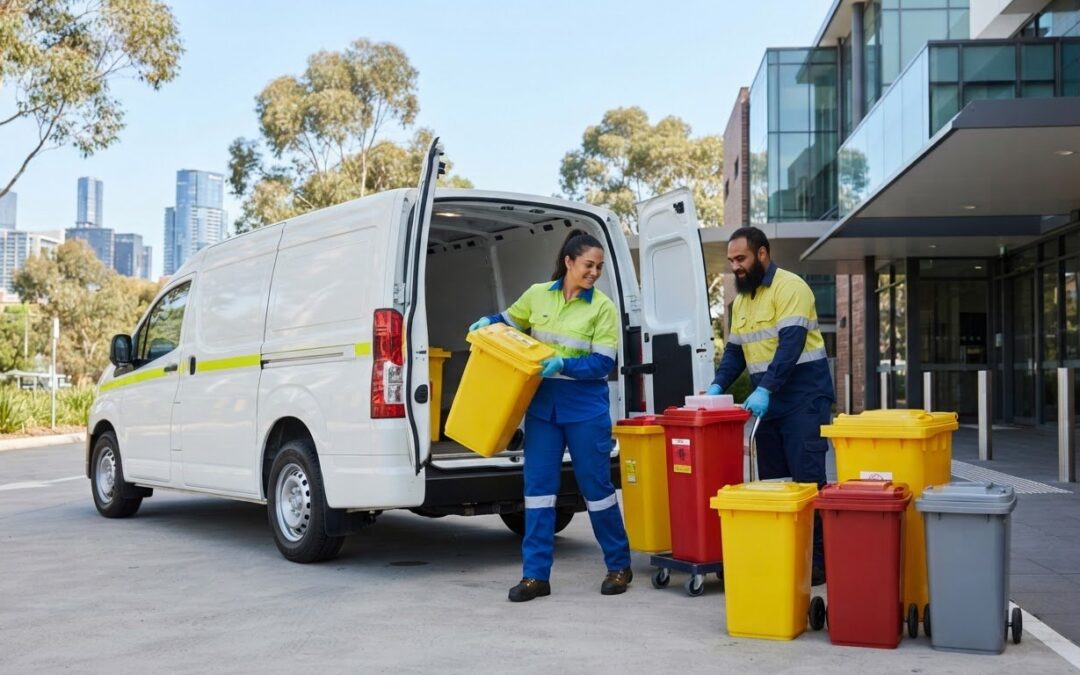
What if a waste stream that seems routine needs a separate handling and collection plan? Melbourne medical waste removal starts with identifying what your facility generates, then arranging suitable storage and collection for those waste streams.
It’s understandable to be unsure which materials need specialised disposal, how to manage them on site and how to fit collections around a busy care environment. In Victoria, EPA requirements apply to clinical and related waste, so clear segregation and suitable arrangements matter for staff, patients and visitors.
This guide explains how medical waste collection works in Melbourne, how needs can differ across healthcare and care facilities, and what to consider when planning a service. BioSafe Waste Management provides clinical and medical waste collection and disposal across Victoria, including Melbourne, for facilities such as dental practices, veterinary clinics and aged care services. You’ll also find practical guidance on sharps, sanitary services and preparing staff and site procedures for collection.
Key Takeaways
- Plan Melbourne medical waste removal around the waste streams your facility generates, rather than treating every site the same.
- Identify the waste, outline site needs, arrange collection and maintain suitable storage and site procedures.
- Assess service requirements by waste-stream fit, facility type, scope and day-to-day operating needs.
- Prepare for collection by identifying responsible staff and communicating existing site procedures.
- BioSafe supports healthcare and care facilities across Victoria with clinical and medical waste collection and disposal.
Melbourne medical waste removal: what facilities need collected
Medical waste removal is the managed collection and disposal of healthcare-related waste that needs handling separately from ordinary rubbish. A useful plan reflects the materials and activities at your site, rather than assuming every healthcare setting produces the same waste. The broad term Biomedical waste covers waste associated with healthcare activities, but the practical collection plan depends on the work performed at each facility.
Clinical waste collection manages healthcare-related waste through a dedicated collection and disposal pathway; general rubbish collection handles everyday waste that doesn’t require that specialised handling. Distinguishing these streams helps staff know what belongs in each pathway and prevents different types of waste from being treated as though they need the same service.
Which Melbourne facilities use medical waste removal services?
Medical and dental practices, veterinary clinics, aged care services and tattoo studios can all generate waste linked to their activities. A practice carrying out wound care may have different needs from a dental clinic handling materials from procedures. Veterinary clinics manage waste associated with animal care, while tattoo studios and care settings have their own operational requirements. BioSafe provides clinical and medical waste collection and disposal for these professional facilities.
For dental teams, procedure-related waste and sharps need particular attention in the facility’s waste plan. See the dental waste management guide for more detail on that setting.
What types of clinical and medical waste may need collection?
Start with the work performed on site. A healthcare facility may generate clinical waste, such as used materials associated with patient care. Sharps disposal is relevant wherever items such as needles or other sharp instruments are used. Identify these streams separately so staff understand what needs specialised collection and how each stream fits into the facility’s procedures.
Sanitary waste services may also be relevant in facilities with shared washrooms or resident care areas. This is a different site need from clinical waste collection. Including sanitary services in the wider plan helps managers account for facility hygiene without confusing separate waste streams.
For Melbourne medical waste removal, map the facility’s activities to the waste they produce. Note where each stream arises, which staff handle it and whether it requires clinical, medical, sharps or sanitary services. This gives managers a practical basis for planning instead of relying on a one-size-fits-all approach.
How medical waste collection works for Melbourne facilities
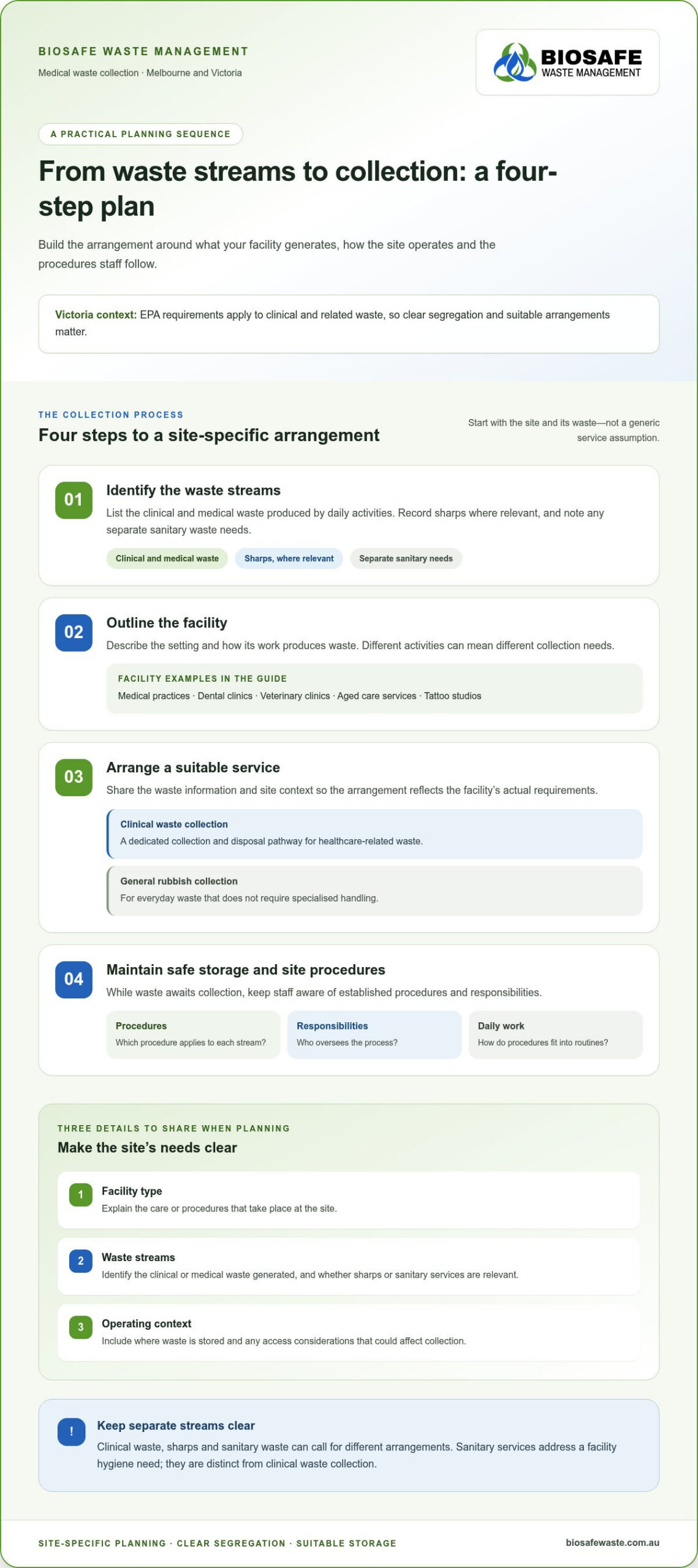
A clear collection process begins with understanding the site, not selecting a generic service. For Melbourne medical waste removal, facility managers can work through four practical steps: identify the waste streams, describe the facility’s needs, arrange a suitable service, then maintain safe storage and site procedures between collections.
- Identify the waste streams: List the clinical and medical waste generated by daily activities, including sharps where relevant. Record any separate sanitary waste needs.
- Outline the facility: Describe the setting, such as a medical practice, dental clinic, veterinary clinic, aged care service or tattoo studio, and explain how waste is produced there.
- Arrange the service: Share the waste information and site context so the arrangement reflects the facility’s requirements.
- Maintain safe storage: Keep staff aware of the facility’s established procedures and responsibilities while waste awaits collection.
This sequence helps managers prepare without assuming different sites need identical arrangements. BioSafe provides clinical and medical waste collection and disposal across Victoria, including Melbourne, and supports facilities with relevant waste streams such as sharps.
What information helps plan a medical waste collection service?
Useful planning starts with three details: facility type, waste streams and operating context. Explain what care or procedures take place, which clinical or medical waste the site generates, and whether sharps or sanitary waste services are relevant. Include practical site information, such as where waste is stored and any access considerations that could affect collection. Clear details help establish an arrangement around the site’s actual needs, rather than relying on assumptions about volume or frequency.
What should staff understand before collection?
Staff should know which site procedures apply to each waste stream, who is responsible for overseeing them and how those procedures fit into daily work. Make responsibilities clear to regular staff and team members who may be less familiar with the process. For more detailed staff guidance, read the clinical waste handling protocols.
Once the facility’s waste streams and site needs are clear, managers can establish an arrangement that supports orderly collection and safe storage. Explore BioSafe’s medical waste collection and disposal for Melbourne healthcare and care facilities.
Choosing Melbourne medical waste removal for your facility’s needs
A suitable collection arrangement reflects the waste a facility generates and how its work is organised. A medical clinic, dental practice, veterinary clinic and aged care service may all need clinical waste support, but their activities and operational priorities differ. Match the service scope to the facility’s actual waste profile, including any sharps or sanitary waste needs, rather than assuming one arrangement suits every site.
| Facility type | Waste-stream fit to consider | Operational needs to map |
|---|---|---|
| Medical clinic | Clinical waste and sharps where generated through patient care | Procedures performed and the site’s existing handling arrangements |
| Dental practice | Dental-related clinical waste and sharps generated during treatment | How waste is produced across treatment areas and managed by staff |
| Veterinary clinic | Clinical waste and sharps associated with animal care | The types of services performed and the site’s storage arrangements |
| Aged care facility | Clinical waste, sharps where relevant, and sanitary waste needs | Resident care activities, shared areas and staff procedures |
How does service fit differ by facility type?
Waste streams follow the work. A clinic’s requirements depend on its patient-care activities. A dental practice or veterinary clinic may generate sharps through procedures, while aged care needs can reflect resident care as well as sanitary services. BioSafe provides clinical and medical waste collection and disposal, sharps disposal and sanitary bin services for relevant facilities. Aged care managers can also read the aged care waste management guide.
How can facilities assess collection and disposal requirements?
Map the waste generated in each part of the facility. Note which activities produce clinical waste or sharps, whether sanitary services are relevant, and how staff currently manage and store each stream. Then identify operational priorities, such as clear responsibilities and arrangements that fit the site’s daily work. This gives the collection plan a practical basis instead of relying on a standard assumption about what every healthcare facility needs.
Victorian requirements can depend on the waste and its handling. Check current official guidance, including EPA Victoria information, when assessing classifications and obligations. The medical waste collection Victoria guide offers further context. A well-matched Melbourne medical waste removal arrangement starts with a clear picture of the site, its waste streams and the way staff work.
Preparing your Melbourne facility for medical waste collection
Preparation helps managers and staff understand how collection fits into daily operations. Before arranging Melbourne medical waste removal, document what the facility generates, how the site operates and who oversees waste procedures. This gives the service arrangement a useful foundation without assuming a fixed onboarding process or timeframe.
What should facility managers organise before service begins?
Record the facility type and the waste streams produced through its day-to-day activities. Include relevant clinical or medical waste, sharps and sanitary waste needs, then note practical operating considerations such as where waste is stored and how staff access that area. Identify the staff members responsible for waste management and make sure they can explain the site’s existing procedures.
Use this preparation checklist:
- Map waste streams: Note what the facility generates and where each stream arises.
- Describe the site: Record relevant access, operating and storage considerations.
- Assign responsibilities: Identify who oversees waste procedures and communicates them to the team.
- Review current practice: Make existing handling and storage procedures available to the staff involved.
- Plan collection access: Consider how the collection area can remain safe, orderly and accessible within normal site operations.
These steps help facility managers share clear, relevant information when arranging clinical and medical waste collection with BioSafe. They also help staff understand their roles before collection arrangements are put into practice.
How can staff support safe, consistent collection?
Consistency depends on staff following the facility’s established waste procedures and knowing who is responsible for each part of the process. Keep responsibilities clear during staff changes, and make sure collection areas remain orderly and accessible without obstructing routine site activities. For guidance focused on sharps, read the Melbourne sharps disposal guide.
Once your facility’s waste streams, site considerations and staff responsibilities are clear, arrange medical waste collection with BioSafe.
Arrange Melbourne medical waste removal with BioSafe
A dependable arrangement starts with the facility and the waste it produces. A medical practice, dental clinic, aged care service, veterinary clinic or tattoo studio may have different collection needs, so planning should account for the site’s work and relevant waste streams. BioSafe Waste Management provides clinical and medical waste collection and disposal across Victoria, including Melbourne, for healthcare and care facilities.
For Melbourne medical waste removal, outline what waste is generated, which services are relevant and how existing site procedures guide staff. This keeps planning focused on the practical requirements of your facility instead of assuming one arrangement suits every setting.
Which BioSafe services support Melbourne facilities?
BioSafe’s services cover several professional facility needs:
- Clinical and medical waste collection and disposal for relevant healthcare settings.
- Dental waste disposal for dental practices.
- Sharps disposal for facilities that generate sharps waste.
- Sanitary bin services and NDIS-compliant waste management where relevant to the site.
BioSafe also supports aged care facilities, veterinary clinics and tattoo studios. The appropriate service mix depends on the work carried out at each facility and the waste streams it generates.
What is the next step to arrange collection?
Share your facility type, the waste streams you need managed and any relevant operating considerations. You can also outline staff responsibilities and site procedures to help frame the arrangement around your facility’s daily needs. This keeps the discussion focused on the collection and disposal services relevant to your site.
Start by outlining your facility’s needs. Contact BioSafe about medical waste removal to discuss a collection and disposal arrangement for your Melbourne facility.
Build a collection plan that fits your facility
Dependable Melbourne medical waste removal starts with a clear view of the waste your facility generates. Identify the relevant streams, consider how your site operates and make sure staff understand their handling responsibilities. A medical clinic, dental practice, veterinary clinic, aged care service or tattoo studio may each need a different service arrangement.
BioSafe Waste Management provides clinical and medical waste collection and disposal across Victoria, with support for healthcare, dental, veterinary, aged care and tattoo settings. Services include sharps disposal, sanitary bin services and NDIS-compliant waste management. Matching the service to your facility’s needs gives you a practical foundation for managing collection and disposal.
Outline your facility type and the waste streams you need managed. Discuss medical waste collection for your Melbourne facility with BioSafe to plan an arrangement suited to your site and support consistent waste handling.
Frequently Asked Questions
What is included in medical waste removal in Melbourne?
Medical waste removal can include the managed collection and disposal of clinical and medical waste, with separate sharps disposal where a facility generates sharps. The service needed depends on the site’s activities and waste streams. BioSafe Waste Management provides clinical and medical waste collection and disposal across Victoria, including Melbourne, as well as dental waste disposal and sanitary bin services for relevant facilities.
Which Melbourne facilities need clinical waste collection?
Facilities that generate clinical or medical waste through their work may need specialised collection. This can include medical and dental practices, veterinary clinics, aged care facilities and tattoo studios. The specific waste streams differ according to the care or procedures provided, so consider what your facility generates rather than assuming every healthcare setting has identical requirements. BioSafe supports these professional facility types across Victoria.
How often should medical waste be collected?
There isn’t one collection frequency that suits every facility. Planning should account for the types and amount of waste generated, how the site operates and its storage arrangements. Describe these factors when arranging a service so the collection plan reflects the facility’s needs. BioSafe provides service arrangements for the site and relevant waste streams, so avoid relying on a frequency intended for a different facility.
How should sharps be managed before collection?
Follow your facility’s established sharps-handling procedures and ensure staff know where sharps belong and who oversees the process. Keep sharps out of ordinary rubbish, and use the designated sharps container and site procedures for your setting. Don’t improvise handling practices or leave sharps where staff, patients, visitors or collection personnel could encounter them. BioSafe provides sharps disposal for facilities that generate sharps waste.
Does medical waste removal in Melbourne need to follow Victorian requirements?
Yes. Facilities should manage relevant clinical and related waste in line with current Victorian requirements. The Environment Protection Authority Victoria regulates aspects of clinical and related waste, including storage, transport, treatment and disposal under the Environment Protection Regulations 2021. Requirements can depend on the waste stream and its handling. Check current EPA Victoria guidance for applicable classifications and obligations, and maintain clear site procedures for staff.
Can one waste service support a dental, veterinary or aged care facility?
A service arrangement can reflect a facility’s relevant waste streams and operating needs, but the right scope differs by setting. A dental practice may need dental waste disposal and sharps services; a veterinary clinic or aged care facility may have different clinical waste requirements. BioSafe supports dental practices, veterinary clinics and aged care facilities with relevant collection and disposal services, alongside sanitary bin services and NDIS-compliant waste management where applicable.