
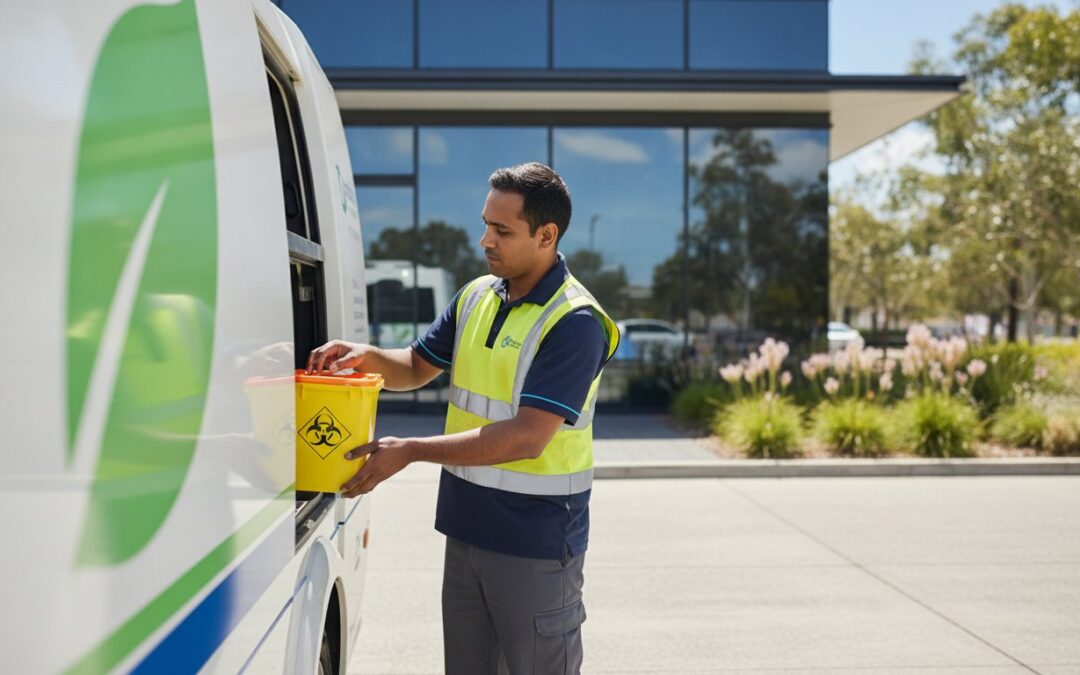
Did you know that failing to manage your clinical waste correctly could expose your Victorian dental practice to corporate fines of approximately $2.03 million? For many practice managers, the constant evolution of the Environment Protection Act 2017 and the 2021 regulations feels like a moving target that adds unnecessary stress to an already demanding clinical environment. It’s understandable if you feel cautious about the technical requirements of reportable priority waste or the administrative burden of the EPA’s digital Waste Tracker system.
This guide provides a clear, professional path through the complexities of dental waste management Victoria, ensuring your surgery remains fully compliant while protecting your staff and patients. You’ll learn how to master the latest Victorian EPA protocols and discover the essential criteria for selecting a waste partner that offers a seamless, set and forget collection schedule. We’ll examine the specific requirements for sharps disposal, the implications of the 2026 landfill levy increases, and the documentation needed to provide a verifiable audit trail for your next inspection. This information serves as a foundation for establishing a safer, more predictable waste management strategy for your practice.
Key Takeaways
- Understand your obligations under the Environment Protection Act 2017 to protect your practice from significant non-compliance penalties.
- Correctly categorise the five primary waste streams, including specialised requirements for amalgam, to streamline your dental waste management Victoria.
- Use a professional framework to verify that your waste partner holds the necessary Victorian EPA transport permits and licences.
- Establish a dedicated segregation station in your sterilisation room to improve clinical hygiene and simplify staff disposal routines.
- Reduce the risk of cross-contamination by implementing precise storage protocols and standardised bin usage across your surgery.
Navigating Dental Waste Compliance in Victoria
Dental waste management Victoria is governed by the Environment Protection Act 2017 and the Environment Protection Regulations 2021. These laws establish a framework where dental practices are legally responsible for every gram of waste they produce. The EPA Victoria classifies clinical waste, including specialised sharps and amalgam, as reportable priority waste. This classification triggers specific obligations for handling, transport, and disposal that are becoming more rigorous. As of 2026, the EPA has increased its focus on digital oversight, requiring absolute transparency in how these materials move from the surgery to the treatment facility.
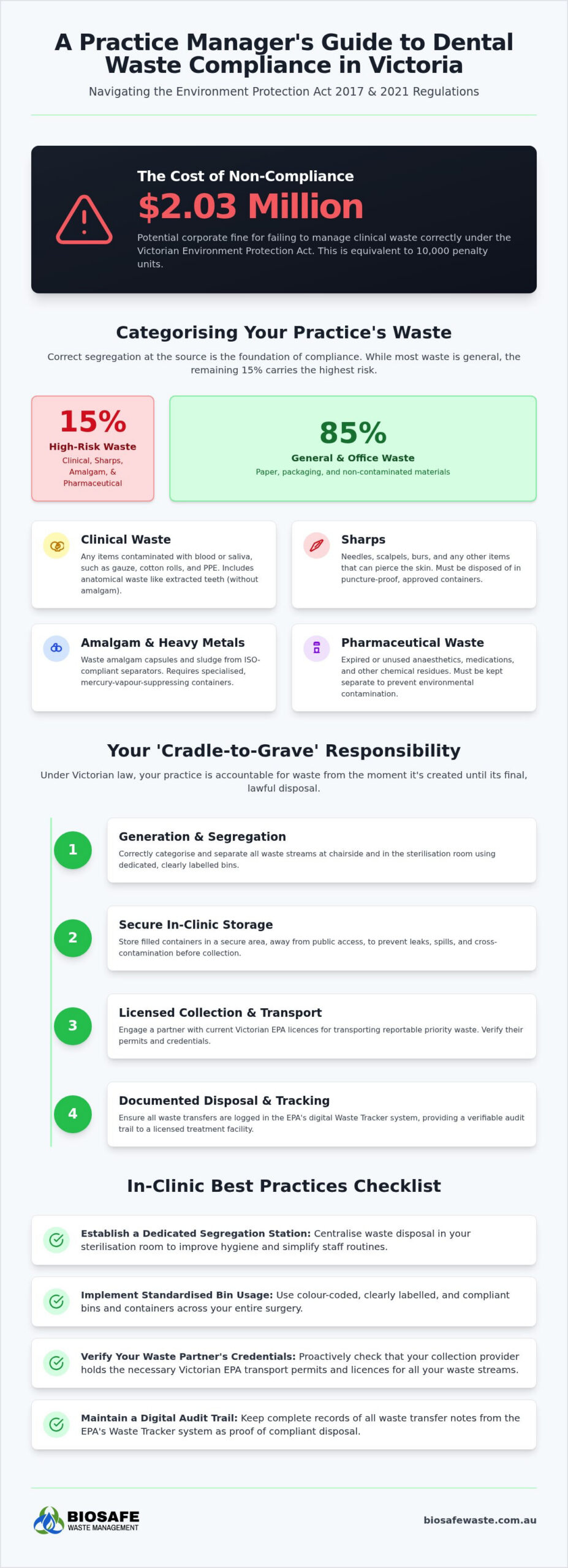
Failure to adhere to these protocols carries heavy risks. For corporations, non-compliance with clinical waste regulations can result in fines of up to 10,000 penalty units, which is approximately $2.03 million. Beyond the financial impact, improper disposal can lead to environmental contamination and public health risks, damaging a practice’s reputation and standing within the Victorian health community.
The Environment Protection Act and Your Practice
The cornerstone of Victorian environmental law is the General Environmental Duty (GED). This duty requires any person engaging in an activity that can cause harm to human health or the environment to minimise those risks so far as reasonably practicable. In a dental setting, you must proactively identify and manage the risks associated with clinical waste and chemical emissions. The Victorian GED for waste storage requires dental practitioners to take all reasonable steps to prevent leaks, spills, or unauthorised access to clinical and priority waste while it remains on the surgery premises.
Clinical waste in Victoria isn’t just general rubbish. It includes any items contaminated with blood or bodily fluids, as well as sharps and mercury-containing amalgam. Recognising these as priority waste streams is the first step toward total compliance.
Duty of Care: From Chairside to Final Disposal
Your legal responsibility doesn’t terminate once a collection vehicle leaves your driveway. Under Victorian law, the waste generator remains accountable for ensuring their waste reaches a lawful destination. This principle is central to established Biomedical waste management principles, which emphasise the “cradle-to-grave” tracking of hazardous materials. Using an unlicensed or generalist provider for dental waste management Victoria creates a significant liability gap.
To meet this obligation, you must only engage transporters who hold current Victorian EPA licences for the specific waste codes you produce. Documentation is your primary defence during an audit. You are required to submit electronic records through the EPA’s Waste Tracker system every time reportable priority waste is transferred. This digital trail confirms that the waste was collected by an authorised agent and delivered to a facility equipped for incineration or autoclaving, rendering it non-hazardous.
Essential Waste Streams for Victorian Dental Surgeries
Modern dental clinics are complex environments that generate several distinct types of waste, each requiring a specific disposal pathway to remain compliant. Effective dental waste management Victoria relies on the precise categorisation of these materials at the point of generation. Broadly, these are divided into clinical waste, sharps, amalgam and heavy metals, pharmaceutical waste, and general office waste. While general waste typically accounts for approximately 85% of a practice’s total output, the remaining 15% contains the highest risk and requires the most meticulous handling.
Infectious clinical waste includes any items contaminated with blood or saliva, such as gauze, cotton wool rolls, and personal protective equipment. Anatomical waste, which includes extracted teeth, must also be handled with care. If teeth contain amalgam fillings, they cannot be placed in the standard clinical waste bin for incineration due to mercury vapour risks. Expired anaesthetics and other pharmaceutical residues represent another critical stream. These must be sequestered from general waste to prevent chemical contamination of the environment.
Amalgam and Heavy Metal Management
Mercury is a potent neurotoxin that requires specialised containment. Victorian regulations mandate the use of ISO-compliant amalgam separators to capture particulate matter before it enters the wastewater system. The resulting “sludge” and used amalgam capsules must be stored in dedicated, mercury-vapour-suppressing containers. Adhering to the EPA Victoria operational guidance ensures that your practice manages these heavy metals without risking environmental contamination.
Lead foil from traditional X-ray packets is another heavy metal contaminant often overlooked. This material should never enter the general waste or clinical bins. Instead, it should be collected for specialised recycling. For surgeries requiring specialised containers for these materials, BioSafe provides compliant dental waste solutions tailored to local requirements.
Sharps and Clinical Waste Protocols
Sharps disposal is perhaps the most critical daily task for protecting clinical staff from needle-stick injuries and blood-borne pathogens. Victorian standards require sharps to be disposed of in yellow, puncture-resistant containers that meet Australian Standard AS 4031. These bins should be placed at the point of use, ideally within arm’s reach of the dental chair, to minimise the distance contaminated sharps are carried.
Staff must be trained to differentiate between infectious clinical waste and general waste. Placing non-contaminated paper or packaging into yellow clinical waste bags unnecessarily increases disposal costs and environmental impact. All clinical waste bins must be colour-coded yellow and clearly labelled to prevent cross-contamination. Understanding the full scope of clinical waste bin requirements Victoria mandates — including colour-coding standards and container specifications — is essential for maintaining a compliant and safe clinical environment. By maintaining these strict boundaries, you ensure a safer environment for your team while keeping your practice’s waste volumes manageable and compliant.
Evaluating Dental Waste Management Companies: A Buyer’s Framework
Selecting a partner for dental waste management Victoria is a critical risk management exercise that extends beyond simple logistics. A reliable provider acts as a vigilant protector of your practice, ensuring that every litre of clinical waste or used sharp is handled with meticulous care. To maintain your professional integrity and legal standing, you need a structured framework to evaluate potential service providers. This process ensures you aren’t just hiring a courier, but engaging a specialist who understands the gravity of healthcare sanitation.
Licensing and Regulatory Credentials
The first step in your evaluation is the verification of Victorian EPA licences. You should request the provider’s specific waste transport permit numbers and cross-reference them with the EPA’s public register. It is essential to ensure they are authorised to carry the exact waste codes produced by your surgery, such as clinical waste (R100) and mercury-containing materials. If your practice provides services to NDIS participants or aged care residents, confirm that the provider’s protocols align with the heightened compliance standards required for these sectors. Facilities managing residential care should also review the dedicated protocols outlined in the aged care waste management Victoria 2026 facility compliance guide to ensure collection workflows meet both EPA tracking duties and Aged Care Quality Standards.
Insurance is another non-negotiable factor. A professional partner should hold comprehensive public liability and specialised environmental impairment insurance. This protects your practice in the rare event of a spill or accident during transport. Without these safeguards, the legal and financial burden of a biohazardous incident could fall back on the waste generator.
Service Reliability and Practice Integration
Reliability in waste collection is fundamental to maintaining a sterile and organised clinical environment. When assessing a provider, consider their ability to offer the following:
- Customised Collection Schedules: Your frequency should reflect your patient volume, whether that is weekly, fortnightly, or on-call, to prevent bins from reaching capacity.
- Local Victorian Expertise: Providers with a local focus often possess a deeper understanding of Victorian EPA nuances and regional landfill levy structures compared to national generalists.
- Emergency Support: Enquire about their capacity for emergency call-outs if your surgery experiences an unexpected surge in waste volume.
- Staff Educational Resources: A supportive partner provides training materials or signage to help your team maintain correct segregation protocols.
The physical quality of the equipment provided is equally important. All sharps containers must meet Australian Standard AS 4031, and clinical waste bins should be robust, leak-proof, and easy to sanitise. High-quality containers reduce the risk of needle-stick injuries and cross-contamination within your sterilisation room. Engaging professional sharps disposal services Melbourne practices trust ensures your containment systems meet the latest 2026 EPA standards and protect your clinical team from preventable workplace injuries. By choosing a partner that prioritises these technical details, you establish a “set and forget” system that allows your clinical team to focus entirely on patient care. To ensure your administrative workflow is just as efficient, you can visit 10X Remote Assist to see how their trained agents support dental reception teams.
Effective dental waste management Victoria starts with the physical layout of your clinical environment. A well-organised practice minimises the risk of cross-contamination and ensures that staff follow disposal protocols without hesitation. By establishing clear, standardised procedures for how waste is handled at the chairside and within the sterilisation room, you protect your team and ensure that your surgery remains audit-ready at all times.
Maintaining a clean and professional waste station also serves a secondary purpose: building patient trust. Patients are increasingly observant of clinical hygiene standards. When they see a highly organised, standardised approach to biohazardous materials, it reinforces their confidence in your clinical expertise and your commitment to their safety.
The Sterilisation Room Workflow
The sterilisation room should be divided into distinct “clean” and “dirty” zones to prevent the movement of pathogens. Sharps containers must be placed exactly where instruments are processed to prevent unnecessary handling of contaminated needles and blades. Chemical waste, such as spent disinfectants and developer fluids, requires sealed, labelled containers to prevent hazardous fumes or spills. Positioning clinical waste bins at waist height within the primary workflow zone reduces repetitive strain and ensures that staff can dispose of contaminated items without disrupting their sterile technique.
Staff training is the most critical component of this workflow. Every team member should be able to identify the correct bin for every item, from blood-soaked gauze to general office paper. This precision prevents the common mistake of over-filling clinical waste bins with non-contaminated materials, which unnecessarily inflates your disposal costs and environmental footprint. For a comprehensive overview of the 2026 tracking requirements and precise segregation techniques, the infectious waste disposal Victoria compliance guide provides detailed protocols that healthcare facilities can rely on to maintain rigorous standards.
Internal Audits and Compliance Monitoring
Regular internal audits are the most effective way to identify gaps in your segregation strategy before they become regulatory liabilities. Conduct monthly spot-checks to ensure that general office waste isn’t being disposed of in clinical waste streams. This attention to detail reduces disposal costs and reinforces a culture of professional responsibility within the clinic.
Keeping an accurate log of waste volumes is essential for modern compliance. This data supports your submissions to the EPA’s digital Waste Tracker and provides a clear history of your practice’s waste output for annual accreditation reviews. If your current bin system is causing confusion or bottlenecks, BioSafe provides specialised clinical waste bins and clear signage designed to simplify your internal compliance monitoring and streamline your daily routines.
Partnering with BioSafe: Victorian Dental Waste Solutions
BioSafe operates as a dedicated specialist for dental waste management Victoria, providing the technical precision required for high-stakes clinical environments. We position ourselves as a “safe pair of hands” for practice managers who require absolute certainty regarding their regulatory standing. Our service is built on a sense of duty to the Victorian healthcare community, ensuring that your surgery’s waste is managed with the sobriety and meticulousness it deserves.
We provide a comprehensive range of specialised dental waste containers and sharps bins that meet all relevant Australian Standards. From small, single-chair surgeries to large multi-practitioner centres, our collection schedules are tailored to your specific patient volume. This customisation prevents the accumulation of biohazardous materials and ensures your sterilisation room remains a clean, professional space for your team and patients alike.
Why Victorian Dentists Trust BioSafe
Our deep understanding of local Melbourne and regional Victorian regulations sets us apart from national generalists. We’re intimately familiar with the nuances of the Environment Protection Act 2017 and the logistical challenges posed by shifting landfill levies. We provide discreet and professional collection services that integrate seamlessly into your daily operations, allowing your clinical staff to focus on patient outcomes rather than waste logistics.
- EPA-Compliant Tracking: We handle all digital documentation requirements through the EPA’s Waste Tracker system, providing you with a verifiable audit trail.
- Specialised Equipment: Our sharps disposal and amalgam containment systems are designed specifically for dental surgery requirements.
- Regional Support: We offer Victorian-wide coverage, ensuring regional practices receive the same high standard of service as metropolitan Melbourne facilities.
Get Started with a Compliance Review
Transitioning to a more efficient waste system begins with a thorough review of your current protocols. BioSafe helps you identify potential compliance gaps and implement a “set and forget” collection schedule that minimises risk. Our team provides clear, straightforward service proposals without hidden fees or complex jargon, reflecting our commitment to transparency and professional integrity.
If you’re ready to secure your practice’s compliance and improve your clinical workflow, our Victorian team is available to discuss a tailored solution for your surgery. For more detailed information on maintaining high standards across your facility, you can explore our Medical Waste Collection Victoria: Professional Compliance and Disposal Guide. We’re here to provide the stability and expertise your practice needs to navigate the complexities of modern waste management.
Securing Your Practice’s Regulatory Future
Maintaining high standards for dental waste management Victoria is a continuous commitment to clinical safety and professional integrity. By implementing strict segregation protocols and understanding your obligations under the General Environmental Duty, you protect your surgery from significant legal and financial risks. Choosing a partner that understands the specific nuances of the Victorian EPA framework ensures that your focus remains on patient care rather than the complexities of priority waste tracking.
BioSafe is a Victorian owned and operated specialist and an EPA licensed transporter. We provide specialised dental waste solutions that integrate seamlessly with your surgery’s workflow. Our methodical approach to collection and disposal provides the stability and documentation required for successful accreditation and audits. It’s essential to ensure your disposal pathways are secure and fully verified before the next regulatory update cycle.
To ensure your surgery meets the latest standards, Request a Victorian Dental Waste Compliance Audit today. Establishing a reliable waste management strategy now provides long-term security for your staff, your patients, and your professional reputation.
Frequently Asked Questions
What are the specific EPA Victoria requirements for dental amalgam disposal in 2026?
EPA Victoria mandates that dental amalgam is handled as reportable priority waste. Practices must use ISO-compliant amalgam separators to capture particulate matter before it enters the sewage system. These materials, along with used capsules, require storage in specialised mercury-vapour-suppressing containers. Every transfer must be logged digitally through the EPA Waste Tracker system to ensure a verifiable audit trail and total compliance with current standards.
How often should clinical waste be collected from a Victorian dental practice?
Collection frequency is determined by your surgery’s specific patient volume and waste generation rates. BioSafe provides customised dental waste management Victoria plans that offer weekly, fortnightly, or on-call collections to prevent overflow. Maintaining a regular schedule is vital for clinical hygiene and ensures that biohazardous materials don’t remain on-site longer than necessary. This approach supports a predictable system that lets your staff focus on patient care.
Is a waste tracking certificate required for every collection in Melbourne?
Yes, an electronic record is mandatory for every transfer of reportable priority waste under the Environment Protection Act 2017. This includes clinical waste, sharps, and dental amalgam. The EPA Waste Tracker system replaces traditional paper certificates, providing a transparent digital history of the waste’s journey from your surgery to a lawful disposal facility. BioSafe manages this reporting process to ensure your practice remains fully compliant during any government audit.
Can I dispose of lead foil from x-rays in general clinical waste bins?
Lead foil must never be placed in general clinical waste or municipal bins because it is a heavy metal contaminant. While clinical waste is often incinerated or autoclaved, lead requires specialised recycling to prevent environmental harm. BioSafe provides dedicated collection pathways for lead foil and other heavy metal by-products. Proper segregation of these materials is a key component of your General Environmental Duty to minimise environmental risks within your surgery.
What happens if my dental practice is found to be non-compliant with Victorian waste laws?
Non-compliance with Victorian waste laws carries severe legal and financial consequences. For corporations, fines for improper clinical waste management can reach 10,000 penalty units, which is approximately $2.03 million as of 2026. Beyond these penalties, practices face mandatory EPA audits and significant reputational damage. Partnering with an EPA-licensed transporter like BioSafe mitigates these risks by ensuring all disposal methods align with current Victorian Environment Protection Regulations.
Does BioSafe provide specialised sharps containers for dental surgeries?
BioSafe provides specialised sharps containers that are purpose-built for the dental environment. These yellow, puncture-resistant bins meet Australian Standard AS 4031 and are designed for safe placement at the chairside or within the sterilisation room. By using these standardised containers, you significantly reduce the risk of needle-stick injuries for your clinical staff. Our team ensures you always have a fresh supply of compliant bins as part of your regular collection service.
How do I categorise pharmaceutical waste vs. general clinical waste?
Pharmaceutical waste includes expired anaesthetics, medicines, and chemical residues, whereas general clinical waste consists of items contaminated with blood or bodily fluids. While both are priority waste streams, they often require different treatment methods, such as high-temperature incineration for pharmaceuticals. Correctly categorising these materials at the point of generation prevents cross-contamination and ensures your practice adheres to the specific disposal protocols outlined in the EPA Victoria operational guidance.
What is the “General Environmental Duty” and how does it affect my waste contract?
The General Environmental Duty (GED) is a legal requirement under the Environment Protection Act 2017 for all Victorian businesses to minimise risks to human health and the environment. This duty means you’re responsible for your waste from the moment it’s generated until its final disposal. Your waste contract must be with a licensed specialist who provides verifiable compliance documentation. BioSafe acts as your “safe pair of hands” to help you fulfil this statutory obligation.