
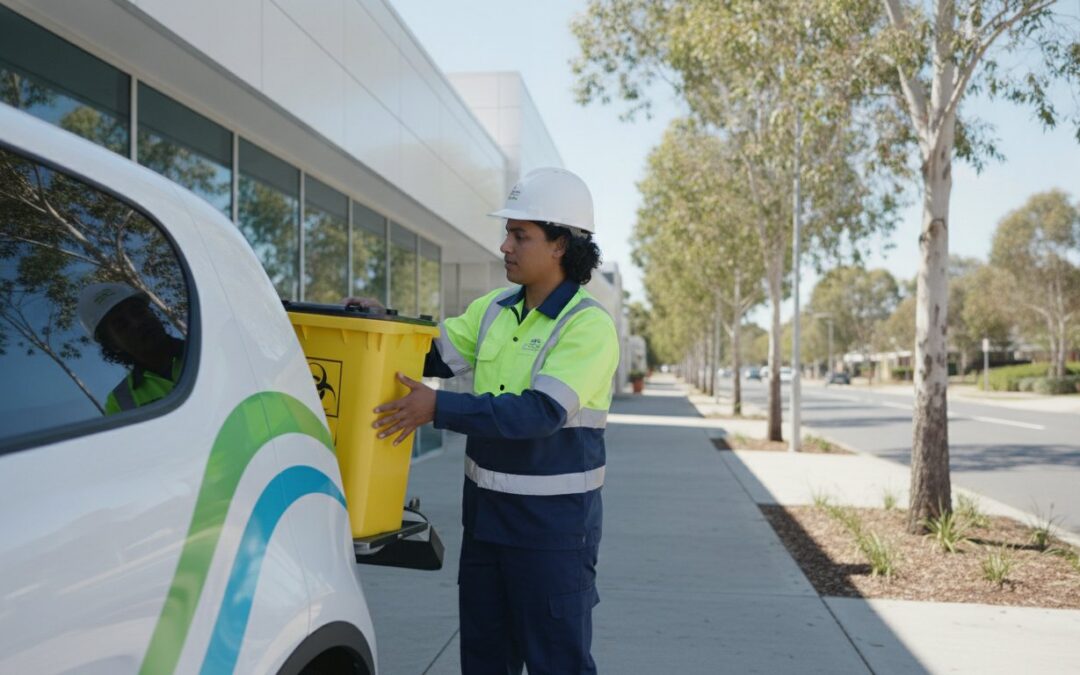
Storing clinical waste for over 72 hours without refrigeration isn’t just a hygiene risk; it’s a direct violation of Victorian EPA regulations that can trigger significant financial penalties. For many healthcare providers, the challenge lies in balancing patient care with the rigid demands of the Environment Protection Act 2017. You likely understand the heavy responsibility of maintaining a sterile environment, yet the complexity of waste categories and mandated pickup frequencies often creates unnecessary stress for facility managers. Fear of a compliance breach shouldn’t dictate your daily operations.
Establishing a reliable medical waste collection schedule is the most effective way to protect your staff, your patients, and your professional reputation. This guide will teach you how to develop a waste management plan that aligns with current Victorian health standards while addressing the specific volume of your clinic. We will examine mandated storage limits, the implications of the 2026-2027 fine unit increases, and the practical steps required to ensure your facility remains a safe, compliant space for everyone.
Key Takeaways
- Identify the specific EPA Victoria storage regulations and time limits that prevent costly compliance breaches.
- Learn how to develop a bespoke medical waste collection schedule that balances your facility’s waste volume with strict safety protocols.
- Recognise the distinct disposal needs for various clinical settings, from NDIS care to specialised dental and tattoo services.
- Streamline your operations by conducting a comprehensive waste audit and selecting the appropriate EPA-approved containers.
- Establish a reliable partnership with a Victorian specialist dedicated to the safe, punctual removal of biohazardous materials.
Why Your Medical Waste Collection Schedule Matters for Compliance
A medical waste collection schedule functions as a disciplined, structured plan designed to ensure the timely removal of biohazardous materials from your facility. It isn’t merely an operational preference; it’s a critical component of Victorian healthcare infrastructure. EPA Victoria oversees the transport and disposal of clinical waste to prevent environmental contamination and protect the community. Effective biomedical waste management requires strict adherence to these timelines to mitigate risks to both your staff and the general public.
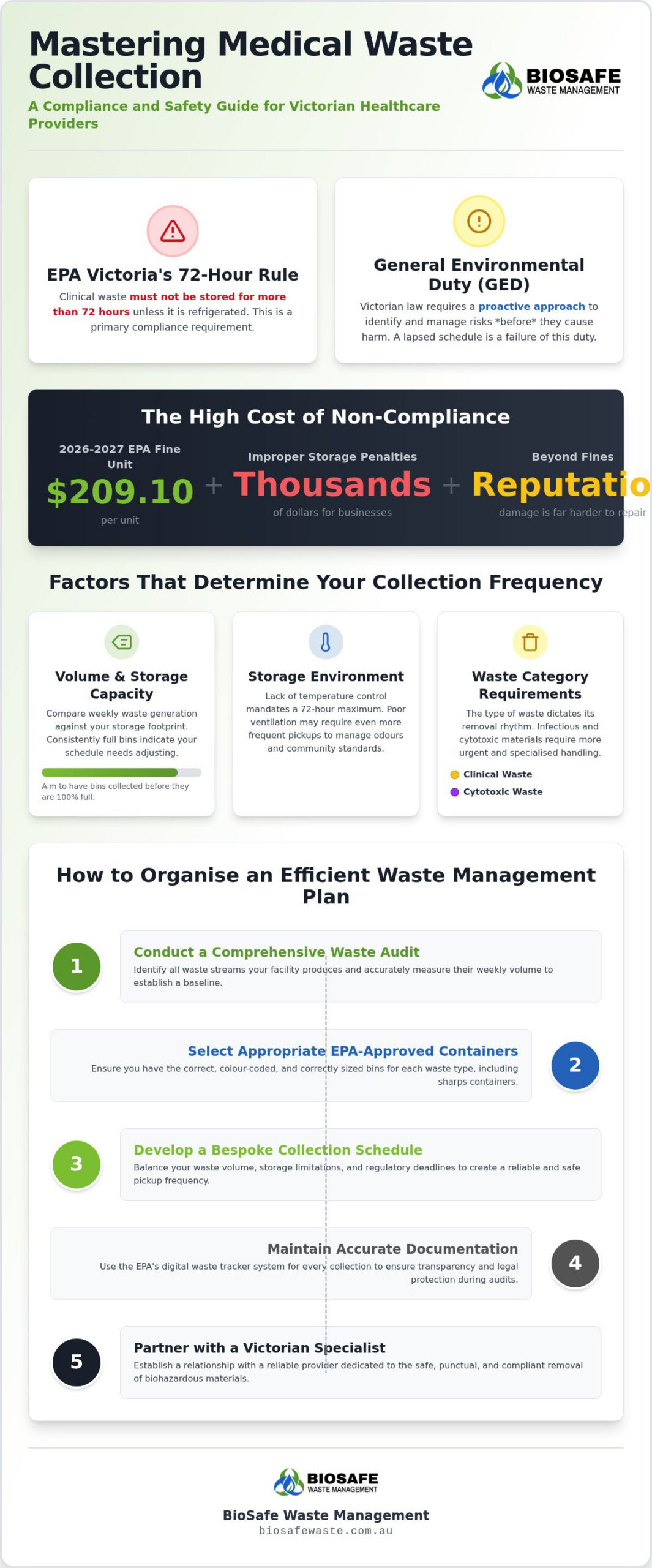
Facility managers in Victoria operate under a “general environmental duty” (GED). This legal obligation requires you to identify and manage risks before they cause harm. It’s a proactive approach rather than a reactive one. A lapse in your medical waste collection schedule is viewed as a failure to uphold this duty. The financial stakes are high. For the 2026-2027 financial year, a single fine unit is set at $209.10. For a business, penalties for improper storage or transport can quickly escalate into the thousands of dollars, alongside the potential for reputational damage that’s far harder to repair than a balance sheet. Understanding the full scope of clinical waste handling protocols under Victoria’s 2026 compliance framework is essential for every facility manager navigating these obligations.
The Legal Framework in Victoria
The Environment Protection Act 2017 serves as the primary legislation governing waste in our state. Under this framework, the EPA categorises clinical and related waste into specific streams to determine appropriate handling and disposal methods. Accurate documentation is mandatory. Every collection must be logged through the digital waste tracker system to ensure transparency from the point of generation to the final treatment facility. This rigorous tracking helps maintain the integrity of Victorian health standards and protects your business from legal scrutiny during audits.
Safety and Hygiene Implications
Maintaining a steady rhythm of waste removal ensures your facility remains hygienic and professional. When clinical waste sits for too long, it becomes a breeding ground for bacteria. Victorian regulations specify that clinical waste must not be stored for more than 72 hours unless it’s refrigerated. A reliable schedule prevents the accumulation of waste that attracts pests or creates offensive odours in patient-facing areas. Timely collection also ensures that yellow clinical waste bins and purple cytotoxic containers are replaced before they reach capacity. This simple measure is vital for preventing spills and protecting staff from the physical risks associated with overfilled or improperly sealed receptacles.
Factors That Influence Your Collection Frequency
Determining the ideal medical waste collection schedule requires a meticulous assessment of several operational variables. It’s not a matter of guesswork; it’s a calculation based on safety and compliance. One of the most critical factors is the physical environment of your waste storage centre. If your facility lacks temperature-controlled storage, the 72-hour limit for non-refrigerated waste becomes the primary driver of your collection frequency. Poor ventilation can also exacerbate odour issues, particularly in facilities located near residential areas or high-traffic public spaces where community standards for hygiene are exceptionally high. In these settings, a more frequent pickup prevents complaints and maintains your reputation as a responsible local health provider.
Volume and Storage Capacity
A thorough audit of your weekly waste production is the first step in establishing a sustainable routine. You must compare the volume of material generated daily against your available storage footprint. Overfilling yellow clinical waste bins or sharps containers creates an immediate safety hazard for your cleaning and clinical staff. It increases the risk of needle-stick injuries and accidental spills. To manage this, you can either increase the number of bins on-site or opt for more frequent collections. Most managers find that a higher frequency of service allows for smaller on-site storage footprints, keeping the facility uncluttered and easier to sanitise. If you find your bins are consistently reaching capacity 24 hours before your scheduled pickup, it’s time to adjust your medical waste collection schedule to ensure a safe work environment.
Waste Category Requirements
The specific nature of the waste you produce dictates the rhythm of its removal. Infectious clinical waste, which is prone to rapid bacterial growth, necessitates a more urgent schedule than non-infectious sanitary waste. Specialised clinics, such as those providing oncology services, must manage cytotoxic waste in purple containers. These materials require handling under strict protocols that often differ from standard clinical streams. Similarly, sharps disposal follows a unique logic. While sharps don’t decay like organic waste, they must be collected once the container reaches the “fill line” to prevent injuries. Even pharmaceutical waste, which may be generated less frequently, requires a designated spot in your schedule to ensure expired medications aren’t left accessible. Professional clinical waste management services can help you synchronise these varying requirements into one cohesive, compliant plan.
Industry-Specific Scheduling: From Dental Practices to Tattoo Studios
Every clinical environment operates under unique pressures and regulatory expectations. A dental clinic’s waste profile differs significantly from an aged care facility or a tattoo studio, meaning a one-size-fits-all approach is rarely effective. Consequently, your medical waste collection schedule must be calibrated to the specific biohazards generated and the physical layout of the site. Whether you are managing mercury-containing dental waste or pathological materials from a veterinary surgery, the timing of your pickups is a direct reflection of your facility’s commitment to safety and Victorian health standards.
Dental and GP Clinics
General practices and dental clinics typically generate a consistent mix of clinical bags, sharps, and specialised waste streams. Dental practices, in particular, must manage amalgam waste and chemical residues that require dedicated disposal to prevent environmental contamination. Most standard medical practices find that weekly or fortnightly collections provide a reliable balance between storage limits and operational costs. Scheduling these pickups during early morning windows or off-peak hours ensures minimal disruption to patient flow and maintains a professional atmosphere in waiting areas. This steady rhythm prevents the accumulation of materials in treatment rooms where space is often at a premium.
Aged Care and NDIS Providers
Large-scale residential facilities and NDIS providers manage high volumes of both sanitary and clinical waste. For these organisations, the priority is often discreet, reliable service that respects the residential nature of the environment. Collections must be frequent enough to prevent odour build-up and maintain high hygiene standards for vulnerable residents. Coordination is essential in these settings, as large facilities often require multiple collection points across various wings. This prevents staff from having to transport waste long distances through public corridors, thereby reducing the risk of cross-contamination and maintaining the dignity of the care environment.
Vets and Tattoo Studios
Tattoo studios operate with a high turnover of sharps and materials contaminated with blood. These facilities must adhere to strict local council and state health regulations for body art to prevent infection risks. Veterinary surgeries face the additional challenge of managing pathological waste, such as animal tissue and anatomical parts. These materials require specialised handling and more urgent disposal than standard clinical waste. For these industries, a disciplined medical waste collection schedule is a non-negotiable part of their licensing and operational safety. Maintaining a “safe pair of hands” for these specific needs ensures that your studio or surgery remains a sterile, compliant space for both staff and clients.
How to Organise an Efficient Waste Management Plan
A systematic approach is required to transform compliance requirements into a functional daily routine. It begins with data. Conduct a comprehensive waste audit across every department to identify exactly where and how much waste is generated. This audit allows you to select the appropriate EPA-approved bins and sharps containers, ensuring you have the correct volume of yellow and purple receptacles for your specific needs. Once your equipment is in place, designate a secure, accessible collection point. This area must be shielded from public access while remaining easily reachable for your service provider to ensure your medical waste collection schedule remains on time and uninterrupted.
Operational efficiency relies on a quarterly review process. As your facility grows or patient numbers fluctuate, your waste volume will inevitably change. A schedule that worked six months ago might lead to overfilled bins today. By reviewing your data every three months, you can adjust pickup frequencies before storage limits are breached. This proactive management prevents the stress of emergency call-outs and keeps your facility in a state of constant readiness for any external inspection.
Segregation and Bin Placement
Proper segregation at the source is the most effective way to prevent delays in your medical waste collection schedule. When general waste is incorrectly placed in clinical bins, it creates unnecessary volume and complicates the disposal process. Optimise bin placement by positioning receptacles as close to the point of waste generation as possible. This reduces the distance staff must carry contaminated materials, significantly lowering the risk of accidental spills. Labelling is also a mandatory requirement. Ensure all clinical, sharps, and cytotoxic containers feature clear, legible signage that adheres to Victorian health standards to prevent cross-contamination during busy clinical hours.
Staff Training and Documentation
Your waste management plan is only as effective as the people implementing it. All staff, including casual and administrative personnel, must be trained on your facility’s specific collection rhythm and segregation protocols. This training ensures that bins are ready for transport exactly when the provider arrives. Documentation is the final, critical step in this process. A Waste Manifest is a mandatory legal document in Victoria that tracks the movement of prescribed industrial waste from the point of generation to its final disposal site. Maintaining accurate manifest records is essential for passing EPA audits and demonstrating your commitment to the general environmental duty. If you need assistance in structuring these protocols, you can organise a professional waste audit to identify potential gaps in your current system.
Reliable Clinical Waste Solutions with BioSafe Waste Management
BioSafe Waste Management serves as a dedicated partner for Victorian healthcare and care facilities. We understand that clinical waste management isn’t just a utility; it’s a critical safety protocol. Our team provides EPA-compliant collection services that prioritise the health of your staff and the safety of the public. By acting as a “safe pair of hands,” we take the complexity out of regulatory adherence, allowing facility managers to focus on their primary duty of care. We view our role as the quiet backbone of your facility’s hygiene standards.
Our commitment to punctuality ensures that your medical waste collection schedule is never compromised. We recognise the high stakes involved in Victorian health standards. A missed collection isn’t just an operational inconvenience; it can lead to storage limit breaches and potential EPA fines. We maintain a disciplined approach to every pickup, ensuring that biohazardous materials are removed and processed with the highest level of professional integrity and technical precision.
Tailored Schedules for Victorian Facilities
Every clinic has a unique operational rhythm. We work closely with facility managers to design a bespoke medical waste collection schedule that reflects your actual waste generation rather than an arbitrary industry average. Our service coverage extends across Melbourne and into regional Victoria, providing consistent support for a diverse range of sectors. Whether you’re managing the discreet needs of an NDIS residential home, the chemical waste requirements of a dental surgery, or the sharps disposal demands of a busy tattoo studio, we provide the specialised equipment and reliable timing required to keep your site compliant.
The BioSafe Difference
Choosing BioSafe means opting for a service defined by meticulous attention to detail. We don’t just collect bins; we provide a comprehensive solution that includes accurate waste tracking and the provision of high-quality, EPA-approved containers. This professional rigour ensures that your facility remains hygienic and that your documentation is always audit-ready. We aim to provide a sense of security and stability in an industry where rules are strict and risks are real. Our experts are always available to offer guidance on segregation or to adjust your service frequency as your facility evolves. Understanding the true medical waste disposal cost in Melbourne — including levies, compliance obligations, and transparent pricing — is essential when evaluating any service provider.
Organise your compliant collection schedule with BioSafe today to ensure your facility meets the highest Victorian standards of safety and professionalism.
Securing Your Clinical Compliance
Maintaining a safe and hygienic healthcare environment requires more than just good intentions; it demands a disciplined approach to waste logistics. You have learned that an effective medical waste collection schedule is the foundation of EPA Victoria compliance, ensuring that biohazardous materials never exceed mandated storage limits. By conducting regular audits and training staff on proper segregation, you protect your facility from the rising costs of non-compliance and the physical risks of overfilled bins. It’s a proactive strategy that transforms a complex legal duty into a manageable daily routine.
BioSafe Waste Management provides the professional, clinical-grade service needed to manage these high-stakes requirements. We offer specialised support for NDIS providers, aged care facilities, and dental practices across Victoria, acting as a reliable partner in your daily operations. Our team ensures every collection is meticulous and every manifest is accurate. We don’t just provide equipment; we offer the peace of mind that comes from a secure, expert-led waste management plan.
Request a tailored medical waste collection schedule for your clinic to establish a secure, compliant routine. We are here to help you uphold your duty of care with confidence and ease.
Frequently Asked Questions
How often should clinical waste be collected in Victoria?
Clinical waste must be collected at least every 72 hours if your facility does not have compliant, refrigerated storage on-site. This is a strict EPA Victoria requirement designed to manage pathogen growth and odour risks. For high-volume environments like aged care centres or busy hospitals, daily pickups are often necessary. Smaller clinics may only extend their collection frequency if they utilise specialised refrigeration systems that meet specific health department standards for biohazardous material storage.
What happens if my medical waste bins are full before the scheduled collection?
You should contact your service provider immediately to request an interim pickup if your containers reach capacity before your next date. Overfilling bins is a significant safety hazard that increases the risk of needle-stick injuries and accidental spills. It also violates your general environmental duty to minimise harm. We recommend maintaining a buffer of extra containers or increasing your service frequency if you find your bins are consistently reaching the fill line early.
Can I change my collection schedule if my clinic grows?
Yes, you can adjust your medical waste collection schedule at any time to reflect changes in your facility’s waste production. As patient numbers increase or you add new clinical services, your waste volume will naturally grow. We recommend performing a brief waste audit every quarter to ensure your current frequency still meets your operational needs. This proactive approach prevents the build-up of biohazardous materials and ensures your facility remains compliant with Victorian health regulations.
Does BioSafe provide the bins and sharps containers for the schedule?
BioSafe provides a comprehensive range of EPA-approved containers as part of our professional service agreements. This includes yellow clinical waste bins, purple cytotoxic containers, and various sizes of puncture-resistant sharps disposal units. Using our specialised equipment ensures that your waste is stored in containers that meet strict Australian Standards for safety and leak prevention. We replace these containers during each scheduled pickup to maintain the highest levels of hygiene and safety within your clinical environment.
Are there specific EPA rules for storing medical waste between collections?
EPA Victoria mandates that medical waste must be stored in a secure area that is inaccessible to the public and pests. Clinical waste must be kept in yellow containers, while cytotoxic waste requires purple containers. These storage areas must be clearly labelled and kept clean to prevent cross-contamination. If you store waste for longer than 72 hours, you must use a refrigerated unit to comply with state-wide sanitation and safety protocols for infectious materials.
What documentation do I need to keep for my medical waste schedule?
You must maintain accurate Waste Manifest records for every collection that occurs at your facility. These documents track the movement of prescribed industrial waste from your site to the final disposal facility and are essential for EPA audits. Victorian law requires these records to be kept to demonstrate compliance with the Environment Protection Act 2017. Digital waste tracking is now the standard, providing a transparent and reliable paper trail for all biohazardous materials handled.
Can BioSafe coordinate schedules for multiple sites across Melbourne?
We provide coordinated waste management solutions for organisations operating across multiple locations in Melbourne and regional Victoria. This allows facility managers to centralise their compliance reporting and ensure a consistent standard of hygiene across all branches. We tailor each site’s medical waste collection schedule to its specific volume while providing a single point of contact for administrative ease. This approach is particularly beneficial for NDIS providers and aged care groups with several residential sites.
Is there a minimum volume requirement for a regular collection schedule?
There is no strict minimum volume required to establish a professional collection routine. We provide bespoke scheduling options for small clinics, tattoo studios, and dental practices that may only generate small amounts of waste. The primary driver for your schedule should be compliance with EPA storage time limits and safety standards rather than volume alone. Regular pickups, even for small quantities, ensure that infectious materials are removed before they become a hygiene or regulatory risk. For a full breakdown of what transparent, compliant service should cost your Melbourne facility, review our 2026 guide to medical waste disposal costs in Melbourne before committing to any provider.