
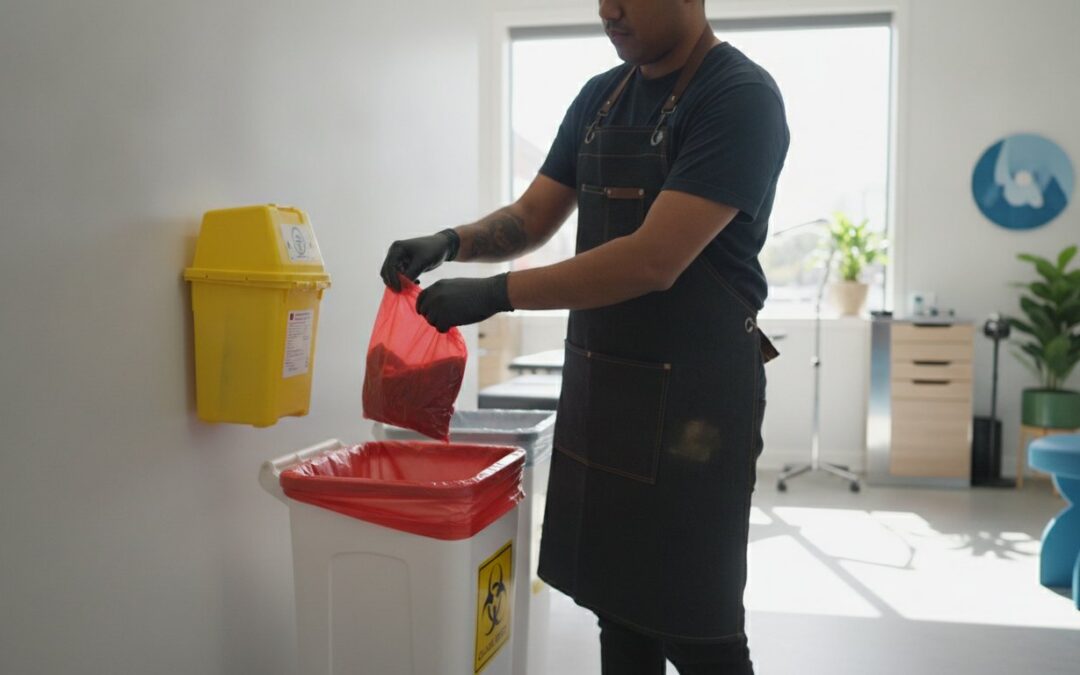
Your legal responsibility for a single used needle doesn’t end when it hits the bottom of the yellow bin; under Victorian law, you’re accountable for its journey from the moment it breaks the skin until its final destruction. You’ve spent years honing your craft and building a reputation for safety, yet the shifting landscape of EPA Victoria regulations can make managing tattoo studio biohazard waste feel like a heavy administrative burden. It’s common to feel a sense of unease regarding the potential for fines or licence suspension during an unannounced health audit, especially when waste disposal costs seem to fluctuate without warning.
This guide will help you master the essentials of clinical waste compliance to protect your studio, your clients, and your professional tattooing licence in Victoria. We’ll examine the 2026 regulatory framework, including the “cradle-to-grave” liability model and the specific Australian Standards for sharps and soft waste. By the end of this article, you’ll know how to establish a reliable, fixed-price waste management system that provides a “set and forget” schedule, allowing you to focus on your art while maintaining total regulatory security.
Key Takeaways
- Learn the legal definitions of clinical materials and why general bins are strictly prohibited for your tattoo studio biohazard waste.
- Identify the critical differences between sharps and soft clinical waste to ensure precise segregation and safety within your studio.
- Understand how to maintain compliant waste management records that withstand scrutiny during local council health audits and EPA inspections.
- Discover best practices for designing a safer studio workflow using standardised colour-coding for all contaminated materials.
- Establish a reliable collection schedule with a licensed specialist to ensure continuous adherence to Victorian health and environmental regulations.
What is Tattoo Studio Biohazard Waste?
In Victoria, tattoo biohazard waste is officially classified as a regulated clinical waste stream consisting of any materials contaminated with blood or bodily fluids during the skin penetration process. This category encompasses a wide range of materials, from the needles used for the procedure to the gloves worn by the artist. Understanding What is biomedical waste? is essential for every studio owner, as it defines the specific protocols required to manage materials that pose a potential risk of infection. Because tattooing involves breaking the skin barrier, the waste generated carries a high risk of containing blood-borne pathogens (BBPs) such as Hepatitis B, Hepatitis C, and HIV. Victorian regulations strictly prohibit placing these items in general waste bins, as they require specialised high-temperature treatment or chemical disinfection to neutralise biological threats before final disposal.
Clinical Waste vs General Studio Waste
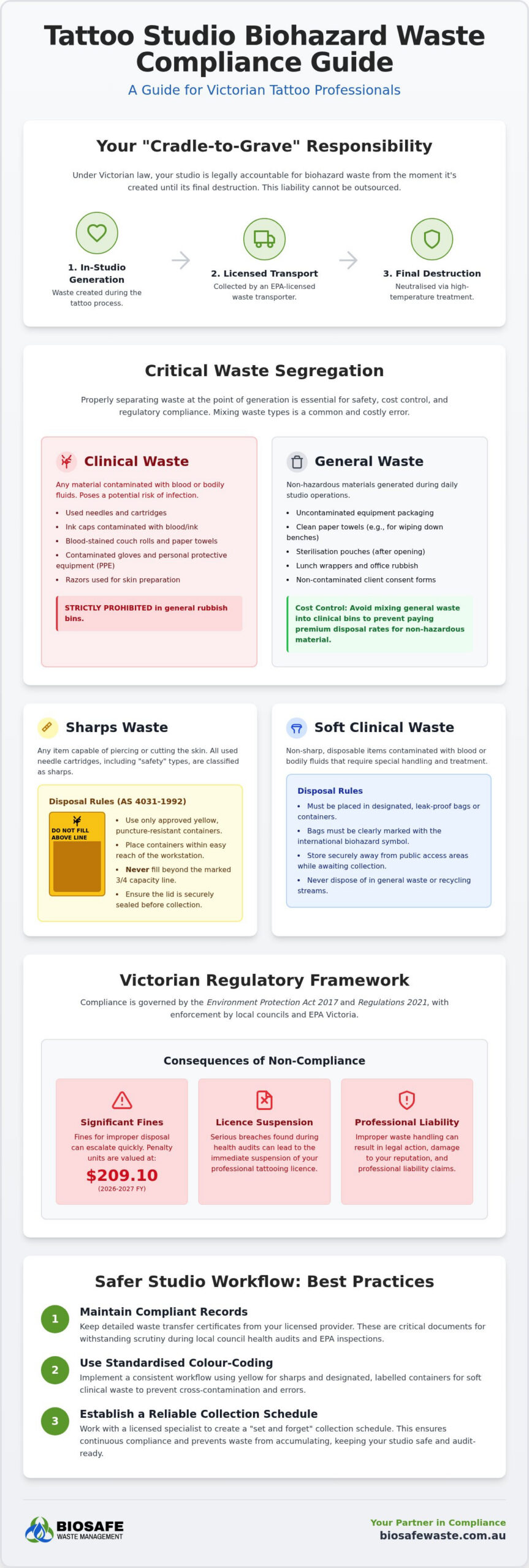
Maintaining a safe environment requires a clear distinction between clinical and general waste categories. Items like paper towels used to wipe down a bench with disinfectant before a client arrives are generally considered office or municipal waste. However, any absorbent material that touches a client’s skin or absorbs blood and ink immediately becomes tattoo studio biohazard waste. Segregating these items at the point of generation is a critical strategy for both safety and cost control. If you mix general rubbish into your clinical bins, you’ll pay premium rates for the disposal of non-hazardous material. Practical examples of this distinction include:
- Clinical Waste: Used needles, ink caps, blood-stained couch rolls, and contaminated gloves.
- General Waste: Sterilisation pouches (post-opening), lunch wrappers, and non-contaminated equipment packaging.
Improper disposal in Melbourne’s municipal systems poses a significant environmental risk, potentially leaching pathogens into the local ecosystem and endangering waste collection workers.
The Legal Framework in Victoria
The primary legislation governing these requirements is the Environment Protection Act 2017 and the Environment Protection Regulations 2021. These laws mandate that every waste generator remains legally responsible for their waste until it’s fully destroyed; a concept known as “cradle-to-grave” liability. Local Victorian councils act as the frontline of enforcement, conducting regular health and safety inspections to ensure studios maintain rigorous disposal records and engage EPA-licensed waste transporters. Failure to comply leads to severe consequences. For the 2026-2027 financial year, penalty units are valued at $209.10, meaning fines for improper disposal can escalate quickly. Serious breaches don’t just result in financial loss; they can lead to professional liability claims or the immediate suspension of your tattooing licence.
Identifying Clinical and Sharps Waste Categories
Effective management of tattoo studio biohazard waste begins with precise identification. Misclassifying items leads to safety risks and potential regulatory breaches during council inspections. In Victoria, any item capable of piercing the skin is categorised as a sharp, while absorbent materials contaminated with blood are classified as soft clinical waste. It is a common misconception that “safety” cartridges or those with integrated membranes are exempt. Under Victorian health guidelines, all needle cartridges are classified as sharps and must be disposed of in dedicated puncture-resistant containers.
Sharps Disposal Protocols
The disposal of needles, razors, and cartridges must strictly adhere to Australian Standard AS 4031-1992. This standard ensures that yellow sharps containers are rigid, puncture-resistant, and leak-proof. Within the tattoo workstation, the sharps bin should be placed at eye level or within easy reach to prevent artists from having to move across the room with exposed needles. This proximity minimises risk.
A critical safety rule often overlooked is the “fill line” requirement. Containers must never be filled beyond the designated line, usually marked at three-quarters capacity. Overfilling prevents the lid from sealing correctly and forces collectors to handle protruding needles, which is a major safety violation. For studios seeking to streamline these requirements, professional sharps disposal services provide the necessary certified containers and reliable pick-up schedules to ensure continuous compliance.
Soft Biohazardous Materials
Soft clinical waste includes non-sharp items that have come into contact with blood or bodily fluids. This category covers contaminated gloves, used ink caps, and blood-stained paper towels or couch coverings. These materials must be placed in heavy-duty yellow clinical waste bags marked with the international biohazard symbol. If a dressing or towel is heavily soaked with blood, it requires immediate containment to prevent drips and secondary contamination.
Maintaining high hygiene standards also involves managing the bins themselves. Clinical waste containers should be foot-operated to allow for hands-free disposal, reducing the risk of cross-contamination. Regular collection is essential for odour control and to prevent the build-up of biological material. In Victoria, clinical waste should not be stored for more than 72 hours without refrigeration. Proper segregation at the point of use ensures that your studio remains a sterile, professional environment while meeting all Victorian EPA expectations.
Beyond biological materials, studios must also account for chemical waste. Expired inks and hazardous cleaning agents used for station teardowns cannot be poured down the drain. These substances must be stored securely and disposed of through a licensed waste stream to avoid environmental contamination and legal penalties under the Environment Protection Act.
Regulatory Compliance and Your Tattooing Licence
Maintaining a valid tattooing licence in Victoria requires more than artistic skill; it demands strict adherence to administrative and clinical protocols. During a local council health audit, environmental health officers will scrutinise your waste management records to verify that all tattoo studio biohazard waste is handled by an EPA-licensed transporter. This oversight ensures that hazardous materials don’t enter the municipal waste stream where they could endanger the public or waste workers. You’re required to maintain a transparent “Duty of Care” paper trail for every collection. This documentation acts as your primary defence during inspections, proving that your studio meets its legal obligations under the Environment Protection Act 2017.
A common but dangerous misconception in the industry is that artists can use public sharps drop-off points at hospitals or pharmacies. These facilities are strictly for residential use by individuals managing personal medical conditions. For a commercial tattoo business, using these points is illegal. Commercial waste generation requires a formal contract with a licensed service provider. Attempting to bypass this through public channels constitutes a serious breach of Victorian law and can lead to immediate disciplinary action against your business registration.
Victorian Health Department Standards
Under the Public Health and Wellbeing Regulations 2019, businesses performing skin penetration procedures must follow rigorous infection control standards. These standards link your waste management practices directly to your accreditation. You must ensure that all staff, including guest artists and apprentices, receive formal training on biohazard protocols. This training should cover the identification of clinical waste and the specific steps for safe containment. Failure to demonstrate that your team is trained and following these protocols can result in the loss of your council registration, effectively halting your ability to operate legally in Victoria.
The Risk of Non-Compliance
The financial and professional stakes of ignoring these regulations are significant. With the 2026-2027 penalty unit value set at $209.10, even a minor breach can result in thousands of dollars in fines. Beyond government penalties, there are critical insurance implications to consider. Most professional indemnity and public liability policies for tattooists are contingent upon the studio following all state health and environmental laws. If your studio is involved in a needle-stick injury or a cross-contamination incident, and your waste disposal methods are found to be non-compliant, your insurer may refuse to cover the claim. This leaves your personal assets and your professional reputation at risk. Adopting a disciplined approach to waste isn’t just about avoiding fines; it’s about protecting the long-term viability of your career.
Best Practices for In-Studio Waste Handling
Efficiency in a professional studio environment is measured by the safety of its workflow. By designing a station that minimises the movement of contaminated materials, you reduce the risk of secondary infection and accidental exposure for both the artist and the client. Ideally, the path from the tattoo chair to the disposal point should be as short as possible to prevent ink or blood from dripping onto unprotected surfaces. You must display a clearly visible “Clinical Waste Storage” sign featuring the international biohazard symbol at the entrance to any designated waste holding area. Proper colour-coding is the most effective visual tool for maintaining this discipline; yellow bins must be reserved exclusively for tattoo studio biohazard waste, while blue or green bins handle general recyclables and office rubbish.
Setting Up Your Waste Station
A methodical approach to station setup ensures that safety becomes a subconscious part of the tattooing process. Follow these three essential steps to organise your workspace:
- Step 1: Place sharps containers at eye level or within easy reach of the artist’s chair. This prevents the need to reach across a client or move away from the station with an exposed needle.
- Step 2: Use foot-pedal operated clinical bins. Hands-free disposal is a mandatory requirement to prevent cross-contamination between the waste receptacle and the artist’s gloves.
- Step 3: Clearly label all storage areas with “Biohazard” symbols. Every artist and apprentice should be able to identify the correct disposal stream at a glance, regardless of how busy the studio becomes.
To ensure your studio setup meets all Victorian environmental standards, you can arrange specialised clinical waste collection that fits your specific workflow and artist numbers.
Staff Training and Safety
A waste management plan is only as effective as the people implementing it. Every new artist, whether a permanent resident or a guest, must undergo a formal induction into the studio’s waste protocols before they begin their first piece. This induction should cover the location of all disposal points and the specific categories of waste handled by the studio. It is essential to have a clear needle-stick injury protocol documented and displayed in the breakroom or sterilisation area, outlining immediate first aid and reporting requirements.
Regular internal audits of your bin usage help to prevent the contamination of general waste streams. If general rubbish is found in yellow clinical bags, it indicates a need for further staff training. Consistent monitoring ensures that your tattoo studio biohazard waste is handled with the meticulous care required by Victorian health authorities, protecting your team and the public from biological risks. By maintaining these high standards, you reinforce the professional integrity of your studio and the wider Victorian tattooing industry.
Professional Waste Services for Victorian Studios
BioSafe Waste Management provides a structured approach to managing tattoo studio biohazard waste, ensuring that Victorian artists can maintain their focus on their craft without the stress of regulatory uncertainty. While some studios opt for on-call collections, a fixed schedule offers superior reliability and financial predictability for small businesses. This “set and forget” model eliminates the risk of bins reaching capacity during busy periods, which can lead to unsafe storage practices or station clutter. Every collection is accompanied by a valid waste tracking certificate. This document is your legal proof of compliance, providing a clear audit trail that satisfies both the EPA and local council health inspectors during unannounced audits.
Professional waste management also serves as a silent pillar of your studio’s brand and reputation. Clients are increasingly aware of infection control standards; seeing a professionally managed clinical waste system reinforces their trust in your professionalism. It demonstrates that your commitment to their safety extends beyond the tattoo chair to the final disposal of all contaminated materials. This transparency builds a sense of security, positioning your studio as a leader in Victorian health standards and protecting the long-term viability of your tattooing licence.
Why Choose a Local Victorian Specialist?
Selecting a local specialist ensures your studio stays ahead of evolving council requirements in Melbourne and regional Victoria. We understand the nuances of the Public Health and Wellbeing Regulations 2019 as they apply to different municipalities across the state. This knowledge allows us to provide a service that respects the unique workflow of the tattoo industry while ensuring total compliance with tattoo studio biohazard waste protocols. Supporting a local Australian business means you receive a dedicated point of contact who understands the gravity of your work and the importance of maintaining a sterile environment.
Next Steps for Your Studio
Transitioning to a compliant system begins with a thorough assessment of your current waste volumes. This helps determine the appropriate bin sizes and collection frequency to prevent overfilling and minimise costs. You should also conduct a compliance audit of your current disposal methods to identify any gaps in your documentation or station setup. Taking these steps proactively protects your studio from the risk of fines or service interruptions. To begin this process, you can Contact BioSafe for a professional waste assessment to ensure your studio meets every Victorian regulatory requirement with confidence and ease.
Protecting Your Studio’s Professional Future
Adhering to Victorian waste regulations is a continuous commitment to the safety of your artists and clients. By correctly identifying sharps and soft clinical materials, you establish a sterile environment that meets the highest standards of the Environment Protection Act 2017. This disciplined approach ensures your studio remains compliant during health audits and avoids the significant financial penalties associated with improper disposal.
Managing tattoo studio biohazard waste doesn’t have to be a source of administrative stress. Partnering with an EPA-licensed Victorian waste transporter provides the reliable Melbourne-based support needed to maintain a consistent collection schedule. BioSafe acts as a specialist in tattoo and clinical waste streams, offering a “safe pair of hands” to manage your compliance needs. Secure your studio’s compliance with BioSafe’s clinical waste services.
Investing in professional waste management allows you to focus on your artistic vision with the confidence that your studio’s reputation and licence are fully protected.
Frequently Asked Questions
Do tattoo artists in Victoria need a specific bin for contaminated gloves?
Yes, any gloves contaminated with blood or bodily fluids must be placed in a dedicated clinical waste bin lined with a heavy-duty yellow biohazard bag. These items are classified as soft clinical waste and are strictly prohibited from entering the general municipal waste stream. Using foot-pedal operated bins is the standard practice to maintain a sterile field and prevent cross-contamination between the waste receptacle and the artist’s hands during a session.
How often should a tattoo studio have its biohazard waste collected?
Collection frequency depends on your studio’s volume, but Victorian guidelines state that clinical waste shouldn’t be stored for more than 72 hours without refrigeration. For most professional studios, a weekly or fortnightly schedule ensures that waste doesn’t accumulate and create hygiene risks. Establishing a regular, fixed collection schedule with a licensed transporter provides the administrative reliability needed to satisfy local council health audits and maintain a clean, professional environment for your clients.
Can I dispose of tattoo needles in a standard household sharps container?
No, commercial tattoo studios must use sharps containers that comply with Australian Standard AS 4031-1992. Household sharps containers are intended for personal medical use and don’t meet the rigorous durability and puncture-resistance requirements for a professional business. Your studio is legally responsible for ensuring that all needles and cartridges are contained in certified yellow bins that are collected and destroyed by a licensed EPA waste contractor to prevent accidental injury.
What happens if an EPA inspector finds general waste in my clinical bin?
If an inspector finds general waste, such as food wrappers or office paper, in your clinical bin, it indicates a failure in your studio’s waste segregation protocols. This can result in official warnings or financial penalties based on current Victorian penalty units. Beyond the legal risk, mixing waste streams increases your disposal costs because the entire bin must be treated as biohazardous material, which requires more expensive high-temperature processing to ensure public safety.
Is a waste tracking certificate required for every collection in Melbourne?
Yes, a waste tracking certificate is a mandatory requirement for every collection of tattoo studio biohazard waste in Melbourne and across Victoria. This document provides the essential “cradle-to-grave” evidence that your hazardous materials were collected by a licensed transporter and disposed of at an authorised facility. You must retain these records for your studio’s annual health registration renewals to prove you are meeting your legal duty of care under the Environment Protection Act.
What is the difference between clinical waste and cytotoxic waste in a studio?
Clinical waste refers to materials contaminated with blood or bodily fluids, which is the primary waste stream generated in a tattoo studio. Cytotoxic waste involves materials contaminated with toxic substances that can inhibit or prevent the function of cells, such as those used in chemotherapy. While tattoo studios rarely produce cytotoxic waste, it’s vital to use the correct purple-coded bins if such substances are ever present to ensure they receive the necessary specialised high-temperature incineration.
How should I store biohazard waste between professional collections?
Biohazard waste must be stored in a secure, designated area that’s inaccessible to the public and clients. This storage zone must be clearly identified with the international biohazard symbol and kept clean to prevent pest infestation or odour issues. Ensuring that bins are kept in a cool, well-ventilated space helps maintain hygiene standards until your scheduled collection. Proper storage is a key component of your studio’s overall infection control and occupational health and safety plan.
Do I need a separate contract for sanitary bin services in my studio?
You don’t necessarily need a separate provider, as many studios choose to bundle their clinical waste and sanitary bin services for better efficiency. BioSafe Waste Management provides integrated solutions that cover both sharps disposal and washroom hygiene requirements. Consolidating these services under a single Victorian specialist simplifies your administrative tasks and ensures that all hygiene-related waste from your facility is managed with the same high level of professional oversight and regulatory compliance.