
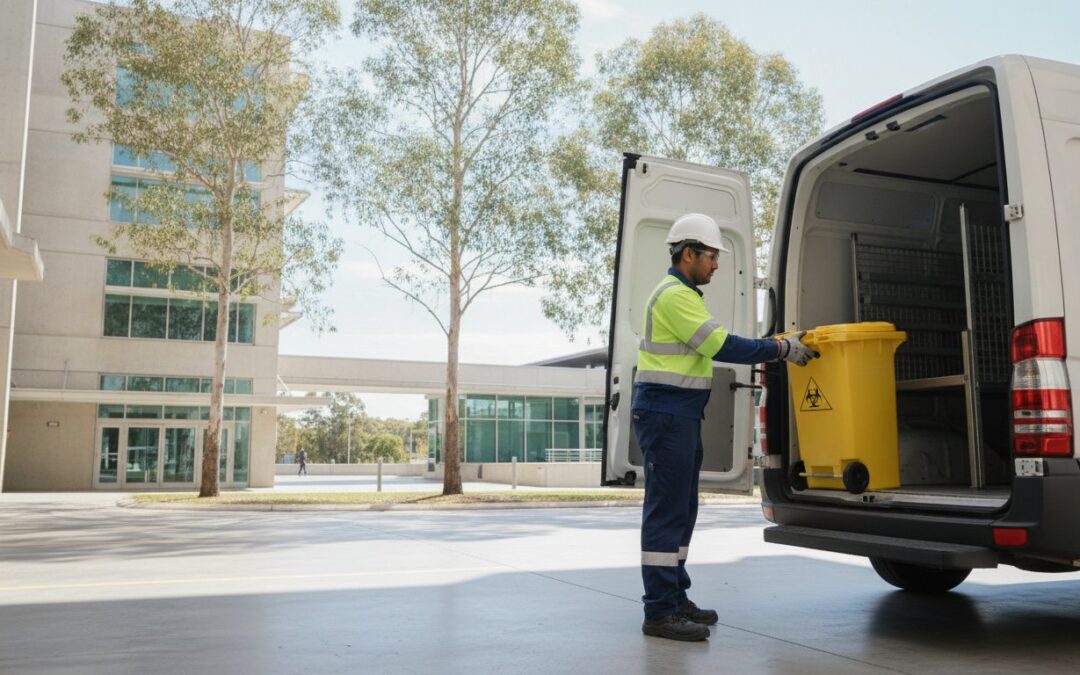
A single oversight in your disposal process could result in corporate fines of up to $2.09 million under the current Victorian penalty unit values for 2026. For healthcare providers and facility managers, the burden of maintaining a secure chain of custody is a constant source of pressure. You likely feel that clinical waste transport in Melbourne is far more than a simple collection service; it’s a critical safety barrier for your staff, your patients, and the public.
We understand the anxiety that stems from navigating complex EPA Victoria regulations and the genuine fear of needle-stick injuries or accidental spills during waste pickups. This guide is designed to help you master the intricacies of Victorian clinical waste transport regulations and safety standards, ensuring your facility remains fully compliant and protected. We’ll provide a clear breakdown of the 2026 EPA Waste Tracker updates, the mandatory colour-coding requirements, and the 72-hour storage limits. By the end of this article, you’ll have a robust framework for a compliant waste management plan and the knowledge to select a reliable transport partner that acts as a safe pair of hands for your facility.
Key Takeaways
- Understand how the Environment Protection Act 2017 governs your legal duties and how to navigate the 2026 EPA Waste Tracker interface updates.
- Learn the specific vehicle requirements, such as leak-proof compartments and climate control, that define compliant clinical waste transport melbourne services.
- Master the Victorian chain of custody to ensure biohazardous materials are meticulously tracked from your facility to the final disposal centre.
- Establish a consistent collection schedule to mitigate the risks of waste accumulation, needle-stick injuries, and heavy non-compliance fines.
- Identify the benefits of partnering with a Victorian specialist who acts as a dependable backbone for your medical or care facility.
What Defines Clinical Waste Transport in Melbourne?
Clinical waste transport in Melbourne is the secure, end-to-end movement of biohazardous materials from the point of generation to an authorised disposal centre. This process serves as a fundamental pillar of public health by ensuring that infectious substances are contained and neutralised before they can impact the community. While standard commercial logistics focus on the movement of inert goods, clinical waste transport melbourne operates under a rigorous chain of custody where every container is tracked and every risk is mitigated through strict engineering controls.
Melbourne facilities cannot rely on standard commercial waste services for these requirements. Biohazardous materials demand specialised containment and climate-controlled environments that general waste trucks don’t provide. Choosing a dedicated specialist ensures that your facility meets its General Environmental Duty (GED) under the Environment Protection Act 2017, which requires all businesses to minimise risks of harm from waste.
The Scope of Biohazardous Materials
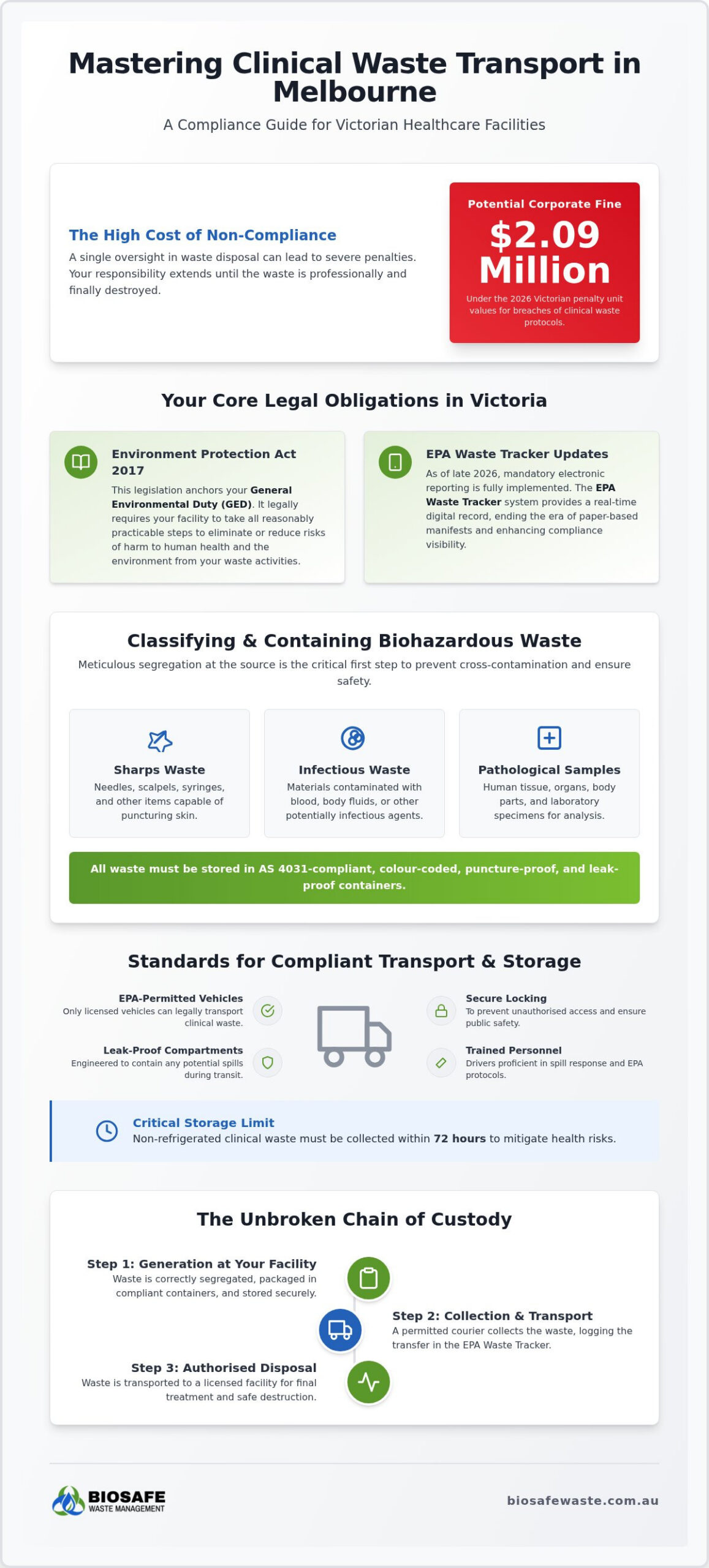
To manage risk effectively, you must first understand What is Clinical Waste? and how it’s categorised in a Victorian context. Clinical transport typically involves the movement of sharps, such as needles and scalpels, alongside infectious waste and pathological samples. Each category requires specific, AS 4031-compliant containers to prevent leaks or punctures during transit. Successful clinical waste transport melbourne begins with meticulous segregation at the source. If infectious waste is mixed with general rubbish, the entire load becomes a biohazard, increasing both your disposal costs and your legal liability. Improper transport of these materials doesn’t just risk environmental contamination; it creates immediate health hazards for waste handlers and the public through potential exposure to bloodborne pathogens.
The Role of Professional Waste Couriers
In Victoria, the transport of clinical waste is a highly regulated activity that standard courier services cannot legally perform. Every vehicle used for this purpose must be EPA-permitted and designed with leak-proof compartments and secure locking mechanisms. These physical safeguards are matched by the specialised training required for drivers, who must be proficient in spill response and the use of the EPA Waste Tracker system. Partnering with a dedicated medical waste collection Victoria provider is a legal necessity for any facility producing biohazardous waste. Professional couriers understand the regional nuances of Melbourne logistics, including the specific permit requirements for CBD pickups and the 72-hour storage limits for non-refrigerated waste. This level of expertise provides a “safe pair of hands” that protects your staff from the physical risks of waste handling while shielding your business from the financial burden of non-compliance.
Victorian EPA Regulations and Transport Compliance
The legal framework for clinical waste transport melbourne is anchored in the Environment Protection Act 2017 and the Environment Protection Regulations 2021. Under Section 25 of this Act, every Victorian business is bound by the General Environmental Duty (GED). This duty requires you to take all reasonably practicable steps to eliminate or reduce risks of harm to human health and the environment from your waste. When biohazardous materials leave your facility, your responsibility doesn’t end at the kerbside; it extends until the waste is professionally treated and destroyed. Using a non-permitted vehicle or an unlicenced carrier is a direct breach of these regulations.
The consequences of non-compliance are severe and financially damaging. For the 2026-2027 financial year, the value of a single Victorian penalty unit is $209.10. Corporations found in breach of clinical waste disposal protocols can face fines of up to 10,000 penalty units, which totals approximately $2.09 million as of July 1, 2026. Beyond these immediate financial penalties, a regulatory breach can lead to permanent reputational damage and the potential suspension of your facility’s operating permits. Entrusting your requirements to a specialised Victorian transport partner ensures these risks are managed with professional sobriety.
Electronic Waste Tracking in 2026
As of late 2026, the Victorian EPA has fully transitioned to mandatory electronic reporting, effectively ending the era of paper-based manifests. The EPA Waste Tracker system provides a real-time digital record of the waste’s journey. As a waste producer, you’re required to create a digital record for every load that leaves your site. You must then verify that the transporter has collected the waste and, crucially, confirm that the receiving facility has accepted it. This cloud-based tracking ensures a transparent chain of custody, allowing regulators to identify exactly where biohazardous material is at any given moment. Digital documentation is now the only acceptable proof of compliance during an EPA audit.
Victorian Clinical Waste Protocols
Adhering to the latest clinical waste handling protocols is essential during the loading phase to ensure transport safety. Every container must be clearly labelled with the appropriate waste category and your facility’s details before the vehicle departs. This includes the mandatory use of yellow containers for general clinical waste and purple for cytotoxic materials. BioSafe manages these complex regulatory requirements on your behalf, providing the necessary documentation and ensuring all waste is correctly categorised for the Waste Tracker system. Our role is to act as the disciplined specialist that maintains your facility’s compliance through every step of the transit process.
Safety Standards for Clinical Waste Transit
The physical security of the vehicle is the primary line of defence during clinical waste transport melbourne. Unlike general freight, biohazardous loads require specialised vehicles engineered with leak-proof, non-porous compartments that are easy to sanitise. Climate control is an essential feature; Victorian regulations mandate that clinical waste must not be stored for more than 72 hours without refrigeration to prevent bacterial growth and odour. Secure locking mechanisms are also mandatory to ensure that hazardous materials are never left unattended or accessible to the public during transit.
Secondary containment provides an additional layer of protection. This involves securing primary waste containers within bunded trays or specialised racking systems that prevent movement and capture any potential leaks before they reach the vehicle body. Driver safety is equally prioritised through rigorous training and the use of site-specific personal protective equipment (PPE). Every driver must be proficient in cross-contamination prevention and the meticulous handling of sharps to protect themselves and your facility’s staff. Every vehicle dedicated to clinical waste collection must carry a specialised spill kit designed for biohazardous materials and chemical neutralisation.
Packaging and Container Integrity
A secure journey begins with the selection of the correct primary container. Sharps must be disposed of in yellow, AS 4031-compliant containers that are puncture-resistant and feature tamper-proof lids. Clinical bags must be heavy-duty and securely tied to maintain integrity during the loading and transit phases. One of the most significant risks to transport safety is overfilling. When containers are filled beyond the designated fill line, they cannot be sealed correctly, which significantly increases the risk of punctures or spills. Maintaining container integrity is a shared responsibility between your facility and your transport partner.
Emergency Response and Spill Management
In the event of an incident, professional transporters follow a disciplined emergency response plan. If a spill occurs during transport, mandatory reporting to the EPA and immediate containment protocols are triggered. Melbourne-based response teams are trained to manage biohazardous cleanup with clinical precision, ensuring that any environmental exposure is neutralised. By employing professional transport services, you ensure that these high-stakes scenarios are handled by experts who understand the gravity of the situation. This meticulous approach to spill management is what distinguishes a dedicated specialist from a standard logistics provider.
Logistics and the Chain of Custody
The logistics of clinical waste transport melbourne involve a meticulous sequence of events that begins the moment a bin is sealed. Mapping the waste route across Melbourne’s transport corridors requires a disciplined approach to ensure that transit times are minimised and safety protocols are maintained. Every movement is recorded within the digital tracking system, providing healthcare managers with the transparency needed to build trust in their disposal partner. This chain of custody serves as an essential record, proving that biohazardous materials have been handled with the required professional sobriety from the point of origin to the final treatment facility. It’s this unwavering commitment to order that allows facility managers to focus on patient care while their waste requirements are managed by a safe pair of hands.
Maintaining a consistent medical waste collection schedule is vital for facility hygiene and overall safety. It prevents the accumulation of hazardous materials and ensures that your site never exceeds the regulatory thresholds for waste storage. Upon successful delivery to the treatment centre, you receive a final waste manifest or certificate of destruction. This document is your ultimate proof of compliance, confirming that the waste has been neutralised according to Victorian standards. This verification process is a critical component of your risk management strategy, shielding your facility from legal liability and potential environmental audits.
Managing Decentralised Care Settings
Transporting clinical waste from decentralised care settings, such as NDIS and home-care providers, presents distinct challenges across Melbourne’s sprawling suburbs. These environments require discreet, respectful transport solutions that integrate seamlessly into residential areas without causing unnecessary alarm. Small-scale facilities, including tattoo studios and veterinary clinics, often require customised pickup frequencies that reflect their lower waste volumes while still adhering to strict safety timelines. A flexible transport partner understands that a one-size-fits-all approach is insufficient for the diverse landscape of Melbourne’s healthcare sector. Providing a supportive partnership for these smaller providers is just as critical as managing the high-volume needs of a metropolitan hospital.
Optimising Transport Efficiency
Modern logistics software allows for route optimisation that reduces the carbon footprint of clinical waste management. By planning the most efficient path through Melbourne’s traffic, transporters can reduce fuel consumption and emissions while maintaining reliable service windows for their clients. Efficiency also plays a critical role in managing the medical waste disposal cost Melbourne facilities face, particularly as metropolitan levies and transport distances continue to evolve. Balancing these economic factors with the uncompromising requirements of biohazardous transport is the hallmark of a seasoned specialist. To ensure your facility’s logistics are handled by a specialist who understands these Victorian nuances, you can partner with BioSafe Waste Management for your transport needs.
Securing Your Facility with BioSafe Waste Management
BioSafe Waste Management operates as the disciplined specialist that Melbourne facilities require to navigate the high-stakes environment of biohazardous waste. We provide a supportive partnership that acts as a safe pair of hands, ensuring that every aspect of your clinical waste transport melbourne is managed with meticulous attention to detail. Being a Victorian-owned and operated business, we possess an intimate understanding of regional EPA nuances, including the specific requirements of the 2026 Waste Tracker interface and local metropolitan landfill levies. This regional expertise allows us to offer a level of stability and reliability that larger, national organisations often struggle to replicate.
Our service model is designed for seamless integration into your existing operations. We manage the entire lifecycle of your waste, from the initial supply of AS 4031-compliant bins to the final disposal and compliant reporting. Meticulous transport is the backbone of any successful clinical waste strategy; without it, even the best on-site segregation efforts can lead to regulatory failure. By providing a transparent and fully documented process, we ensure that your facility remains a safe environment for both staff and the public. We take pride in being the quiet but essential backbone for medical and care centres across the metropolitan area.
The BioSafe Difference: Professionalism and Duty
Our commitment to clinical hygiene is grounded in a sense of serious responsibility. We understand that dental clinics, veterinary practices, and aged care facilities face unique pressures regarding waste volume and staff safety. BioSafe provides a consistent and unwavering service that prioritises the protection of your team from needle-stick injuries and exposure risks. The peace of mind that comes with a professional chain of custody cannot be overstated. When you partner with us, you’re choosing a specialist that values precision and professional integrity over aggressive marketing. Our drivers and consultants act as seasoned experts who understand the gravity of the work they perform daily.
Getting Started with Compliant Transport
Transitioning to a professional service begins with a thorough audit of your current transport arrangements to identify any regulatory gaps. Many facilities discover that their existing providers haven’t fully adapted to the 2026 electronic manifest requirements or the mandatory vehicle specifications for secondary containment. During your first pickup with BioSafe, you can expect a methodical briefing on our collection protocols and a clear demonstration of how we record data for the EPA. This steady, step-by-step approach ensures a smooth transition without disrupting your daily operations. To begin securing your facility, Contact BioSafe Waste Management for a tailored transport assessment that aligns with your specific clinical needs.
Maintaining a Compliant Chain of Custody for 2026
Maintaining a secure and compliant facility depends on a logistics strategy that prioritises precision over convenience. As Victorian regulations continue to evolve, the necessity for a disciplined approach to clinical waste transport melbourne becomes even more critical for healthcare providers. Meeting your General Environmental Duty involves more than just correct segregation; it requires a transparent chain of custody supported by real-time digital tracking and specialised containment protocols that protect your staff from the physical risks of waste handling.
By partnering with a 100% Australian owned and operated specialist, you ensure your waste is managed by experts who understand the regional nuances of Melbourne’s sanitation industry. BioSafe provides the security of Victorian EPA-permitted transport vehicles and specialist dental and medical waste protocols to keep your facility protected from the financial and reputational risks of non-compliance. You don’t have to navigate these complex legal requirements alone.
Secure your facility with EPA-compliant clinical waste transport from BioSafe and gain the stability of a dedicated Victorian partner. We’re here to provide the consistent, unwavering support your facility needs to thrive in a strictly regulated environment.
Frequently Asked Questions
Is a special licence required to transport clinical waste in Melbourne?
Yes, clinical waste transport melbourne requires an EPA-permitted vehicle and a licensed provider. Under the Environment Protection Act 2017, only authorised transporters can legally move biohazardous materials. This ensures vehicles meet specific safety standards, such as leak-proof compartments and secure locking mechanisms. Relying on unlicensed carriers is a breach of your General Environmental Duty and can result in significant corporate fines exceeding two million dollars in 2026.
How often should my clinical waste be transported for disposal?
Your collection frequency depends on your waste volume and storage capabilities. Victorian regulations mandate that clinical waste must not be stored for more than 72 hours unless it’s kept in a refrigerated environment. Most Melbourne facilities establish a weekly or fortnightly medical waste collection schedule to ensure they remain compliant and maintain high hygiene standards. Regular pickups prevent the accumulation of biohazardous materials and reduce the risk of accidental exposure or spills.
Can I transport clinical waste in my own vehicle to save costs?
You cannot legally transport clinical waste in a private, unlicensed vehicle to save costs. Victorian law requires that all clinical waste movements are conducted using EPA-permitted transport. Standard passenger vehicles lack the necessary engineering controls, such as secondary containment and spill kits, required for biohazardous transit. Attempting to transport these materials yourself violates the Environment Protection Regulations 2021 and exposes your business to severe legal liability and potential environmental contamination risks.
What documentation do I need to provide before the waste is collected?
Before collection, you must ensure all containers are correctly labelled and that a digital record is created in the EPA Waste Tracker system. You’ll need to provide details regarding the waste category, such as whether it’s general clinical, cytotoxic, or sharps. This information is used to generate the electronic waste manifest, which serves as the primary documentation for the chain of custody. Accurate records are essential for proving your facility’s adherence to Victorian compliance standards.
What happens to the clinical waste once it leaves my Melbourne facility?
Once the waste leaves your Melbourne facility, it’s transported to a licensed treatment centre for neutralisation. Depending on the waste type, it may undergo high-pressure steam sterilisation in an autoclave or high-temperature incineration for cytotoxic materials. After the waste is rendered non-infectious, it’s safely disposed of in a managed landfill. You will receive a final manifest or certificate of destruction to verify that the disposal process is complete and compliant with all state regulations.
How does the EPA Waste Tracker work for clinical waste transport?
The EPA Waste Tracker is a mandatory digital interface used to document the movement of clinical waste transport melbourne in real-time. As a waste producer, you initiate the tracking process by creating a record for each load. The transporter then confirms the collection, and the treatment facility confirms receipt. This cloud-based system replaces traditional paper manifests, ensuring a transparent chain of custody that regulators can monitor to prevent illegal dumping or improper handling.
Are there different transport requirements for sharps versus pharmaceutical waste?
Yes, sharps and pharmaceutical waste have distinct transport requirements. Sharps must be placed in yellow, puncture-resistant containers that comply with AS 4031 standards to prevent needle-stick injuries during transit. Pharmaceutical waste often requires different containment and disposal protocols, particularly for hazardous substances that cannot be flushed. Both categories must be clearly identified on your waste manifest to ensure they’re routed to the correct treatment stream and handled with appropriate safety measures by your transport partner.
What should I do if a clinical waste spill occurs during the loading process?
If a spill occurs during the loading process, you must immediately implement your facility’s spill response plan. This involves containing the spill using a biohazard spill kit, neutralising the area with appropriate disinfectants, and ensuring staff wear correct PPE. Any significant incident must be reported to the EPA as part of your regulatory obligations. Professional transport partners like BioSafe are trained to assist in these scenarios, ensuring that any exposure is contained with clinical precision.