
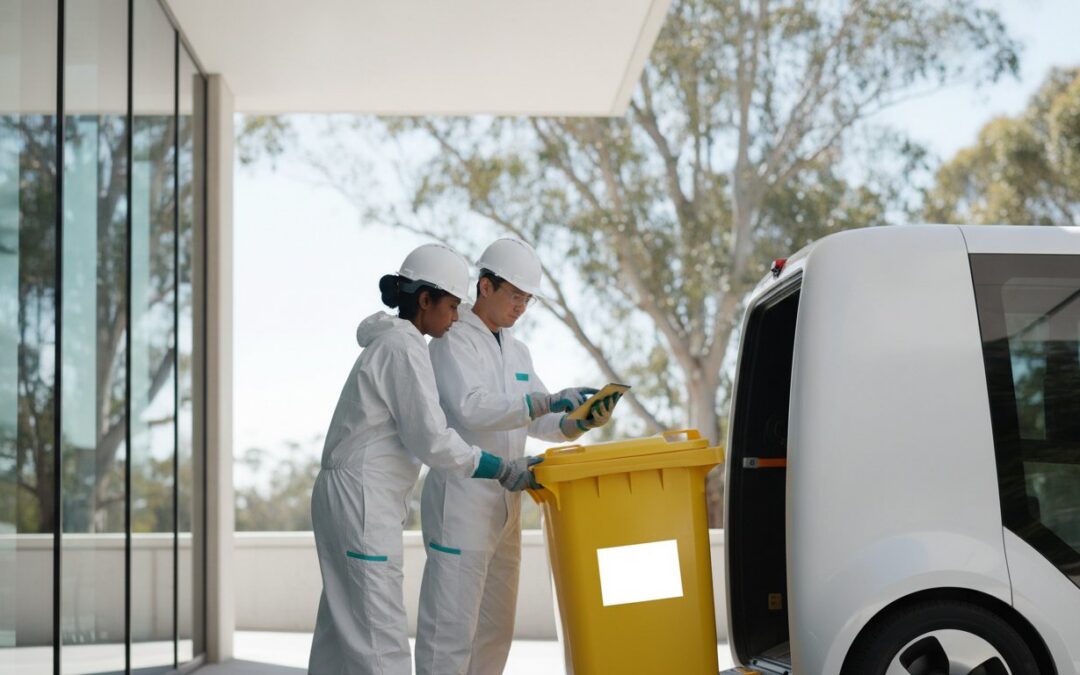
A single oversight in your waste segregation protocol can lead to more than just a financial penalty; it represents a fundamental breach in the safety net protecting your staff and the Victorian public. With EPA fine units currently valued at $209.10, the cost of procedural errors is high, yet the anxiety surrounding needle-stick injuries and biohazard exposure often weighs more heavily on facility managers. You understand that maintaining a clinical environment requires more than just cleanliness; it demands a rigorous, disciplined approach to infectious waste disposal Victoria healthcare providers can rely on.
We recognise that the transition to mandatory digital reporting through the EPA Waste Tracker has introduced new layers of administrative complexity. This guide serves as a professional reference to help you master Victorian clinical waste regulations and ensure your facility remains fully compliant. You’ll gain a comprehensive understanding of the 2026 tracking requirements, precise segregation techniques for various biohazardous streams, and streamlined workflows designed to protect your team from the inherent risks of medical waste handling.
Key Takeaways
- Identify the specific legal criteria under the Environment Protection Act 2017 that determine how your facility must classify infectious biohazards.
- Master the mandatory EPA Waste Tracker system to digitise your reporting and protect your organisation from the risk of substantial financial penalties.
- Optimise your infectious waste disposal Victoria workflows by applying the correct “Yellow Bin” and sharps container standards for clinical safety.
- Establish secure on-site storage protocols that isolate hazardous materials from the public while maintaining a streamlined path for collection.
- Learn the essential benchmarks for selecting a waste partner who provides the transparent reporting and EPA certification your facility requires.
Defining Infectious Waste within the Victorian Healthcare Landscape
Under the Environment Protection Act 2017, Victoria defines infectious waste as a specific subset of clinical waste that has the potential to cause disease. It isn’t merely about the presence of a microorganism; it’s about pathogens being present in a high enough concentration and virulence that exposure could lead to infection in a susceptible host. This technical distinction is vital for anyone managing infectious waste disposal Victoria wide. It dictates the level of containment, labelling, and tracking required by law to ensure public safety and environmental protection.
To maintain a safe facility, you must distinguish between clinical waste, such as human tissue or blood-soaked items, and sharps like needles or scalpels. While Defining Biomedical Waste often involves broad international categories, Victorian regulations are precise about segregation at the point of generation. General waste bins are strictly for non-contaminated items like office paper or hand towels. Mixing infectious materials into general streams creates an immediate biohazard risk for waste collectors. It also compromises the integrity of the Victorian waste stream, often leading to the rejection of entire loads at processing centres.
Common Sources of Infectious Waste in Victoria
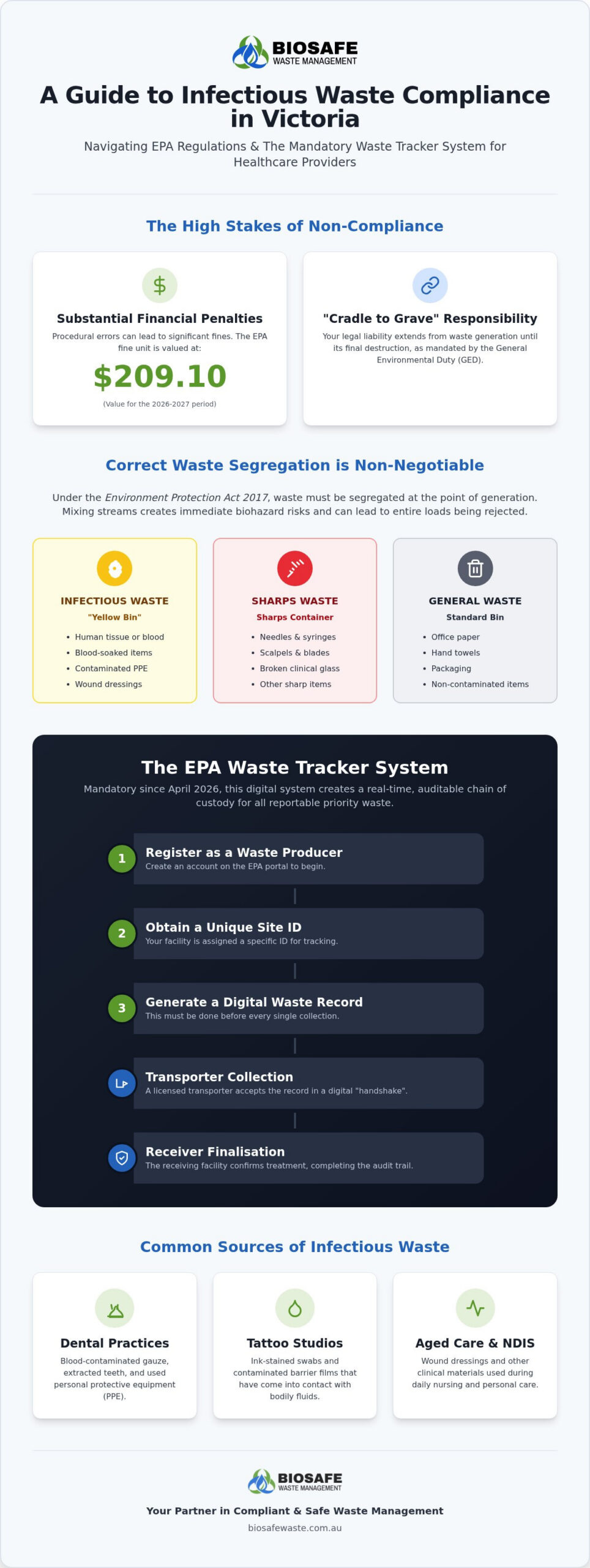
Different sectors produce varied waste profiles that require specific handling protocols. Dental practices frequently manage blood-contaminated gauze, extracted teeth, and used PPE. Tattoo studios must dispose of ink-stained swabs and contaminated barrier films that have come into contact with bodily fluids. In the aged care and NDIS sectors, the focus often shifts to wound dressings and clinical materials used during daily nursing care. Each of these items requires immediate disposal into approved yellow clinical waste containers to prevent cross-contamination within the facility.
The Legal Duty of Care for Victorian Facility Managers
Victorian facility managers operate under a “cradle to grave” responsibility. This means your legal liability doesn’t end when the waste leaves your front door; you’re responsible for ensuring it’s handled correctly until its final destruction. The General Environmental Duty (GED) requires you to take all reasonable steps to minimise risks to human health and the environment. Failing this duty is a serious matter. With fine units valued at $209.10 for the 2026-2027 period, even minor administrative errors in your disposal workflow can result in significant financial consequences for your organisation.
The Regulatory Framework: EPA Victoria and the Waste Tracker System
EPA Victoria acts as the state’s environmental watchdog, enforcing the Environment Protection Act 2017. Their primary tool for oversight is the digital Waste Tracker system, which became mandatory for all reportable priority waste in April 2026. This system eliminates the old paper-based certificates, replacing them with real-time data that monitors the movement of biohazards. By requiring a digital “handshake” at every stage, the EPA can instantly identify if waste has been diverted or illegally dumped. This high level of accountability is essential for the integrity of infectious waste disposal Victoria protocols. The system creates a clear chain of custody between the producer who generates the waste, the transporter who moves it, and the receiver who treats it. It ensures that no hazardous materials disappear from the regulatory radar, protecting the Victorian community from environmental contamination.
Navigating the Waste Tracker Portal
Registering your clinic as a waste producer is the first step toward compliance. You’ll need to create an account on the EPA portal and obtain a unique site ID. Once registered, you must generate a digital waste record before any collection occurs. This process identifies the specific waste type and volume, providing the transporter with the necessary legal documentation.
Generating these digital records for every collection is a non-negotiable requirement. It’s not enough to simply have a bin; you must prove where that bin goes. The portal allows you to track the waste from the moment it leaves your facility until it’s safely processed at a licensed receiving centre. This data provides the audit trail necessary to demonstrate your compliance during an EPA inspection.
EPA Licencing for Waste Transport
Not all transport services are authorised to handle clinical materials. You must only engage contractors who hold a valid EPA licence for the specific waste codes your facility generates. Using a general courier or an unlicensed provider is a breach of the General Environmental Duty. A licensed partner like BioSafe Waste Management ensures that every vehicle and driver meets the rigorous safety standards required by Victorian law.
Checking a partner’s credentials isn’t just a best practice; it’s a legal safeguard. It protects your staff and the broader community from the risks of mishandled biohazards. Only a specialist who understands the sobriety of these regulations can provide the security your facility needs for compliant infectious waste disposal Victoria. By choosing an expert who prioritises meticulousness, you ensure that your facility remains a safe environment for both patients and staff.
Classification and Segregation: Identifying Your Waste Streams
Precise segregation is the foundation of a safe clinical environment and remains a non-negotiable aspect of the General Environmental Duty. In Victoria, the yellow bin is the mandatory standard for clinical and infectious materials, including blood-stained items, human tissue, and contaminated laboratory waste. It’s essential to distinguish these from cytotoxic waste, which requires dedicated purple bins for materials contaminated by cytotoxic drugs, and separate pharmaceutical waste streams. Mixing these categories can lead to improper treatment methods and serious regulatory breaches. For a comprehensive breakdown of container types and labelling, refer to our Clinical Waste Bin Requirements: Victoria Compliance Guide. This resource helps you align your facility with current EPA standards and ensures that every waste stream is handled with the required level of sobriety. Facilities managing medications alongside clinical materials should also review the biohazard waste disposal regulations Victoria requires for pharmaceutical streams to ensure full compliance across all waste categories.
Sharps Management for Victorian Clinics
Sharps management requires meticulous attention to detail to prevent needle-stick injuries and potential pathogen transmission. All sharps containers must comply with Australian Standard AS 4031 to ensure they are puncture-resistant, leak-proof, and designed for secure closure. You should place these bins at eye level and as close to the point of use as possible to minimise the handling and movement of exposed needles or scalpels. A critical safety protocol is the “three-quarters full” rule; you must never allow a sharps container to overflow. Once the waste reaches the designated fill line, the container must be sealed immediately and prepared for infectious waste disposal Victoria collection to maintain a secure environment for your staff and patients.
Specialist Waste: Dental and Tattoo Studios
Facilities like dental clinics and tattoo studios face unique challenges in managing their biohazardous output and chemical residues. Dental practices must utilise amalgam separators to prevent heavy metals from entering the sewerage system, alongside specialised disposal for dental chemicals and extracted teeth. Similarly, tattoo studios must handle contaminated ink swabs, barrier films, and needles as high-risk infectious waste. For more sector-specific advice on managing these risks, see our guide on Dental Waste Management and sharps Disposal in Victoria. Effective infectious waste disposal Victoria relies on these niche protocols to protect both the operator and the public from cross-contamination. This disciplined approach ensures your studio or clinic remains a safe, compliant space that meets the highest professional standards.
Best Practices for Safe On-site Handling and Storage
Establishing a dedicated waste storage area is a critical component of your facility’s safety infrastructure. This space must be isolated from public access and patient zones to prevent accidental exposure or tampering. Effective infectious waste disposal Victoria relies on the disciplined movement of waste from the point of generation to a secure, centralised holding point. By keeping these streams separate from the daily traffic of your clinic, you maintain a high standard of clinical hygiene and professional order.
Clear signage, meeting Victorian health and safety standards, must be displayed at every disposal point and on the doors of the storage centre. Staff training isn’t a one-off event; it’s a continuous requirement. Every team member should understand how to handle biohazardous materials and where to find the spill kit. These kits must be readily available and stocked with appropriate absorbents, hospital-grade disinfectants, and replacement PPE to manage any accidental breach of containment. Having a prepared emergency response protocol ensures that your team can act with steady confidence if a spill occurs.
Staff Safety and PPE Protocols
When handling infectious waste bags or bins, staff must wear mandatory PPE, including puncture-resistant gloves and protective eyewear where splashing is a risk. Hand hygiene stations should be positioned near all waste disposal points to encourage immediate decontamination after waste is secured. If a needle-stick injury occurs, your facility must have a documented management plan. This includes immediate first aid, formal reporting, and clinical follow-up. Maintaining a transparent and supportive response to these incidents is essential for the long-term safety of your workforce.
Storage Area Requirements
The dedicated storage centre must be designed with adequate ventilation and temperature control to minimise odours and prevent the growth of pathogens. This is particularly vital for clinical waste that may sit for several days before a scheduled pickup. Security is paramount; the area must be locked to prevent unauthorised access by patients or visitors. Pest control measures are equally essential to ensure rodents or insects don’t compromise the integrity of your waste containers. A regular cleaning schedule for the storage centre should be enforced, using appropriate disinfectants to maintain a sanitary environment.
By treating the storage area with the same level of meticulousness as a treatment room, you uphold the highest standards of clinical excellence. If you need assistance in auditing your current storage protocols or require a reliable collection schedule, contact BioSafe Waste Management for professional guidance on infectious waste disposal Victoria.
Choosing a Reliable Partner for Clinical Waste Collection
Selecting a waste management provider is a decision that impacts your facility’s legal standing and operational safety. You should evaluate service frequency based on your actual waste volume to ensure hazardous materials don’t sit on-site longer than necessary. A reliable partner provides transparent reporting and essential EPA compliance certificates, which serve as your primary defence during audits. Local Victorian expertise is indispensable for managing infectious waste disposal Victoria; a provider must have a deep, practical understanding of state-specific regulations to ensure your adherence to the law. Unlike national providers who may apply a one-size-fits-all model, a local specialist understands the specific expectations of EPA Victoria inspectors and the nuances of the Environment Protection Act 2017. For more detailed insights into professional standards, see our Medical Waste Collection Victoria: Professional Compliance and Disposal Guide.
Tailored Solutions for NDIS and Aged Care
Residential and home-care settings require a more nuanced approach than a standard hospital environment. We provide discreet collection services that prioritise the dignity and privacy of residents while efficiently managing high-volume sanitary and clinical waste. Maintaining hygiene in these sensitive environments demands a consistent, reliable clinical waste collection workflow that protects both the care recipients and the staff. By implementing a specialised collection schedule, you ensure that biohazardous materials are removed promptly, reducing the risk of cross-contamination in communal living spaces. This disciplined approach is essential for facilities that must balance strict clinical protocols with the comfort and security of a residential setting.
The BioSafe Commitment to Victoria
BioSafe Waste Management positions itself as a “safe pair of hands” for facilities across the state. We understand that small to medium clinics often struggle with the administrative burden of infectious waste disposal Victoria requirements. To address this, we offer fixed-price reliability that helps you manage your budget without compromising on safety or compliance. This transparency eliminates the anxiety of hidden levies or unexpected administrative fees that can disrupt your facility’s operations. Our team provides direct support for your EPA Waste Tracker documentation, ensuring that every handshake in the digital system is recorded accurately. This partnership allows you to focus on patient care while we maintain the quiet, essential backbone of your facility’s sanitation and regulatory adherence.
Securing Your Facility’s Regulatory Future
Upholding the standards of the Environment Protection Act 2017 is a continuous commitment to clinical excellence. By masterfully managing waste segregation and the digital requirements of the EPA Waste Tracker, you establish a facility that prioritises the safety of your team and the Victorian public. These rigorous protocols do more than just prevent financial penalties; they form the essential backbone of a reliable healthcare environment. Maintaining this level of meticulousness ensures that your duty of care is met with the gravity it deserves.
As a fully EPA-licenced Victorian waste transporter, we provide the specialised expertise required by dental, tattoo, and aged care sectors. Our team offers comprehensive support for your EPA Waste Tracker reporting, ensuring your documentation remains as precise as your clinical care. You can maintain a secure, hygienic environment by trusting a partner who understands the high stakes of infectious waste disposal Victoria. We pride ourselves on being the quiet, dependable specialist that medical and care facilities rely on for operational stability. For a complete overview of what to look for in a service provider, our Reliable Clinical Waste Collection in Victoria: The 2026 Practitioner’s Guide outlines the essential criteria for securing total EPA compliance and protecting your operational continuity.
Enquire about EPA-compliant infectious waste disposal from BioSafe Waste Management to ensure your facility remains a safe pair of hands. We’re ready to provide the steady, professional support you need to navigate the complexities of 2026 compliance with total confidence.
Frequently Asked Questions
What is the definition of infectious waste in Victoria?
Infectious waste in Victoria is a subset of clinical waste that contains pathogens in sufficient concentrations and virulence to cause disease in a susceptible host. This includes human tissue, blood-soaked swabs, and contaminated laboratory waste. Under the Environment Protection Act 2017, these materials are classified as priority waste. Proper identification is the first step in ensuring your facility meets its General Environmental Duty and avoids cross-contamination with general waste streams.
How do I use the EPA Victoria Waste Tracker for my clinic?
You must register your clinic as a waste producer on the EPA Victoria portal to use the digital Waste Tracker system. Once your account is active, you generate a digital waste record for every collection, which creates a secure chain of custody. This system replaced paper certificates in April 2026. It requires a digital handshake between you, your licensed transporter, and the receiving facility to confirm the waste has been safely processed.
How often should infectious waste be collected from a dental practice?
Collection frequency for dental practices depends on your specific waste volume and the storage capacity of your facility. Most Victorian dental clinics require at least a monthly collection to prevent the accumulation of biohazardous materials like blood-stained gauze and extracted teeth. Regular pickups ensure that your storage area remains sanitary and complies with the 2026 EPA guidelines regarding the safe management of infectious waste disposal Victoria healthcare providers must follow.
Can I dispose of clinical waste in my regular council bin?
No, you must never dispose of clinical or infectious waste in a regular municipal council bin. Doing so creates a significant public health risk and is a direct breach of the Environment Protection Act 2017. Clinical waste requires specialised treatment, such as autoclaving or incineration, which standard landfill processes don’t provide. Improper disposal can lead to heavy financial penalties and immediate intervention from the EPA Victoria enforcement team.
What are the requirements for a clinical waste bin in Victoria?
Clinical waste bins in Victoria must be yellow, clearly labelled with the biohazard symbol, and compliant with Australian Standards. These containers must be puncture-resistant, leak-proof, and have a secure lid to prevent spills or unauthorised access. Sharps must be placed in dedicated rigid containers that meet AS 4031 standards. Ensuring your bins meet these technical specifications is vital for maintaining a safe, EPA-compliant workflow within your medical or care facility.
Do I need a special licence to transport my own clinical waste?
You generally can’t transport your own clinical waste without a specific EPA licence if the waste is classified as reportable priority waste. Victorian law requires that these materials are moved by fully EPA-licenced transporters using specialised vehicles. Attempting to transport biohazardous waste in a private vehicle poses significant safety risks and legal liabilities. It’s best to partner with a professional service provider who manages all tracking and compliance requirements on your behalf.
What happens if I don’t comply with Victorian infectious waste laws?
Failing to comply with Victorian infectious waste laws can result in substantial financial penalties and legal action under the Environment Protection Act 2017. For the 2026-2027 period, a single fine unit is valued at $209.10, and multiple units can be applied for serious breaches. Beyond financial costs, non-compliance can lead to the suspension of your clinical operations and damage your professional reputation within the Victorian healthcare community.
How should I dispose of sharps in a Victorian tattoo studio?
Sharps in a Victorian tattoo studio must be disposed of in a rigid, puncture-resistant container that complies with Australian Standard AS 4031. These bins should be yellow and placed as close to your workstation as possible to minimise the handling of contaminated needles. Once the container is three-quarters full, it must be sealed and collected by a licensed provider of infectious waste disposal Victoria tattooists can rely on for professional safety.