
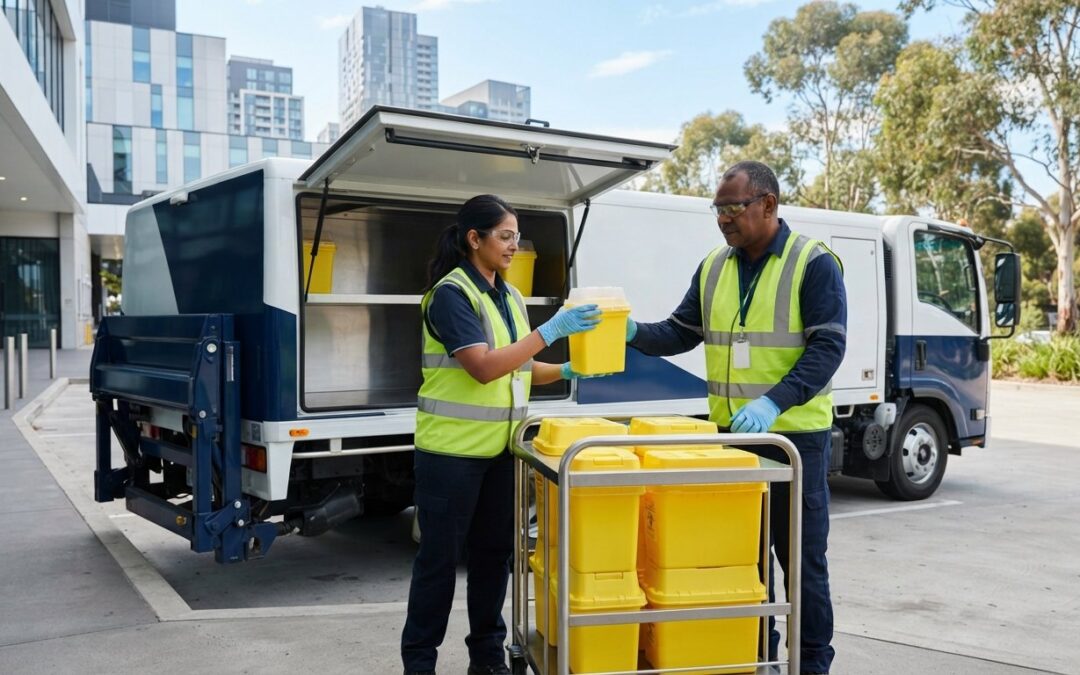
In the high-stakes environment of a Victorian medical facility, a single missed sharps container collection in Melbourne isn’t just a logistical hiccup; it’s a critical breach of your duty of care. You likely recognise that maintaining a sterile, secure environment requires more than just diligence. It demands a level of meticulousness that accounts for every needle and blade from the moment of use to final disposal. The persistent fear of an EPA fine or the trauma of a staff needle-stick injury shouldn’t be a routine part of your workday, yet unreliable collection schedules often make these risks feel unavoidable.
We understand that your primary responsibility is the protection of your patients and professional team. This guide is designed to help you master the complexities of EPA-compliant sharps disposal and organise a seamless collection service for your Melbourne facility. We’ll provide a comprehensive overview of the 2026 regulatory landscape, the technical requirements of Australian Standards, and the practical steps needed to achieve zero-friction waste management. This briefing offers a clear roadmap for ensuring your facility remains fully compliant, safe, and prepared for any rigorous audit.
Key Takeaways
- Distinguish between professional B2B services and residential drop-off points to maintain a secure, documented chain of custody.
- Ensure all on-site containers strictly adhere to AS 4031:1992 or AS/NZS 4261:1994 standards to meet Victorian clinical safety requirements.
- Organise a reliable sharps container collection Melbourne schedule by conducting a waste volume audit to determine appropriate bin sizes and pick-up frequencies.
- Identify the specific EPA waste codes and colour-coding protocols, such as yellow for clinical and purple for cytotoxic waste, required for 2026 compliance.
- Mitigate the risk of staff injuries and regulatory fines by partnering with a specialist provider for end-to-end biohazardous waste management.
Understanding Sharps Container Collection in Melbourne
Professional sharps container collection in Melbourne is a specialised B2B service designed for the secure management of biohazardous waste. It’s far more than a simple waste removal task; it’s a regulated process that ensures dangerous materials are handled with the sobriety they require. Unlike residential programs where individuals take single containers to a local pharmacy, commercial facilities are legally prohibited from using public drop-off points for their business waste. You must engage a professional service that provides a documented chain of custody from the moment the waste is generated until its final destruction.
The distinction between public disposal and professional collection is critical for maintaining regulatory compliance. While local councils might offer bins for community use, these aren’t built for the volume or the strict reporting standards expected of a medical or dental clinic. A robust sharps waste management strategy ensures your facility is actively mitigating risk rather than just reacting to it. This involves the systematic handling of various items, including hypodermic needles, scalpels, lancets, and contaminated glass shards that have been in contact with infectious agents.
The Legal Framework for Victorian Facilities in 2026
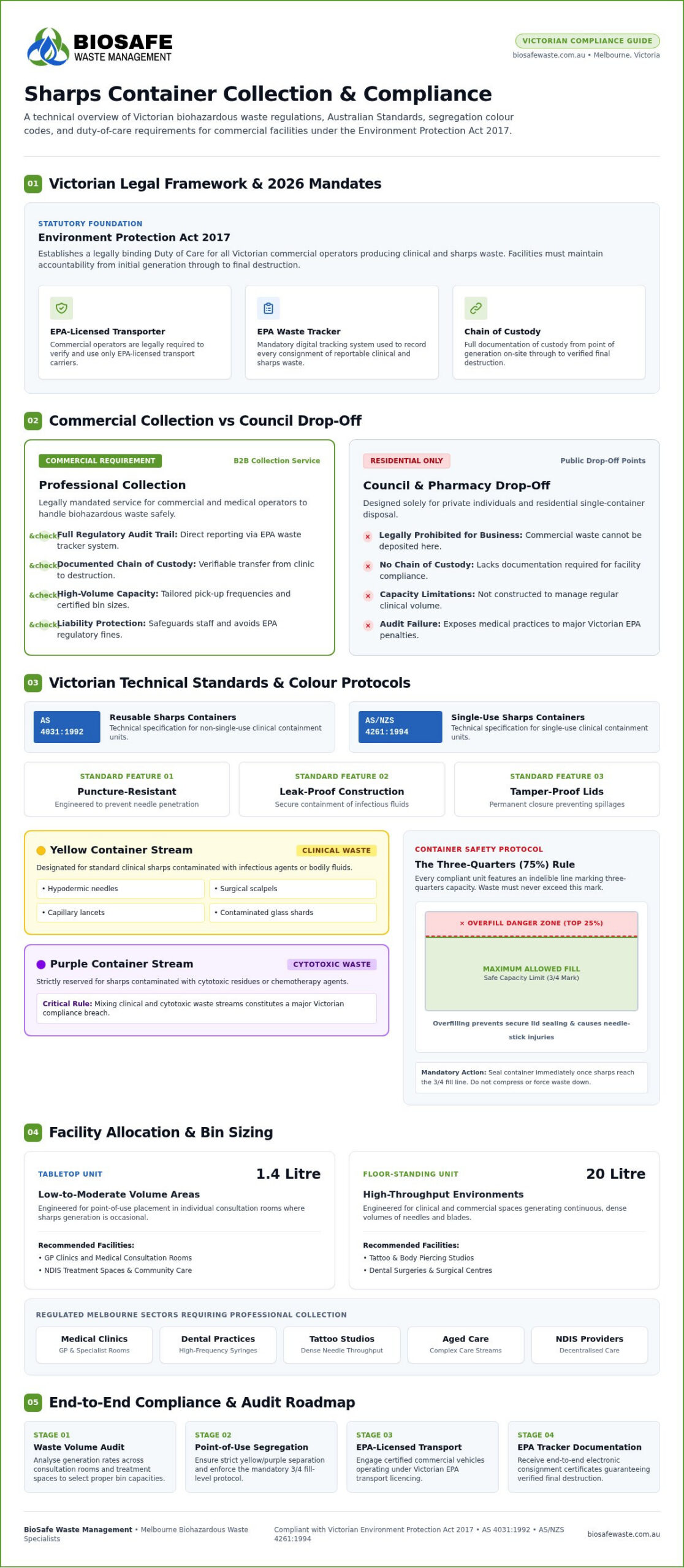
The Environment Protection Act 2017 serves as the foundation for waste laws in Victoria, imposing a strict “Duty of Care” on any business that produces clinical waste. As a facility manager, you’re responsible for ensuring that sharps are stored and transported in a manner that minimises risks to the public and your staff. This obligation doesn’t end at your back door; you must verify that your chosen provider is an EPA-licensed transporter. Victorian businesses are now required to use the EPA waste tracker system to record the movement of all reportable clinical and sharps waste.
Who Requires Professional Collection Services?
Specific industries in Melbourne face higher risks and more frequent disposal requirements than others. Dental practices and medical clinics, for example, generate a steady volume of sharps that necessitate high-frequency pick-ups to prevent bins from overfilling. Tattoo and piercing studios also require specialised biohazard management because of the sheer volume of needles used in their daily craft. Similarly, aged care facilities and NDIS providers manage complex waste streams where reliability is essential for maintaining a safe living environment. A professional sharps container collection Melbourne service provides the consistency needed to keep these high-pressure environments compliant and safe.
Victorian Standards for Sharps Containers and Storage
Compliance begins with the physical hardware used to contain biohazardous materials. In Victoria, commercial facilities are strictly required to use containers that meet AS 4031:1992 for reusable units or AS/NZS 4261:1994 for single-use containers. These standards ensure that bins are puncture-resistant, leak-proof, and equipped with tamper-proof lids. Unlike residential advice that might suggest repurposed plastic bottles, professional environments must use certified equipment to maintain a safe chain of custody. Using non-compliant containers exposes your facility to significant EPA penalties and increases the risk of accidental needle-stick injuries during handling.
The colour-coding system is a vital component of Victorian clinical safety protocols. Yellow containers are designated for standard clinical sharps, while purple containers are reserved for cytotoxic waste, such as those contaminated with residues from chemotherapy. Mixing these waste streams is a major compliance breach. Additionally, every container features a clearly marked “fill line,” usually at the three-quarters mark. You must never allow waste to exceed this limit; overfilling prevents the lid from sealing correctly and is a primary cause of injury during the final closure process. When selecting equipment, ensure your provider supplies AS-compliant sharps containers as part of your service agreement.
Selecting the Right Bin Size for Your Facility
Effective waste management requires matching bin capacity to your actual usage rates. Small 1.4L tabletop bins are ideal for individual consultation rooms where needle use is occasional, such as in GP clinics or NDIS treatment spaces. Conversely, high-volume environments like tattoo studios or dental surgeries often require 20L floor units to manage their throughput safely. You should align your bin size with your sharps container collection Melbourne schedule to ensure that no container reaches its fill line before the next scheduled pick-up. This balance prevents the dangerous practice of “tamping down” waste to make more room. For a detailed breakdown of bin sizing options and rental structures suited to your clinical volume, the Victoria biohazard bin hire guide for healthcare providers offers practical guidance on selecting the right medical waste bin collection Melbourne solution.
On-Site Storage Protocols Before Collection
Once a sharps container is sealed, it must be moved to a secure storage area while awaiting transport. Victorian regulations require these storage zones to be restricted from unauthorised access, typically via a locked room or a designated cage. The area should be bunded to contain potential leaks and must display clear biohazard signage that identifies the contents as clinical waste. It’s also important to manage your inventory levels carefully; Victorian guidelines generally stipulate that clinical waste should not be stored on-site for more than 90 days to maintain hygiene and safety standards. Following these protocols ensures your facility remains audit-ready at all times.
Professional Collection vs. Council Drop-Off Points
While various local councils provide public disposal units across the city, these are strictly intended for community use and individual residents. Commercial entities that attempt to utilise residential waste infrastructure face significant legal and operational risks. A professional sharps container collection Melbourne service offers a verified chain of custody, ensuring that biohazardous waste is tracked with precision from your facility to the point of final destruction. This level of oversight is absent in public drop-off scenarios, where waste is often mixed and untraceable.
The provision of Waste Transfer Notes is a critical differentiator. These documents serve as your legal shield, providing undeniable proof that you’ve fulfilled your regulatory obligations. Without this documentation, your facility lacks an audit trail, which can lead to substantial EPA penalties during a compliance review. Additionally, the time-cost of staff travelling to public bins is often overlooked. It’s a poor use of clinical resources and introduces a severe liability risk; if a needle-stick injury occurs during transport in an unapproved vehicle, the legal consequences for the business owner are immense.
The Hidden Risks of DIY Disposal
Attempting to manage sharps disposal internally creates a dangerous vacuum in your facility’s safety protocols. If an accident occurs during transport to a council bin, you’re unlikely to be covered by standard professional indemnity insurance. The lack of a formal audit trail means that any discrepancy in waste volumes can trigger an EPA investigation. Beyond the financial impact of fines, the reputational damage associated with improper biohazard management can be devastating for a trusted medical or dental practice.
Efficiency and Reliability of Scheduled Services
Transitioning to a structured management plan streamlines your daily operations. Utilising sharps bin exchange services ensures that your team always has access to compliant, empty containers without having to manage inventory themselves. This “set and forget” approach removes the mental burden of waste tracking from your senior staff. For facility managers overseeing multiple clinics, professional sharps disposal melbourne provides a consistent, high-standard compliance model that protects every site under your care.
How to Organise a Compliant Collection Schedule
Organising a sharps container collection melbourne service requires a methodical approach to ensure every regulatory requirement is met. You shouldn’t rely on guesswork when determining your waste output. Instead, start by conducting a waste volume audit over a standard 14 day period to identify the exact bin sizes and pick up frequencies your facility requires. Once your volume is established, verify that your facility is registered for the appropriate EPA waste codes. This ensures your reporting is accurate from the very first collection.
- Step 1: Audit your waste volume to match bin capacity with clinical output.
- Step 2: Register your facility for the correct Victorian EPA waste codes.
- Step 3: Select a specialist provider that includes safe disposal of medical sharps training as part of their service.
- Step 4: Formalise a Service Agreement that specifies collection dates and includes emergency pick up options.
- Step 5: Implement staff training on correct waste segregation and final bin closure protocols.
Determining Your Collection Frequency
Your collection frequency is influenced by patient volume, the types of procedures performed, and your available on-site storage space. For many Melbourne dental practices, weekly or fortnightly collections have become the industry standard to prevent bins from reaching capacity. It’s also vital to account for seasonal fluctuations. For example, aged care providers often experience a surge in waste during flu season, necessitating a temporary increase in collection frequency to maintain safety standards and prevent overflows. Understanding how to structure your medical waste bin collection Melbourne arrangements, including flexible rental agreements that scale with your clinical demand, is an essential part of long-term compliance planning.
Staff Training and Safety Compliance
Compliance is a collective responsibility. You should incorporate sharps safety directly into your clinical induction process to ensure every new team member understands your specific protocols. This includes a clear, written procedure for managing needle-stick injuries and immediate reporting lines. A reliable waste partner supports your broader medical waste collection Victoria goals by providing the educational resources your staff need to remain vigilant. If you’re ready to secure your facility’s compliance, you can request a waste management audit to establish your ideal collection schedule and bin requirements.
BioSafe Waste Management: Melbourne’s Specialist in Sharps Disposal
BioSafe Waste Management serves as a dedicated partner for Victorian facilities, providing a level of expertise that only a local specialist can offer. We understand the specific pressures of the Melbourne healthcare landscape, where regulatory scrutiny is high and the margin for error is non-existent. We specialise in professional sharps container collection melbourne, offering a disciplined approach to clinical waste management. Our “Safe Pair of Hands” philosophy isn’t just a marketing phrase; it’s a commitment to the serious responsibility of biohazard management. We operate as the quiet backbone of your facility, ensuring that your clinical waste is handled with the meticulousness required by law.
Our end-to-end service model removes the complexity from your daily operations. We don’t just pick up waste; we provide a complete system that includes the supply of AS-compliant bins and the final, EPA-documented disposal of all materials. Whether you’re managing a high-volume dental surgery, an aged care centre, or a specialised tattoo studio, our solutions are tailored to your specific waste streams. We provide the technical support needed to navigate the 2026 EPA tracking requirements, ensuring that every sharps container collection melbourne service we perform is backed by a transparent audit trail.
Why Victorian Facilities Trust BioSafe
Victorian facility managers prioritise BioSafe because we offer more than a transactional waste service. Our local drivers possess a deep understanding of Melbourne’s clinical environment, which translates into a more reliable and punctual collection schedule. This consistency is vital for high-risk settings like NDIS providers, where a missed pick-up can quickly become a safety hazard for both staff and patients. We maintain a focus on strict EPA compliance and transparent waste tracking, providing you with the peace of mind that comes from knowing your waste is being handled by a disciplined specialist.
Requesting a Sharps Collection Audit
If your current waste provider is failing to meet your expectations or if you’re concerned about your facility’s compliance status, we invite you to request a professional assessment. A sharps collection audit allows us to evaluate your current waste volumes and storage protocols, identifying any gaps in your regulatory adherence. Switching to a more dependable, compliant service is a straightforward process that immediately elevates the safety of your clinical environment. We work closely with you to design a schedule that fits your specific operational needs. Contact BioSafe Waste Management for a sharps collection quote today.
Securing Your Facility’s Compliance for 2026 and Beyond
Maintaining a safe and compliant clinical environment requires a disciplined approach to biohazardous waste. By prioritising AS-compliant containers and adhering to the latest Victorian EPA tracking requirements, you protect your staff from injury and your business from regulatory penalties. A professional sharps container collection melbourne service provides the essential documentation and reliability that public disposal methods simply cannot match. This guide has outlined the critical steps necessary to transition from a reactive posture to a state of total compliance.
BioSafe Waste Management acts as a steady partner in this high-stakes industry. As an EPA Licensed Transporter and Specialists in NDIS & Aged Care Compliance, our 100% Victorian Owned and Operated team understands the gravity of your duty of care. We’re committed to providing the meticulous support your facility needs to maintain the highest standards of hygiene and safety. You don’t have to manage these complex requirements alone.
Request a Professional Sharps Collection Quote for Your Melbourne Facility and ensure your waste management strategy is robust, compliant, and reliable for the years ahead.
Frequently Asked Questions
How often should a sharps container be collected in a Melbourne clinic?
Collection frequency depends entirely on your clinic’s waste volume and storage capacity. For high-volume dental and medical practices in Melbourne; weekly or fortnightly schedules are standard to prevent bins from reaching capacity. Victorian guidelines generally recommend that clinical waste shouldn’t be stored on-site for more than 90 days. We recommend a waste audit to determine the safest interval for your specific facility to ensure continuous compliance.
Can I put my clinic’s sharps containers in my general council bin?
You must never place commercial sharps containers in a general council bin or use residential waste infrastructure. Victorian law strictly prohibits businesses from disposing of clinical waste via municipal systems. Doing so is a major compliance breach that can result in heavy EPA fines and environmental investigations. All business-generated sharps must be managed through an EPA-licensed transporter who provides a documented chain of custody and final destruction certificates.
What Victorian EPA regulations apply to sharps disposal in 2026?
The primary regulation is the Environment Protection Act 2017; which imposes a General Environmental Duty on all waste producers. In 2026, facility managers must ensure all sharps waste is correctly classified, stored in AS-compliant containers, and transported by licensed professionals. A critical requirement is the mandatory use of the EPA Waste Tracker system to record every movement of reportable clinical waste from your site to the disposal facility.
Do I need a different bin for cytotoxic sharps in my practice?
Yes, cytotoxic sharps must be segregated into specific purple containers, which are distinct from the standard yellow clinical sharps bins. This segregation is vital because cytotoxic waste, often from oncology or certain specialised treatments, requires different final disposal protocols. Mixing these waste streams is a serious safety violation. Your sharps container collection melbourne service should provide both container types if your practice handles cytotoxic materials to maintain strict segregation.
What is the maximum fill level for a commercial sharps container?
Commercial sharps containers must never be filled beyond the designated “fill line,” which is typically located at the three-quarters mark of the bin’s capacity. Overfilling a container prevents the tamper-proof lid from sealing correctly; which is a leading cause of needle-stick injuries during handling and transport. Once the waste reaches this line, the container must be permanently sealed and moved to a secure storage area to await professional collection.
Does BioSafe provide the actual sharps containers as part of the service?
BioSafe provides high-quality, AS-compliant sharps containers as an integrated part of our collection service. We supply a range of sizes, from 1.4L tabletop units to 20L floor bins, ensuring your facility has the correct hardware for its specific needs. Our team handles the exchange process, replacing your full, sealed units with clean, empty containers during every scheduled visit. This ensures you always have compliant storage available without managing inventory yourself.
Is there a difference between clinical waste and sharps waste collection?
Sharps waste is a specific sub-category of clinical waste that involves items capable of causing cuts or puncture wounds, such as needles and scalpels. While clinical waste generally includes blood-stained materials or human tissue, sharps require more rigid, puncture-resistant containment. Most facilities require a comprehensive sharps container collection melbourne strategy that addresses both general clinical waste and specialised sharps disposal to ensure all biohazardous materials are managed under the same compliant framework.
How does the EPA Waste Tracker system work for Melbourne businesses?
The EPA Waste Tracker is a digital system used to monitor the movement of high-risk waste across Victoria. As a waste generator, your business must record when waste leaves your premises, and the licensed transporter must confirm receipt. This creates a transparent, real-time audit trail that ensures biohazardous materials reach an authorised disposal facility. Using this system is a legal requirement for 2026 audits, providing proof that you’ve fulfilled your duty of care.